

- Trending
- Comments
- Latest

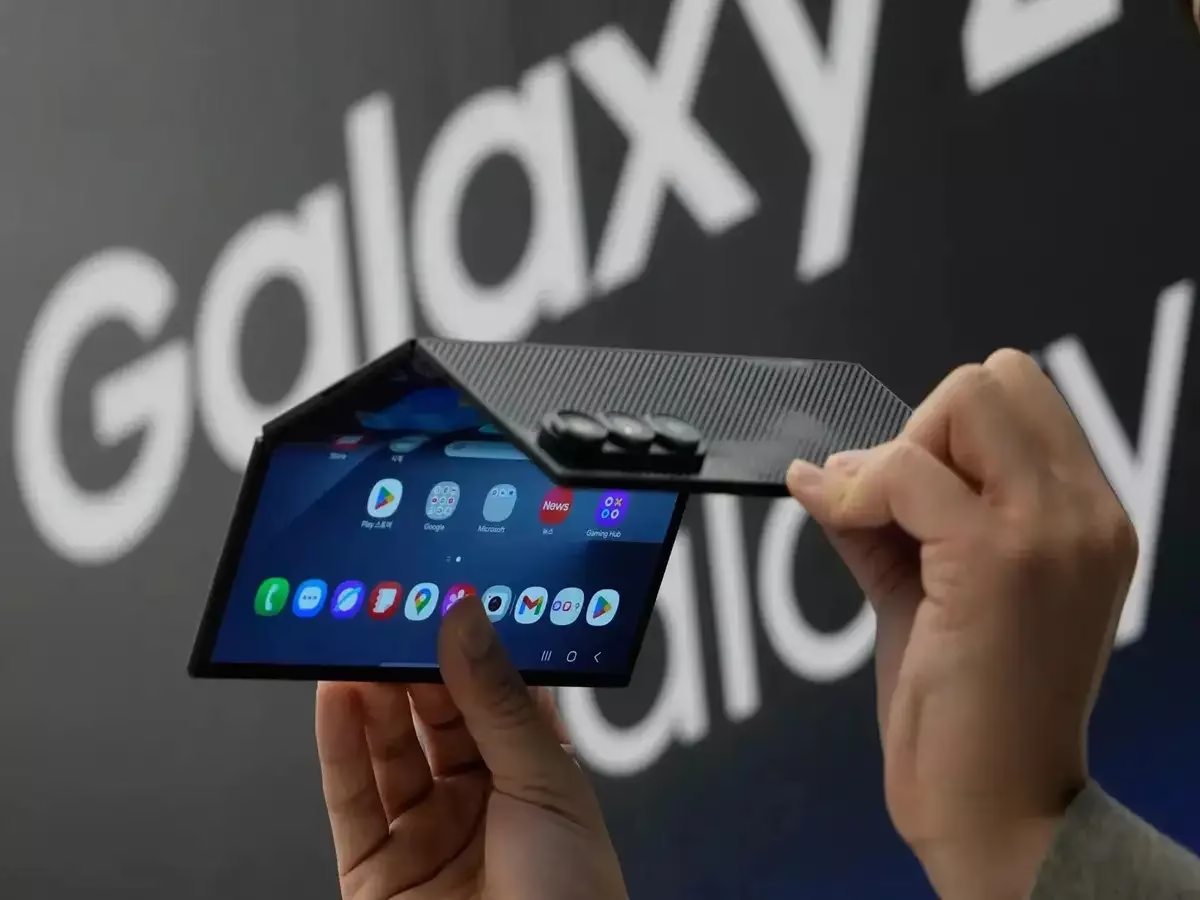
Samsung launched its first tri-fold smartphone Monday, positioning the $2,449 Galaxy Z Trifold as a limited production ‘test-bed device’ that will debut in South Korea on December 12 before expanding to select Asian markets, as the company faces growing competition from Chinese manufacturers including Huawei.
The United States market is scheduled to receive the device in the first quarter of 2026, though Samsung says full rollout details will be shared at a later date.
The launch answers the core 5Ws: Samsung (who) released the tri-fold phone (what) on Monday in South Korea (where) with additional markets coming in December and early 2026 (when), driven by the company’s strategy to test early demand and refine engineering before a wider release (why).
The Galaxy z trifold will be sold in a single configuration 16GB RAM and 512GB internal storage priced at 3,594,000 KRW (about $2,449). Samsung confirmed that no lower-tier storage models will be part of the initial run.
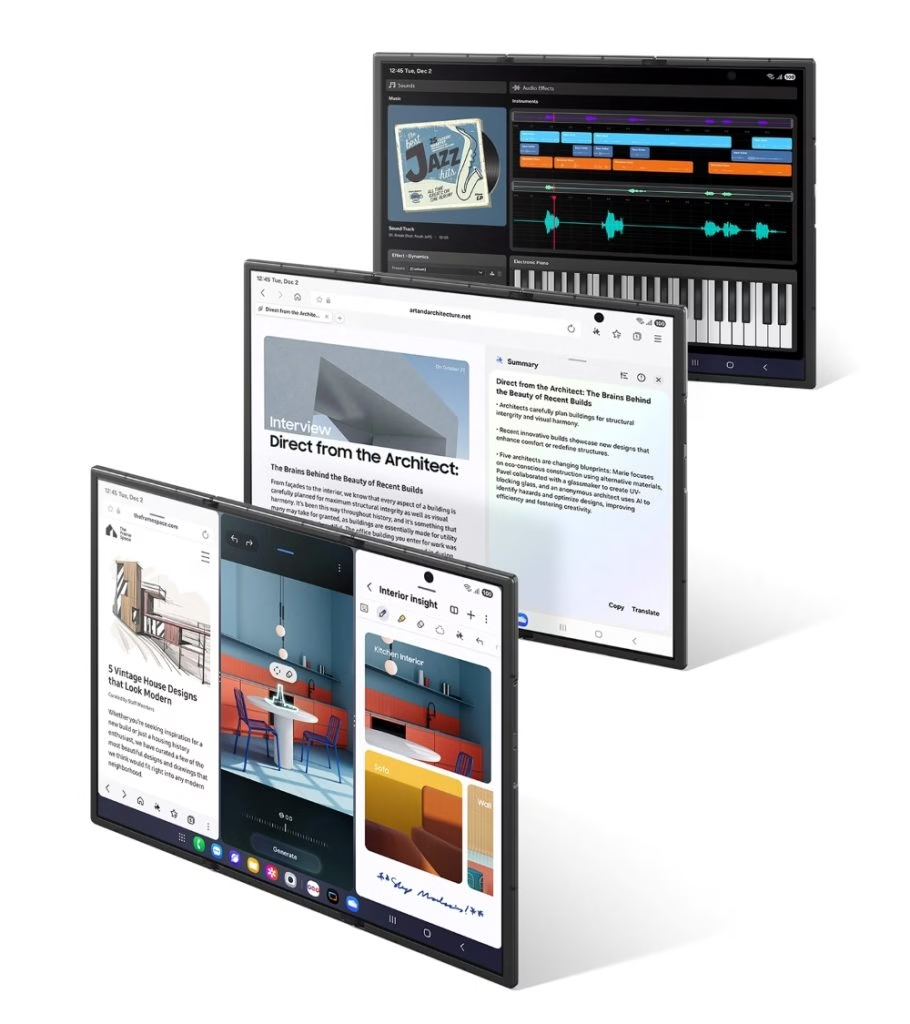
Samsung describes the Galaxy z trifold as a “test-bed device,” produced in limited quantities to evaluate hinge durability, software behavior and real-world usability. The phone uses two inward-folding hinges that expand into a 10-inch display with a 2160 x 1584 resolution slightly smaller than the 11-inch panel on Apple’s iPad (11th generation).
When folded, the Galaxy z trifold measures 12.9 mm thick, making it bulkier than Samsung’s existing foldables including the Galaxy Z Fold6 and the slimmer Galaxy Z Fold7. Samsung also confirmed the device includes the largest battery capacity used in any of its foldables to date, with super-fast charging that reaches approximately 50% in 30 minutes.
“Samsung’s first tri-fold model will ship in very limited volume, but scale is not the objective,” — Liz Lee, Associate Director, Counterpoint Research, in a statement. She added that the purpose of the Galaxy z trifold program is to test hinge engineering, multi-app performance and user behavior before considering mainstream production.
Samsung’s documentation highlights the ability to run three vertically aligned apps at once, along with a desktop-style interface that does not require an external monitor. This feature aims to position the Galaxy z trifold as a hybrid device bridging smartphone and tablet productivity.
The Galaxy z trifold enters a global foldable market that has grown more competitive since Samsung first introduced its Galaxy Fold line in 2019. Despite being an early leader, Samsung now contends with accelerating innovation from Chinese manufacturers.
Huawei recently unveiled its second-generation tri-fold device in China, featuring a folded thickness of 12.8 mm slightly thinner than Samsung’s model.
Honor, which separated from Huawei in 2020 to avoid U.S. sanctions, has also expanded its foldable lineup into international markets, increasing pressure on Samsung’s long-held dominance. The Galaxy z trifold therefore lands in an environment where tri-fold and multi-hinge form factors are no longer experimental concepts, but competitive battlegrounds.
“The Galaxy Z TriFold reflects years of work on foldable designs and aims to balance portability, performance and productivity in one device,” — TM Roh, co-CEO and Head of Samsung’s DX Division. His statement underscores Samsung’s commitment to maintaining leadership in the premium foldable category despite intensifying competition.
The Galaxy z trifold carries an IP48 rating, meaning it is resistant to water splashes and immersion up to 1.5 meters for 30 minutes, though it offers limited dust protection compared to newer competitors.
Instead of pursuing mass adoption immediately, Samsung is positioning the Galaxy z trifold as a long-term strategic test which is a way to refine tri-fold engineering before committing to mainstream deployment.
Analysts believe the device will help Samsung evaluate demand for larger foldables, stress-test hinge longevity and determine whether multi-fold designs offer meaningful advantages in productivity.
With Huawei and Honor expanding aggressively and Apple exploring larger-screen hybrids, Samsung’s early launch of the Galaxy z trifold suggests that the company aims to stay ahead of emerging form-factor shifts.
While the device carries a premium price and limited supply, its release marks a significant milestone toward establishing multi-fold smartphones as a future category within the global device market.
As competition intensifies, the Galaxy z trifold will likely serve as Samsung’s blueprint for future foldable innovation and a decisive indicator of whether tri-fold devices can transition from experimental technology to mainstream adoption.



Copyright © 2025 - The Bit Gazette.