




- Trending
- Comments
- Latest

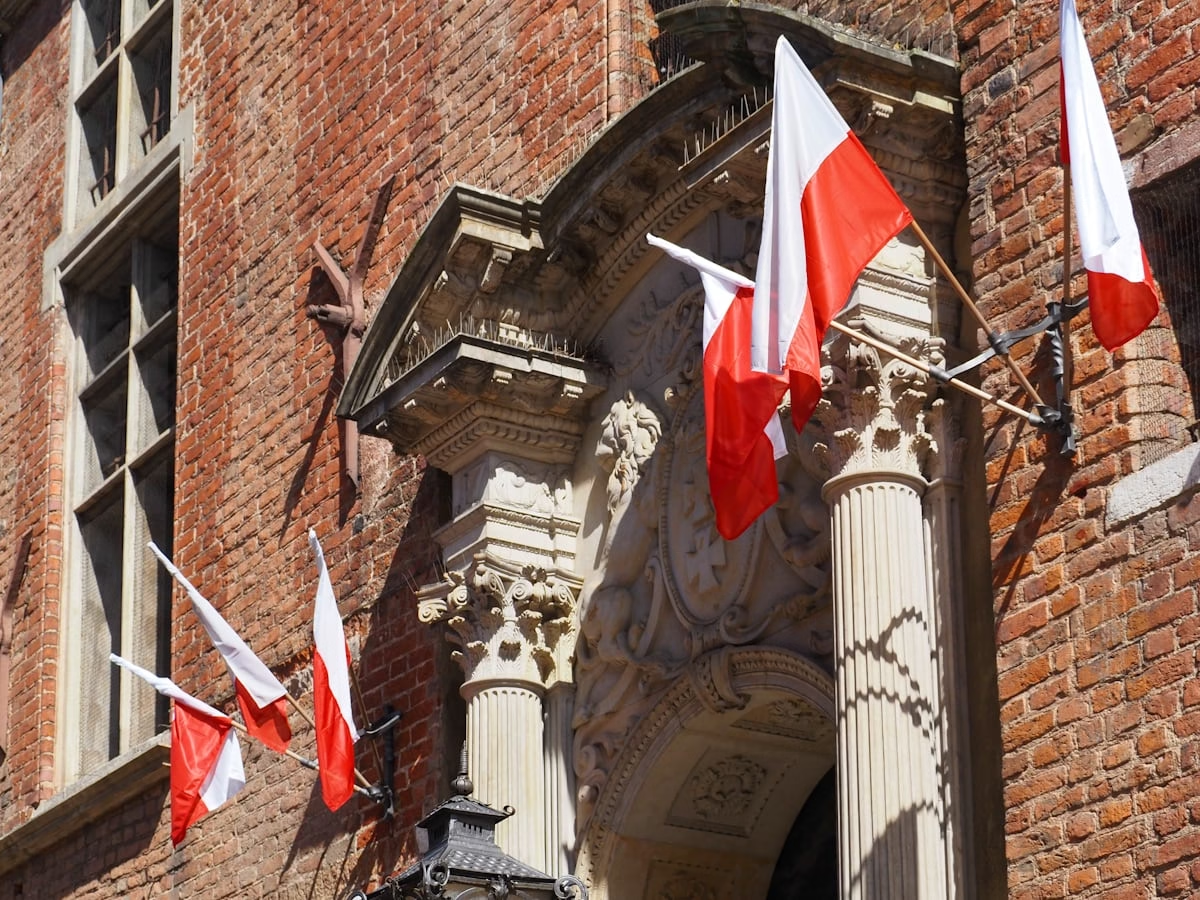
Polish President Karol Nawrocki vetoed a crypto regulation bill Monday, citing provisions that would grant authorities power to block websites and impose heavy compliance costs, triggering an immediate backlash from the finance minister who warned that consumers are losing money without investor protections.
Nawrocki said he refused to sign the Crypto-Asset Market Act because several provisions “genuinely threaten the freedoms of Poles, their property, and the stability of the state.” His decision marks one of the most consequential policy standoffs this year involving the Poland crypto asset market, drawing applause from crypto advocates and anger from key government ministers.
The veto comes at a time when the Poland crypto asset market is undergoing rapid expansion, attracting new platforms, investors, and startups. With the European Union preparing to implement MiCA rules in 2026, Poland’s regulatory direction is seen as a crucial issue for the future of the Poland crypto asset market and its competitiveness within the EU.
A central factor behind Nawrocki’s veto was a provision granting authorities extensive power to block websites connected to the Poland crypto asset market. The president’s office warned that unchecked domain-blocking could be easily abused and would undermine digital freedoms.
“Domain blocking laws are opaque and can lead to abuse,” the president’s office stated in an official release.

Another concern was the bill’s extraordinary length and complexity. According to the president’s office, the legislation risked creating unnecessary legal barriers that would place Poland at a competitive disadvantage compared with neighboring countries that maintain simpler frameworks for regulating the crypto industry.
The president argued that excessive regulatory pressure would suppress innovation and push companies to relocate outside Poland, harming the Poland crypto asset market and broader economic development.
“Overregulation is an easy way to drive companies to the Czech Republic, Lithuania or Malta, rather than create conditions for them to operate and pay taxes in Poland,” Nawrocki said.
Nawrocki also criticized proposed supervisory fees that could disproportionately burden startups and give foreign banks and large corporations an advantage over local firms operating in the Poland crypto asset market.
“This is a reversal of logic, killing off a competitive market and a serious threat to innovation,” he added.
The veto triggered immediate criticism from senior Polish officials, who argued that rejecting the bill leaves the Poland crypto asset market dangerously underregulated. Finance Minister Andrzej Domański issued a stark warning on X, claiming consumers are already suffering losses due to abuses in the sector.
“Already now 20% of clients are losing their money as a result of abuses in this market,” Domański wrote, asserting that the president had “chosen chaos” and must bear responsibility for the consequences.
Deputy Prime Minister and Minister of Foreign Affairs Radosław Sikorski echoed the criticism, saying the bill was designed to introduce essential protections for the Poland crypto asset market. “When the bubble bursts and thousands of Poles lose their savings, at least they will know who to thank,” Sikorski said.
Crypto advocates and industry experts welcomed the veto, arguing it prevents harmful restrictions on the Poland crypto asset market and preserves room for innovation. Polish economist Krzysztof Piech dismissed claims that the veto endangers consumers, saying the president cannot be blamed for authorities’ failures to enforce existing laws.
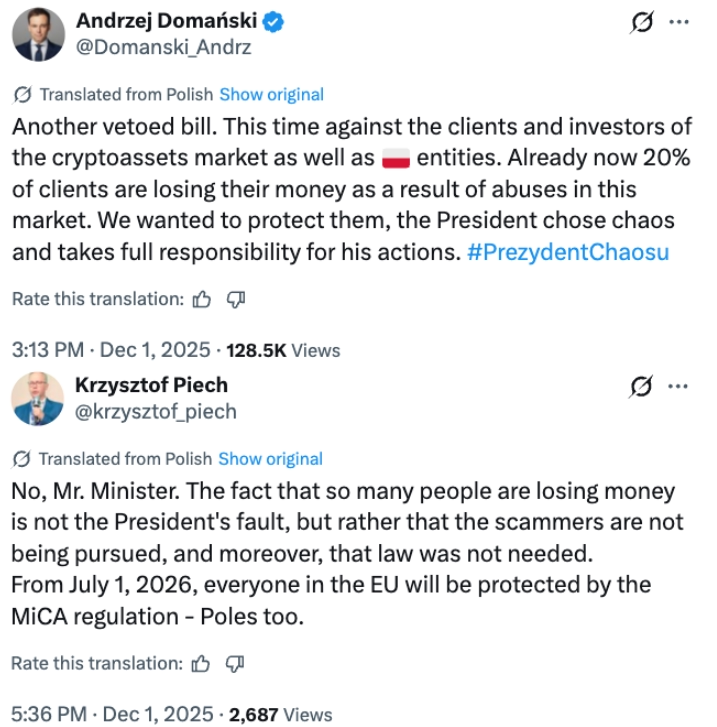
Piech also noted that the EU’s Markets in Crypto-Assets Regulation (MiCA) — set to take effect across all member states on July 1, 2026 — will introduce unified investor protections and a consistent regulatory framework for the entire European crypto sector, including the Poland crypto asset market.
As political tensions escalate, the future of the bill remains uncertain. Parliament now faces the decision of whether to amend the legislation, attempt an override, or restart the process altogether — a call that will determine how the Poland crypto asset market evolves in the coming years.



Copyright © 2025 - The Bit Gazette.