





- Trending
- Comments
- Latest

Israel will require all stablecoin issuers serving Israeli users to obtain Bank of Israel licenses under new regulations announced Monday, as the central bank cited concentration risks from Tether and Circle’s 99% market dominance and warned that unregulated stablecoins could threaten monetary stability ahead of the 2026 digital shekel launch.
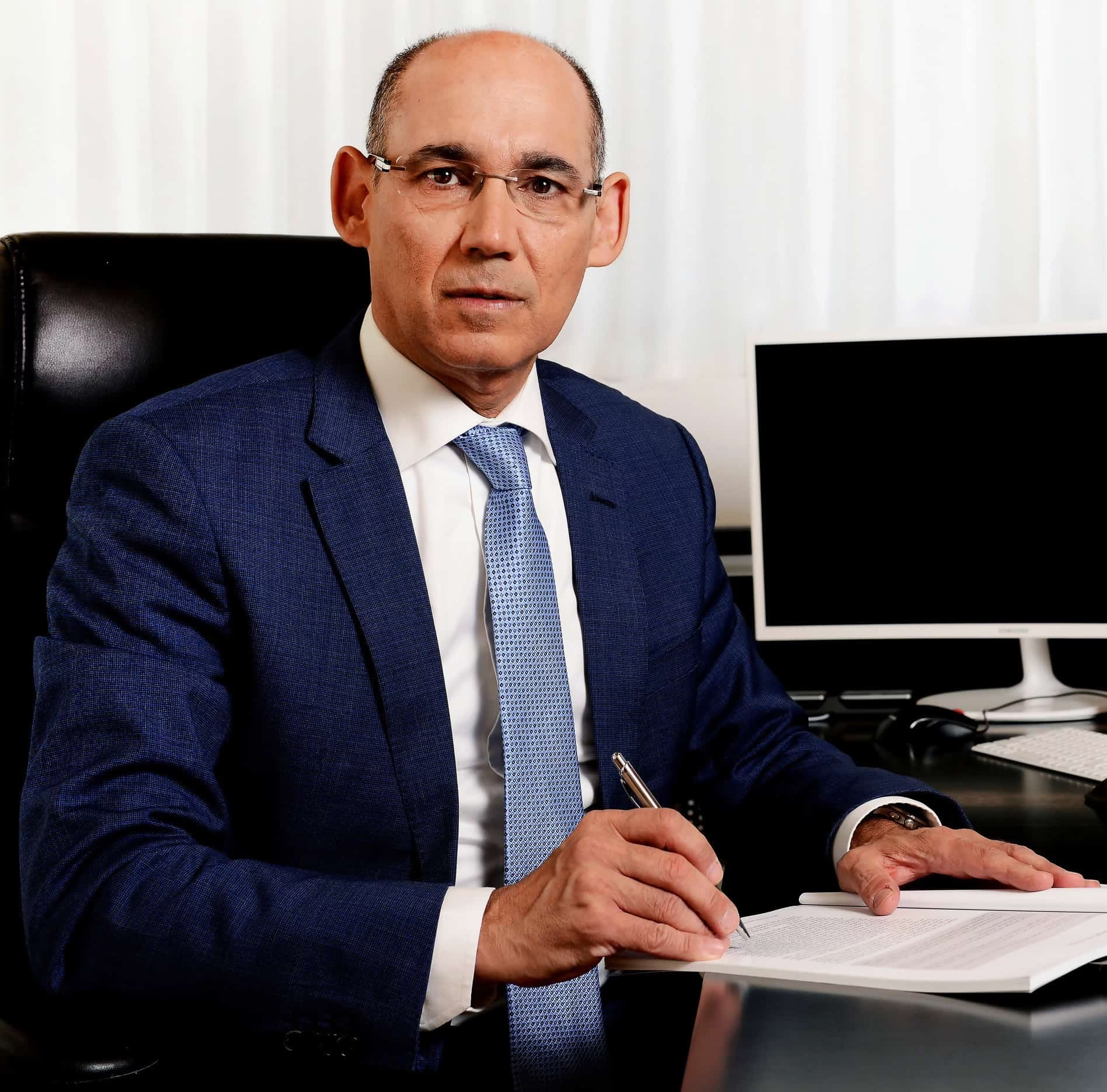
In his remarks, Yaron emphasized that global stablecoin activity has surged past $300 billion in market capitalization, adding that “given adoption among the public, it cannot be said that this is a marginal phenomenon.” The tightening of Israel stablecoin regulations reflects growing concerns that the dominance of USD-backed stablecoins and the rapid expansion of crypto usage inside the country could pose material risks if not properly supervised.
Israeli officials say the overwhelming concentration of USD-backed stablecoins, particularly those issued by Tether and Circle, is one of the primary drivers behind the new Israel stablecoin regulations. According to a Bank of Israel report presented during the conference, approximately 99% of global stablecoin activity is linked to these two issuers — a structural imbalance the central bank views as a threat to financial stability.
Yaron warned that disruptions to either of the dominant issuers could have global consequences, especially in countries connected to major payment networks. He noted that concentration risk reinforces the need for stronger Israel stablecoin regulations and tighter supervision across the domestic ecosystem.
In response, the central bank intends to require all stablecoin issuers serving Israeli users to obtain a full Bank of Israel license. This licensing process will include detailed risk assessments covering technological systems, financial vulnerabilities, and operational reliability.
New prudential rules under the expanded Israel stablecoin regulations will also obligate issuers to maintain fully backed reserves in highly liquid assets, including government bonds and bank deposits.
The central bank emphasized that it will retain authority to suspend or revoke licenses if an issuer endangers monetary stability, provides misleading documentation, or offers products that interfere with national payment systems.
Alongside the expanded Israel stablecoin regulations, officials also outlined the latest developments in the digital shekel project. Yoav Soffer, head of the initiative, described the forthcoming central bank digital currency as “central bank money for everything,” and reaffirmed that deployment is targeted for 2026.
The digital shekel remains one of the central bank’s top priorities, although early experiments encountered obstacles. In March 2024, fintech firm Bits of Gold received approval to pilot a shekel-backed token known as BILS.
However, nearly a year later, the Capital Market, Insurance and Savings Authority (CMISA) blocked local access to the Bitin crypto exchange — which had been offering BTC, ETH, LTC, XRP, USDT, and USDC — citing operations without a valid license. The regulator issued a 1.7 million-shekel penalty and noted that Bitin’s previous licensing request had been rejected due to a criminal investigation involving its operator.
Despite the enforcement actions, Soffer reiterated that the digital shekel program is moving ahead, with formal recommendations expected before the end of the year. These developments run parallel to the strengthening of Israel stablecoin regulations, which officials say are necessary to ensure a stable environment for the digital shekel’s introduction.
The push to tighten Israel stablecoin regulations also occurs against the backdrop of rapidly increasing crypto activity within the country.
According to Chainalysis, Israel recorded more than $713 billion in crypto inflows between 2024 and 2025. Usage accelerated sharply following the October 7, 2023 Hamas attacks, with volumes exceeding expectations by an average of 60.4%.
Additional scrutiny has emerged internationally as well. Families of 300 U.S. citizens harmed or killed during the 2023 crisis recently filed a lawsuit accusing Binance of facilitating transfers to Hamas and other groups by ignoring compliance warnings — allegations that continue to attract global attention.
As the digital shekel advances and oversight tightens, the government maintains that the expanded Israel stablecoin regulations are designed to safeguard monetary stability while ensuring Israel remains aligned with global financial standards.



Copyright © 2025 - The Bit Gazette.