

- Trending
- Comments
- Latest

The Office of the Comptroller of the Currency said Monday that cryptocurrency firms seeking bank charters should be evaluated under the same standards as traditional banks, marking a shift from earlier regulatory skepticism.
Senior Deputy Comptroller Jonathan Gould told a blockchain conference that crypto custody services are not fundamentally different from electronic banking services already supervised by federal regulators.
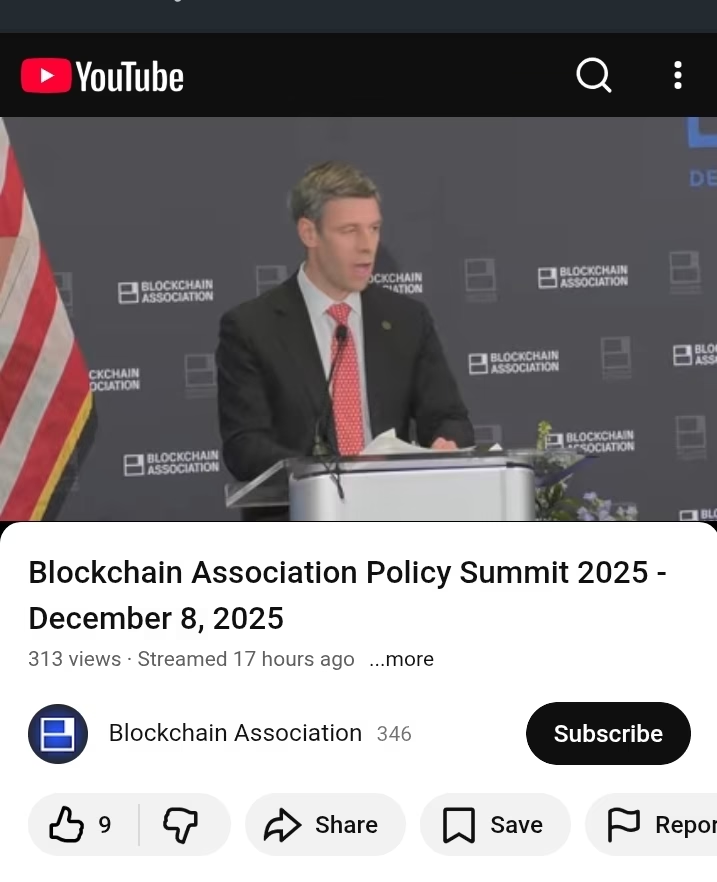
Gould noted that while many applicants in the digital-asset sector may appear to offer novel capabilities for a national trust bank, the underlying services are not fundamentally new.
“Custody and safekeeping services have been conducted electronically for several years,” — Jonathan Gould, Senior Deputy Comptroller, OCC.
With this argument, he stressed that the agency sees no reason to treat digital assets differently from activities addressed within a traditional crypto banks charter.
He also underscored the importance of avoiding regulatory stagnation. According to Gould, restricting national trust banks to outdated technologies or legacy models would hinder innovation and reduce the banking sector’s ability to evolve.
The OCC—responsible for supervising national banks—had previously viewed crypto firms as potential risks to financial stability. However, after reviewing the evidence, the agency reconsidered its approach. The initial concerns surrounding the crypto banks charter process were ultimately deemed “speculations,” Gould suggested, prompting the OCC to re-evaluate its criteria.
Two firms have already secured an OCC-approved crypto banks charter: Anchorage Digital, which received its license in 2021, and Erebor, granted preliminary approval in October. This change reflects the agency’s belief that the banking system can—and must—adapt from legacy infrastructure such as telegraphs to modern blockchain technology.
Gould highlighted that the OCC received around 14 new bank applications this year, including several involving digital-asset activities.
Remarkably, that number nearly matches the total number of applications submitted over the previous four years combined. The surge underscores growing interest in obtaining a crypto banks charter as firms seek regulated pathways into the U.S. financial system.
Financial groups have expressed apprehension over whether the OCC can adequately supervise institutions holding a crypto banks charter under crypto-focused business models. Gould acknowledged these concerns but rejected the idea that skepticism should slow progress.
He argued that casting doubt on the OCC’s supervisory capabilities could stifle innovation that benefits consumers and supports local economies. “This all boosts my trust in the OCC’s skill to supervise new companies and new activities of current banks fairly and consistently,” — Jonathan Gould, Senior Deputy Comptroller, OCC.
Gould pointed to the agency’s years of experience overseeing national trust banks with cryptocurrency operations, stating that ongoing communication with banks about their upcoming products reinforces confidence in the OCC’s ability to monitor a growing number of crypto banks charter holders.
Chartering, he emphasized, is essential to the U.S. banking ecosystem because it keeps institutions aligned with economic realities and evolving technological trends. For organizations working with digital assets, access to a federally regulated crypto banks charter will remain a critical entry point.
As the debate over the U.S. crypto banks charter intensifies, Argentina is also moving toward broader crypto integration within its banking system.
Recent reports indicate that the Banco Central de la República Argentina (BCRA) is evaluating whether to allow traditional banks to offer cryptocurrency trading—potentially reversing the strict 2022 restrictions that barred such services.
Sources familiar with the discussions noted that the BCRA is reconsidering its stance after two major financial institutions previously demonstrated strong interest in digital-asset products. The shift signals Argentina’s ambition to strengthen its position as a leader in the Latin American crypto industry.
The developments in both the U.S. and Argentina highlight a global reassessment of how banks and regulators approach digital-asset services. As applications for a crypto banks charter increase and international policymakers explore new models, the future regulatory landscape may become more open to integrating blockchain-based financial services.



Copyright © 2025 - The Bit Gazette.