
- Trending
- Comments
- Latest

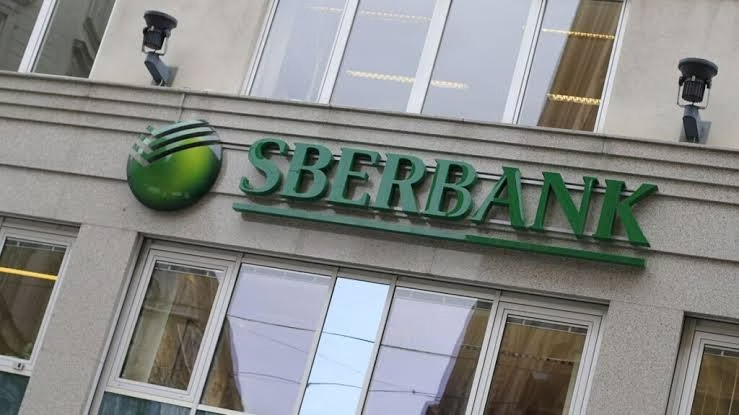
Sberbank, Russia’s largest lender, issued the country’s first bitcoin-backed loan in a pilot transaction with Intelion Data, one of Russia’s largest Bitcoin mining companies, marking a significant test of crypto integration into traditional finance as digital asset regulations evolve.
The Dec. 29 transaction used cryptocurrency mined by Intelion Data as collateral, though Sberbank declined to disclose the loan’s size, duration or specific asset used, framing the deal as a controlled experiment rather than a commercial product.
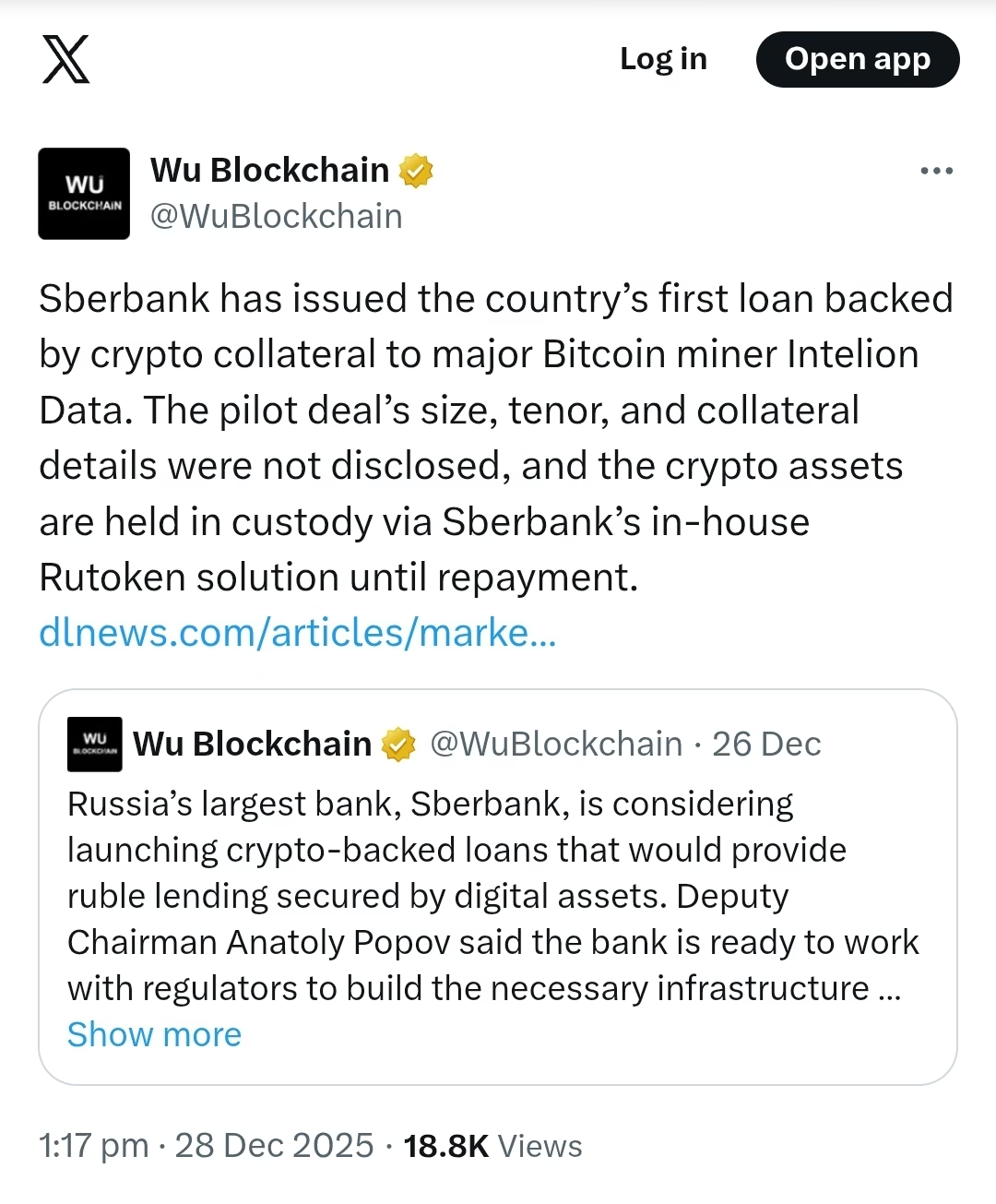
The Bitcoin-Backed Loan was structured as a controlled experiment rather than a fully commercial product. While Sberbank confirmed that cryptocurrency mined by Intelion Data was used as collateral, it declined to disclose the loan’s size, duration, or the specific digital asset involved.
The move comes as Russia continues to refine its digital asset regulations, balancing innovation with regulatory oversight.
According to Sberbank, the Bitcoin-Backed Loan was issued using crypto assets generated directly through Intelion Data’s mining operations. The bank emphasized that the structure is not limited to miners alone and could eventually be extended to other companies that hold cryptocurrencies on their balance sheets.
To mitigate risks associated with digital collateral, Sberbank relied on its proprietary custody system, Rutoken, which it said was designed to secure crypto assets throughout the loan period. By framing the deal as a pilot, the bank underscored that the Bitcoin-Backed Loan remains experimental and subject to further evaluation.
The transaction highlights the banking sector’s cautious approach to crypto exposure, particularly in a market where large-scale mining operations play a central role. Russia has become a global hub for Bitcoin mining due to its energy capacity, making miners a natural starting point for testing a Bitcoin-Backed Loan model.
Sberbank executives have positioned the Bitcoin-Backed Loan as part of a broader effort to test regulatory and technical mechanisms alongside policymakers.
Deputy Chair Anatoly Popov said Russia’s digital asset rules are “still in their early stages,” signaling that formal frameworks for crypto-backed lending are not yet fully defined — Anatoly Popov, Deputy Chair, Sberbank.
Popov added that Sberbank is prepared to work closely with the Central Bank of Russia to help shape the rules and infrastructure required for such products. In this context, the Bitcoin-Backed Loan provides regulators with a real-world case study to assess custody standards, asset security, and risk controls before wider adoption.
At the industry level, Intelion Data welcomed the development. CEO Timofey Semenov described the transaction as a “significant milestone,” suggesting it reflects a maturation of Russia’s crypto market — Timofey Semenov, CEO, Intelion Data.
He noted that if the pilot proves effective, similar Bitcoin-Backed Loan structures could be adopted more broadly across the mining sector.
The Bitcoin-Backed Loan aligns with Sberbank’s broader exploration of digital finance. Earlier this month, the bank disclosed that it was testing decentralized finance tools and signaled support for the gradual inclusion of cryptocurrencies within Russia’s legal financial system.
Other major lenders appear to be moving in parallel. State-owned VTB has previously indicated interest in allowing customers to buy and sell cryptocurrencies directly, suggesting competition among banks to define their role in Russia’s evolving crypto economy. However, Sberbank’s pilot Bitcoin-Backed Loan stands out as one of the most concrete steps taken so far.
Intelion Data’s involvement also reflects its industrial scale. According to RBC, the company generated $79 million in revenue in 2024, with data centers consuming nearly 300 megawatts of electricity.
The firm is expanding further, developing a mining facility near the Kalinin Nuclear Power Plant in the Tver region, alongside a gas-powered energy station and turnkey mining solutions for industrial partners.
While institutions experiment with crypto-backed finance, regulators remain cautious on retail access. Media reports indicate that the Central Bank of Russia is prepared to allow individuals to trade digital assets within an annual cap of just over $3,800, underscoring a controlled approach to broader market participation.
Taken together, these developments suggest Russia’s financial system is probing the boundaries of crypto integration without abandoning regulatory restraint.
The Bitcoin-Backed Loan issued by Sberbank serves as a controlled test case, offering insight into how traditional banks, miners, and regulators might coexist in a hybrid financial landscape.
As regulatory frameworks evolve, the success or failure of this pilot Bitcoin-Backed Loan could shape future policy decisions and determine whether crypto-backed lending becomes a mainstream financial tool in Russia.



Copyright © 2025 - The Bit Gazette.