




- Trending
- Comments
- Latest

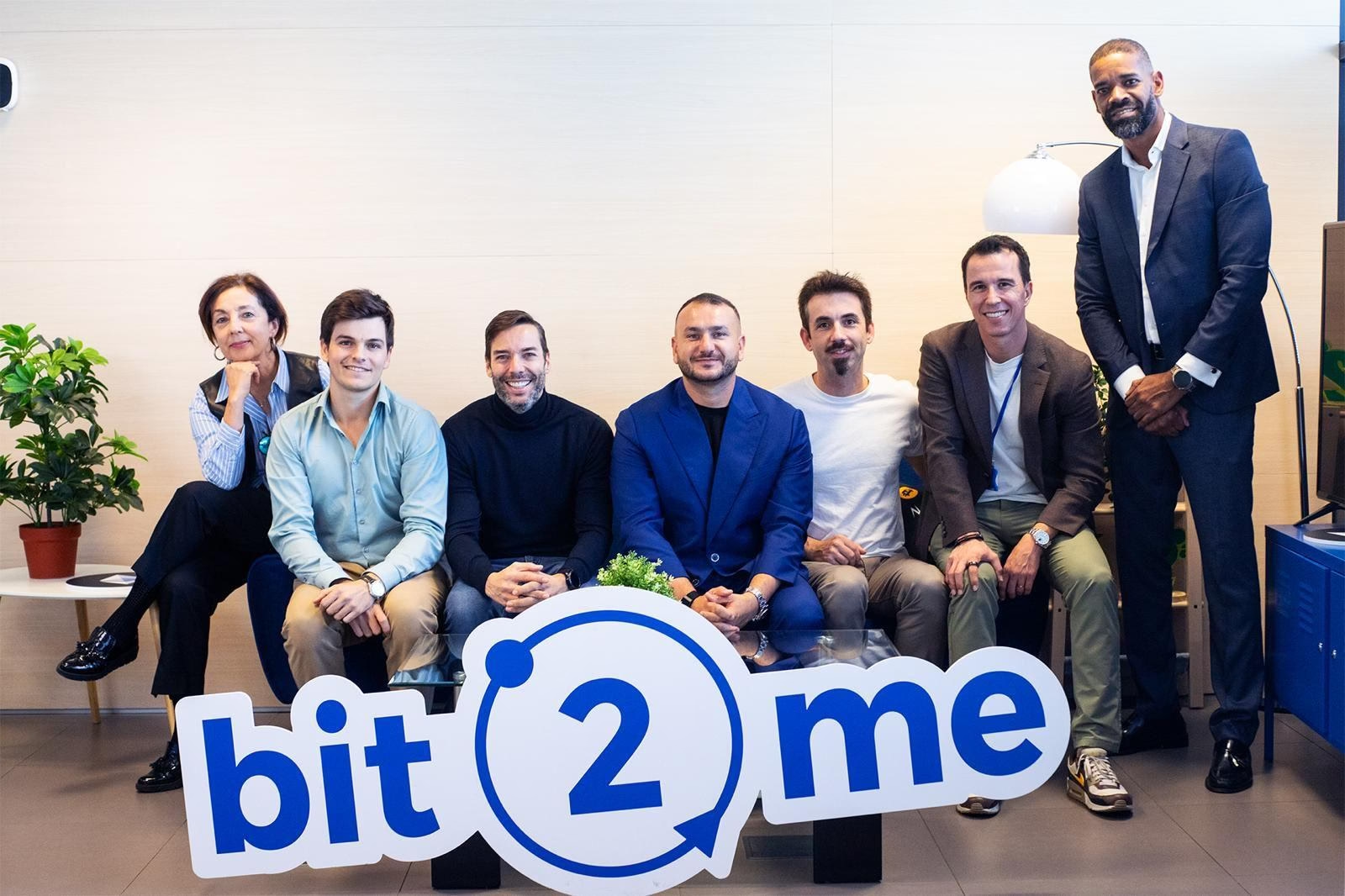
Spanish bank Bankinter has taken a minority stake in cryptocurrency exchange Bit2Me, joining a €30 million funding round that includes lender BBVA and stablecoin issuer Tether.
The investment, announced Wednesday, marks another step in European banks’ growing participation in regulated digital asset platforms as the bloc’s Markets in Crypto-Assets (MiCA) framework takes effect.
Bankinter said the goal of the investment is to “achieve technological and knowledge synergies” while supporting Bit2Me’s fintech growth throughout Spain and the EU.
The language reflects a broader shift in how banks approach crypto not as a parallel system, but as an extension of existing financial infrastructure.
MiCA, formally adopted by the European Union and outlined in the official regulation text at EU Markets in Crypto-Assets Regulation, establishes passportable licensing for crypto firms operating across member states.
For banks, this framework significantly reduces legal uncertainty which is a key barrier that previously slowed Banks crypto adoption.
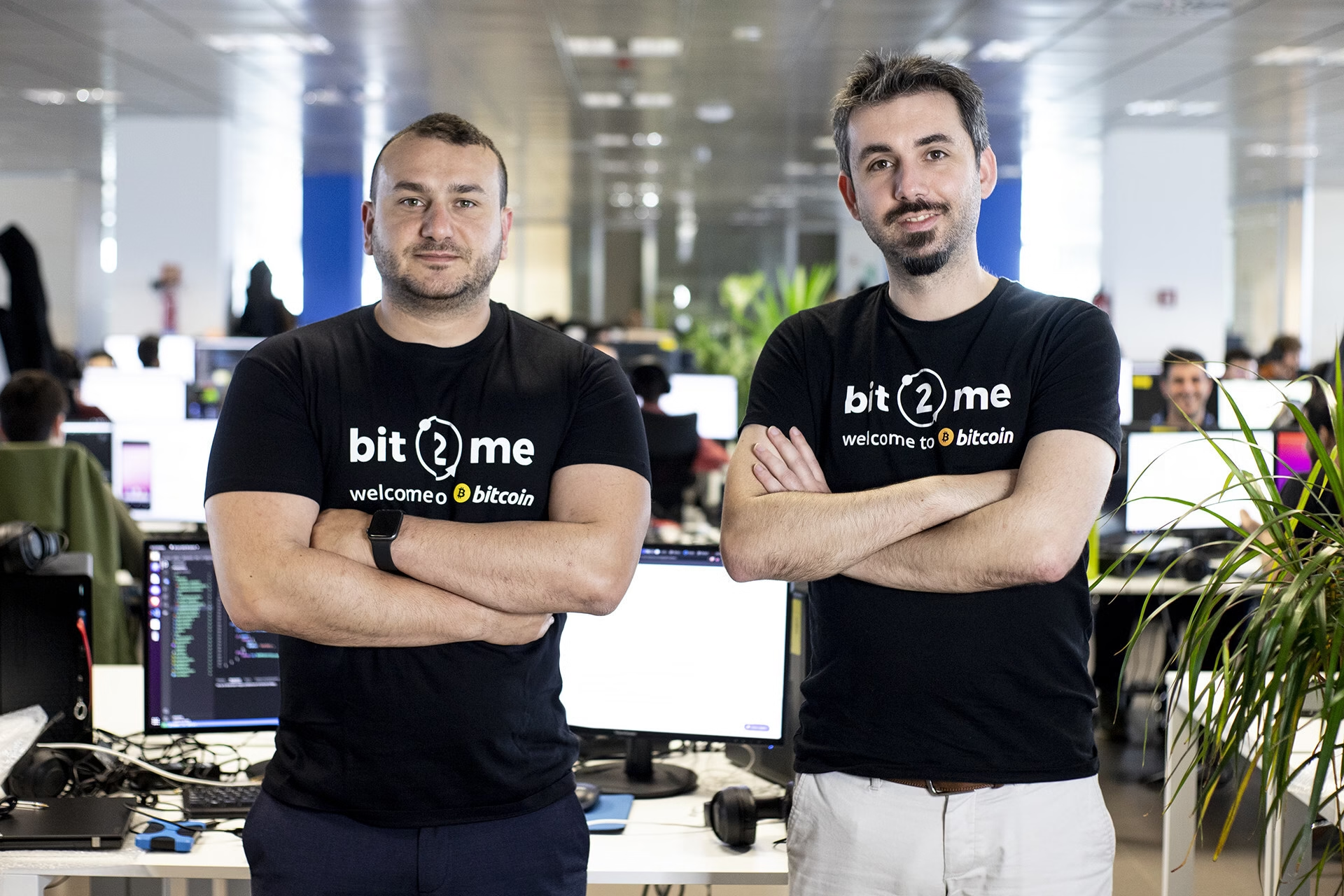
“This alliance confirms that banks can take advantage of our deep know-how in the sector to enhance their offer,” said Pablo Casadío, Chief Financial Officer at Bit2Me. “Instead of competing, we integrate strengths.”
Casadío added that Bit2Me’s “technological and regulatory solidity” positions it as a natural partner for large financial institutions navigating crypto integration under MiCA.
The €30 million ($34.9 million) funding round that Bankinter joined ranks among the most significant capital raises by European crypto exchanges.
While it trails the larger rounds completed by Austria-based Bitpanda, it remains the fourth-largest publicly disclosed exchange raise in the region, underscoring investor confidence in compliant platforms.
The investment also reflects a strategic calculation by banks facing margin pressure in traditional lending.
By aligning with regulated crypto platforms, banks gain exposure to new revenue streams, custody solutions, and tokenized financial products without assuming full operational risk.
“Banks are no longer asking whether crypto belongs in finance,” said a European fintech compliance consultant familiar with MiCA implementation. “They are asking how to participate without breaching regulatory or reputational boundaries.”
Bankinter’s move comes amid a broader global shift as major banks expand their crypto footprints.
Across jurisdictions, large financial institutions are increasingly pursuing crypto exposure through regulated instruments rather than direct trading.
In the United Kingdom, Standard Chartered has publicly outlined its digital asset ambitions, while in the United States, leading investment banks have filed for multiple spot crypto exchange-traded funds.
These developments reinforce the idea that Banks crypto adoption is evolving into a core strategic theme rather than a niche experiment.
Europe’s advantage lies in regulatory clarity. MiCA’s harmonized framework allows banks operating in one member state to scale services across the EU, reducing compliance fragmentation.
For crypto investors, this creates a more predictable environment for institutional capital inflows.
Bit2Me’s authorization under MiCA detailed on the company’s regulatory disclosures page at Bit2Me MiCA compliance documentation makes it a rare example of a crypto-native firm that satisfies both technological and supervisory standards demanded by banks.
For market participants, Bankinter’s investment is less about a single exchange and more about structural validation.
Banks crypto adoption brings deeper liquidity, improved governance standards, and greater integration between digital assets and traditional financial products.
At the same time, institutional involvement may reshape competitive dynamics. As banks partner with compliant platforms, smaller or unregulated exchanges could struggle to attract capital or users within Europe.
“MiCA effectively separates institutional-grade platforms from the rest,” said a regulatory analyst specializing in digital assets. “Banks will concentrate their partnerships where legal certainty exists.”
As Banks crypto adoption accelerates, crypto investors may increasingly evaluate projects not just on innovation, but on regulatory readiness and institutional alignment.



Copyright © 2025 - The Bit Gazette.