




- Trending
- Comments
- Latest

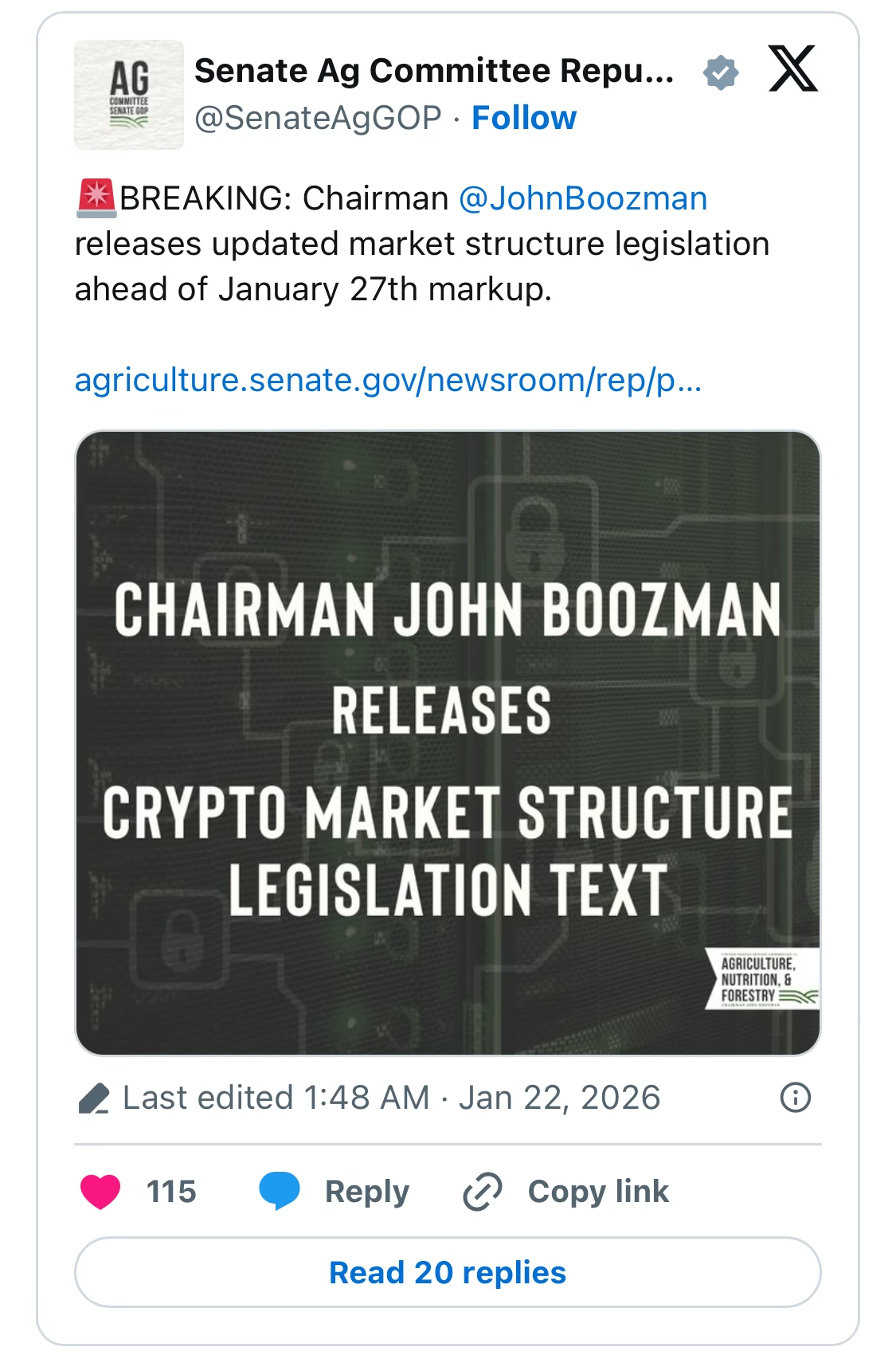
The Senate Agriculture Committee will mark up crypto market structure legislation on January 27 without Democratic support, advancing a partisan approach after months of failed bipartisan negotiations.
Committee Chairman John Boozman announced the Monday markup despite acknowledging he could not secure agreement with Democrats on key provisions covering stablecoins, regulatory authority, and ethics safeguards.
The 3 p.m. session in the Russell Senate Office Building could set up a party-line vote on legislation that would establish federal oversight for digital asset spot markets.
The move comes as the Senate Banking Committee has delayed work on its parallel framework, the CLARITY Act, until late February or March to focus on housing legislation—narrowing the path for comprehensive crypto regulation and increasing the likelihood that the Agriculture Committee’s bill advances first.
The Agriculture Committee’s push comes as momentum slows elsewhere on Capitol Hill. The Senate Banking Committee has postponed work on its parallel framework, known as the CLARITY Act, until late February or March, according to people familiar with the matter.
The delay narrows the legislative path and increases the likelihood that crypto market structure legislation could advance first through the Agriculture Committee alone.
The Banking Committee has shifted focus to housing legislation after President Donald Trump publicly emphasized affordability as a top priority, describing housing reform as central to preserving the “American Dream.”
That pivot followed growing controversy around the CLARITY Act, particularly after Coinbase Chief Executive Brian Armstrong withdrew his support.
Armstrong described several provisions as “catastrophic,” citing restrictions on tokenized equities and limits on stablecoin yield as key concerns.
His withdrawal intensified industry debate and underscored the fragile coalition supporting crypto market structure legislation.
Patrick Witt, Executive Director of the White House’s President’s Crypto Council, responded sharply to Armstrong’s stance, warning that delaying legislation could backfire.
“You might not love every part of the CLARITY Act, but I can guarantee you’ll hate a future Dem version even more,” — Patrick Witt, Executive Director, President’s Crypto Council.
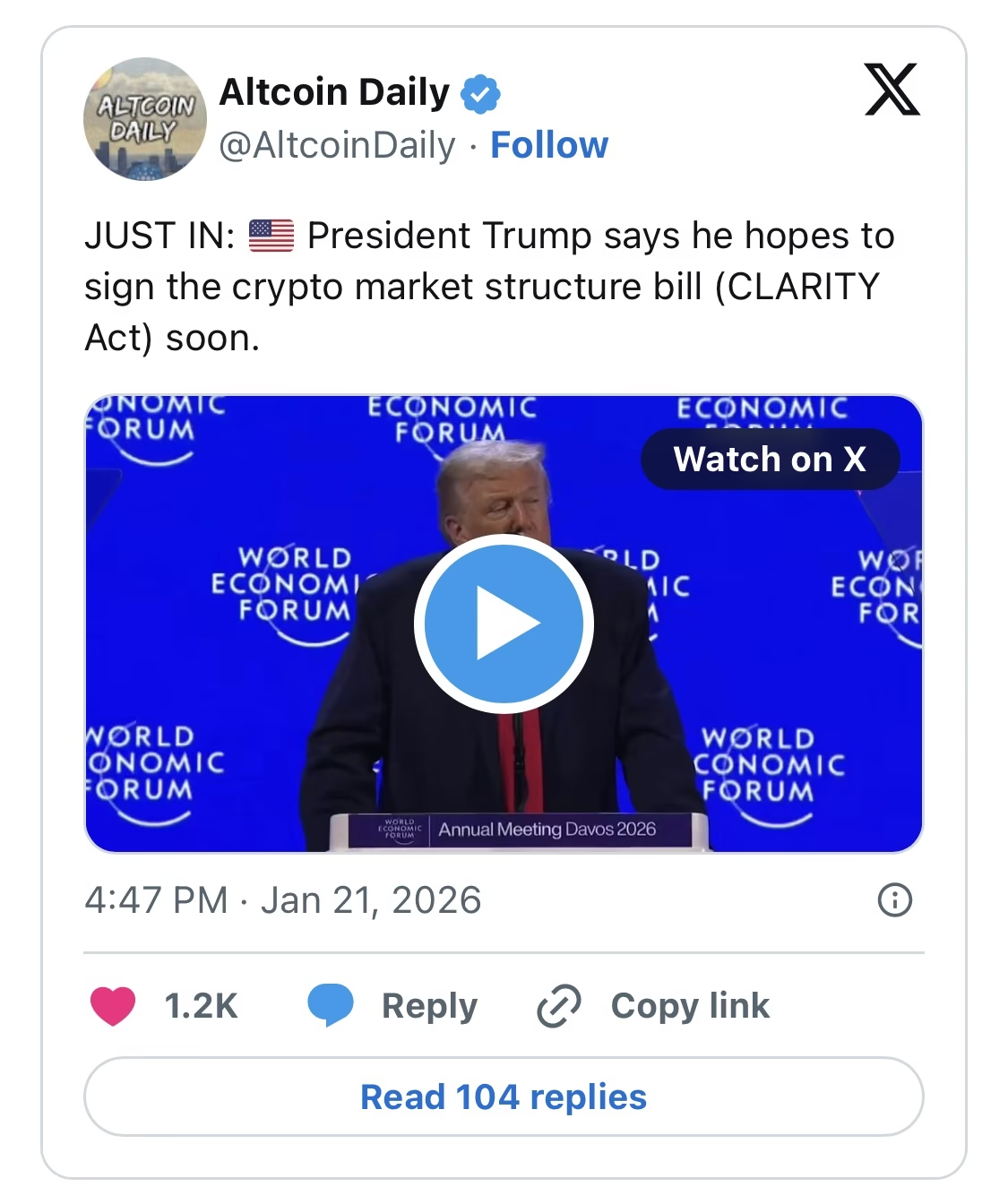
Despite the uncertainty, President Trump struck an optimistic tone at the World Economic Forum in Davos, saying he expects to sign crypto market structure legislation “very soon” and reaffirming his administration’s goal of ensuring “America remains the crypto capital of the world.”
The stablecoin debate has exposed widening rifts between crypto firms and traditional banks, further complicating the outlook for crypto market structure legislation.
Bank executives have repeatedly warned that yield-bearing stablecoins could disrupt the U.S. banking system.
Bank of America CEO Brian Moynihan has cautioned that as much as $6 trillion in deposits roughly one-third of U.S. commercial bank deposits could migrate into stablecoins.
JPMorgan CFO Jeremy Barnum echoed those concerns, describing yield-bearing stablecoins as “a parallel banking system” that resembles interest-paying deposits without equivalent safeguards.
Concerns extend beyond banking competition. Galaxy Digital has warned that the Banking Committee’s draft could grant the Treasury Department sweeping surveillance powers, including the ability to freeze transactions for up to 30 days without a court order.
Facing mounting resistance, Armstrong has signaled a willingness to seek compromise.
Speaking during Davos meetings, he said Coinbase would continue engaging with policymakers and banks.
“We’re going to continue to work on the market structure legislation, and meet with some of the bank CEOs to figure out how we can make this a win-win,” — Brian Armstrong, CEO, Coinbase.
Even as legislative uncertainty persists, analysts say adoption is not slowing. Clear Street analyst Owen Lau noted that “institutional use cases continue to expand even without a favorable Clarity Act,” pointing to ongoing blockchain integration by major financial institutions.
As crypto market structure legislation moves toward markup under increasingly partisan conditions, the outcome will shape not only regulatory authority but also the balance of power between banks, crypto platforms, and federal agencies.
Whether the Agriculture Committee’s approach can gain broader support or harden divisions further will become clearer in the weeks ahead.



Copyright © 2025 - The Bit Gazette.