







- Trending
- Comments
- Latest


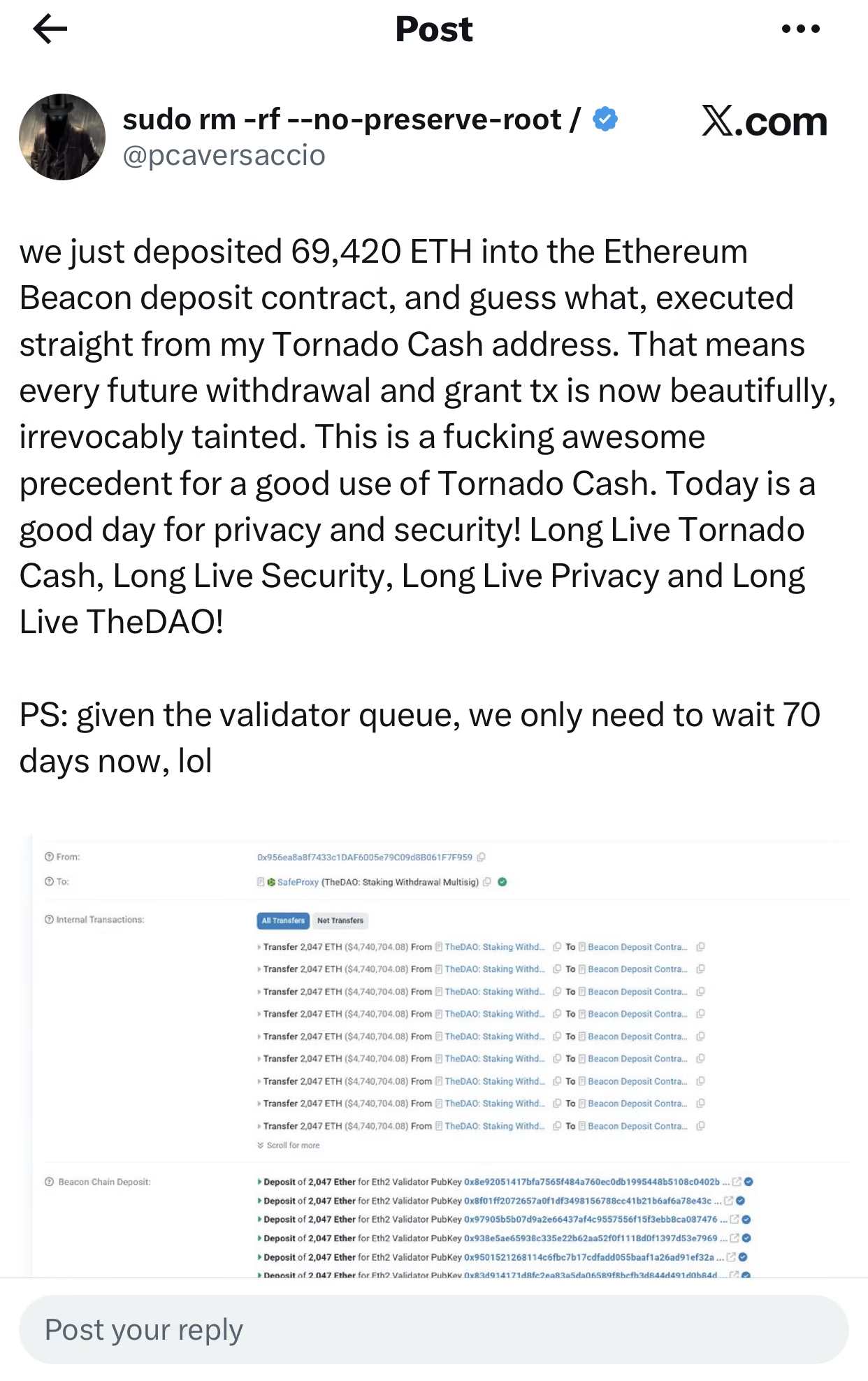
The newly revived Ethereum DAO has routed its $220 million treasury through Tornado Cash, the sanctioned cryptocurrency mixer, in what co-founder Griff Green frames as a deliberate statement on transaction privacy rights.
The 69,420 ETH deposit, now publicly tagged on Etherscan as originating from Tornado Cash, will fund security research and ecosystem grants while challenging ongoing regulatory narratives that equate privacy tools with illicit activity.
One of the Ethereum DAO’s co-founders, Griff Green, publicly confirmed the deposit of 69,420 ETH into the Ethereum Beacon Chain deposit contract.
The transaction was executed through Green’s well-known griff.eth vanity address, adding transparency to a process that paradoxically began with obfuscation.
“The goal is not secrecy for wrongdoing,” Green has previously stated in DAO governance discussions, “but privacy as a public good—especially for builders and researchers operating in adversarial environments.”
On-chain data shows the wallet responsible for deploying the Ethereum DAO funds was initially funded via Tornado Cash, now visibly tagged on Etherscan. As a result, all subsequent DAO transactions will carry a “tainted” history—an intentional statement rather than an oversight.
By officially routing funds through Tornado Cash, the Ethereum DAO is reinforcing a long-held Ethereum narrative: privacy should not be treated as proof of guilt.
While Tornado Cash has drawn warnings for processing funds tied to exploits—including those allegedly linked to DPRK hackers—its widespread usage complicates enforcement.
Currently, regulations surrounding Tornado Cash remain inconsistent across jurisdictions. Many centralized exchanges still do not automatically reject assets that have passed through mixers, especially when no direct link to illicit activity is proven.
This move places the Ethereum DAO firmly on the ideological front line of crypto’s privacy debate.
Despite the bold treasury launch, the Ethereum DAO’s plans for passive income will not materialize immediately.
ETH deposited into the Beacon Chain must wait in the validator activation queue, which now holds over 4 million ETH awaiting entry.
At current levels, the waiting period has surged to nearly 71 days, marking an all-time high for validator onboarding.
Withdrawals, meanwhile, face virtually no delay—highlighting Ethereum’s lopsided demand for yield-bearing positions.
Once active, staking rewards generated by the Ethereum DAO will fund grants, audits, and long-term security research across the Ethereum ecosystem.
The reborn Ethereum DAO will complement the Ethereum Foundation’s evolving financial strategy, which aims to preserve capital while deploying funds more selectively.
Ethereum Foundation leadership has repeatedly emphasized sustainability over aggressive spending.
Ethereum researcher Justin Drake previously noted that “Ethereum’s long-term security depends on disciplined capital allocation, not short-term hype.”
The DAO’s reserve model mirrors that thinking, positioning the Ethereum DAO as a patient capital allocator rather than a speculative vehicle.
Despite sanctions and scrutiny, Tornado Cash has quietly regained traction. The mixer now holds over 361,000 ETH, with activity levels approaching highs not seen since 2021.
Total value locked across ETH and stablecoins recently hit an all-time high.
Even wallets with no intent to use privacy tools have been “dusted” with Tornado-linked funds, further blurring enforcement lines across Ethereum.
Ethereum co-founder Vitalik Buterin has repeatedly defended privacy tools, arguing that “veiled transactions protect users from surveillance, targeting, and MEV exploitation—not just criminals.”
The revival of the Ethereum DAO is more than a funding announcement—it is a philosophical signal.
By embracing Tornado Cash, the Ether DAO is challenging regulators, exchanges, and even fellow Ethereum builders to reconsider what privacy means in decentralized finance.
Whether this bold stance strengthens Ethereum’s credibility—or invites renewed pressure—remains to be seen. One thing is certain: the Ether DAO is back, and it is not playing it safe.



Copyright © 2025 - The Bit Gazette.

