

- Trending
- Comments
- Latest

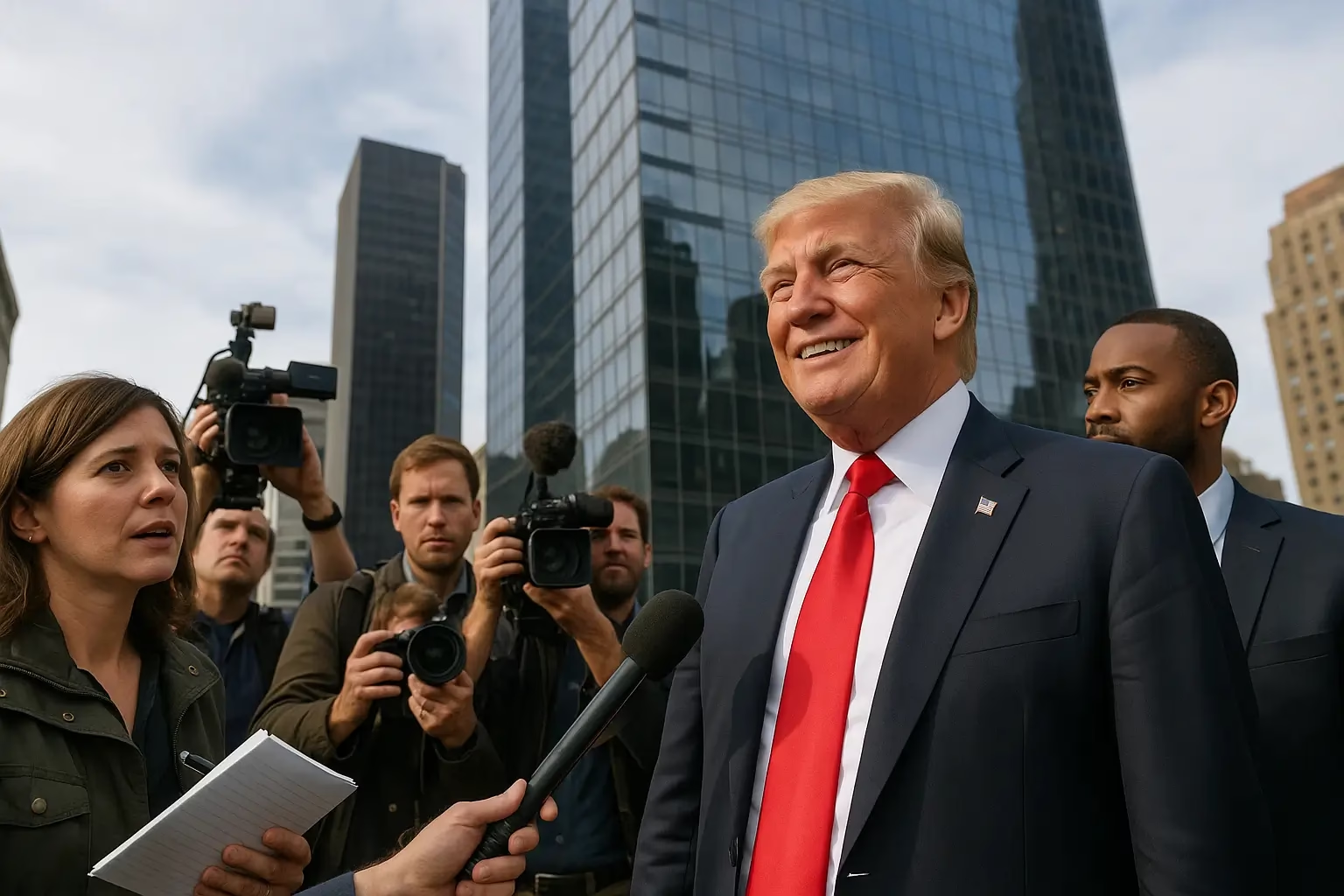
Former President Donald Trump denied knowledge of a reported $500 million investment from an Abu Dhabi-backed firm in World Liberty Financial, a cryptocurrency platform controlled by his sons, according to statements made to reporters on February 2, 2026.
The deal, allegedly finalized just four days before Trump’s second inauguration, has drawn sharp criticism from lawmakers who question whether the timing created conflicts of interest between family business interests and presidential duties.
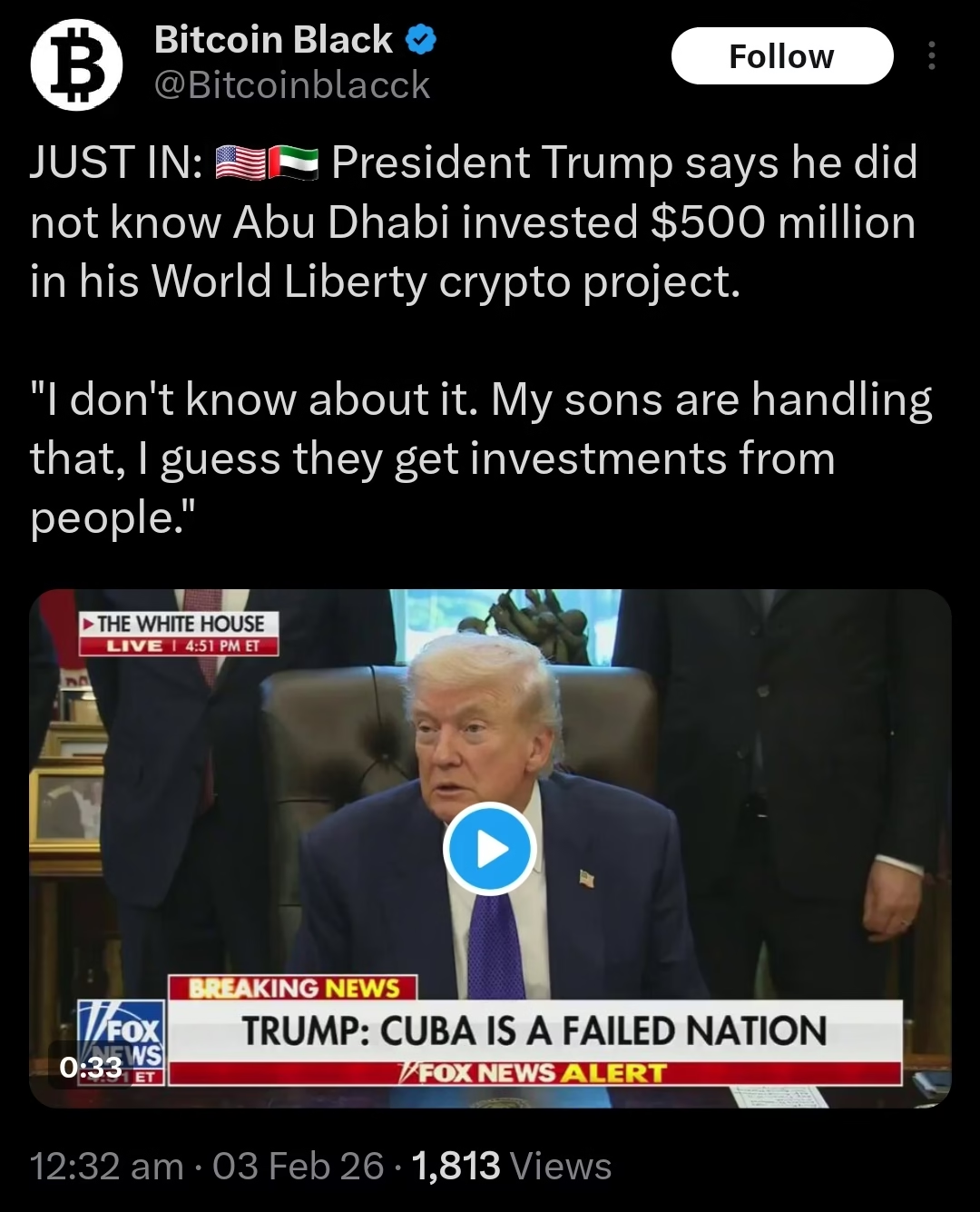
Speaking to reporters, Trump sought to distance himself from the WLFI UAE deal, stating that World Liberty Financial is run by his sons and that he plays no role in its operations or financing.
According to his remarks, the former president said he remains focused on presidential duties while his family manages its business interests independently.
“World Liberty Financial is run by my sons,” Donald Trump, Former U.S. President, according to statements made to reporters on February 2, 2026.
Trump’s comments followed growing attention on the WLFI UAE deal, which critics argue highlights the difficulty of separating public office from private business interests when family-controlled companies are involved.
While Trump rejected any connection to the funding arrangement, the issue has continued to attract scrutiny because of the reported scale of the investment and its timing.
Details of the WLFI UAE deal were first reported by The Wall Street Journal, which identified the investor as Aryam Investment 1, an Abu Dhabi-based entity reportedly backed by Sheikh Tahnoon bin Zayed Al Nahyan, the UAE’s National Security Advisor.
According to the report, Aryam Investment 1 acquired a 49% equity stake in World Liberty Financial through an agreement signed on January 16, 2025 just four days before Trump’s second inauguration.
The Journal reported that the WLFI UAE deal involved a $500 million commitment that allegedly closed shortly before the inauguration.
Financial allocations cited in the report indicated that approximately $187 million was paid to Trump family-controlled entities, while around $31 million was directed to entities associated with World Liberty Financial co-founder Steve Witkoff.
These figures have fueled debate over whether the WLFI UAE deal created indirect financial benefits for Trump-linked entities at a politically sensitive moment, even as Trump maintains he had no knowledge of the transaction.
The timing and scale of the WLFI UAE deal have drawn criticism from U.S. lawmakers, particularly Democrats, who have called for further investigation into potential conflicts of interest.
Senator Elizabeth Warren was among those who sharply criticized the reported transaction, framing it as an example of ethical misconduct tied to foreign influence.
“This looks like corruption,” Sen. Elizabeth Warren, U.S. Senator, referring to the reported investment.
Warren and other critics have also pointed to subsequent U.S. policy decisions involving the United Arab Emirates. They noted that the UAE later received approval to purchase advanced Nvidia artificial intelligence chips, a move described as a reversal of earlier restrictions.
While no direct evidence has been presented linking the WLFI UAE deal to the policy shift, critics argue the overlap in timing raises legitimate questions that warrant scrutiny.
The White House has rejected claims that the WLFI UAE deal created any conflicts of interest. A White House spokesperson dismissed allegations of improper influence and emphasized that Trump does not manage his family’s business ventures.
“There is no conflict of interest,” White House spokesperson, responding to questions about the reported investment.
The spokesperson added that existing ethics frameworks remain in place and that decisions are made in the interests of the American people, not private entities.
Despite these assurances, governance experts say the WLFI UAE deal underscores broader challenges around transparency when political leaders have close family ties to large-scale commercial ventures, particularly in emerging sectors such as cryptocurrency.
As scrutiny continues, questions remain about the structure and oversight of World Liberty Financial, the role of foreign investors, and how future disclosures might clarify the boundaries between public office and private enterprise.
While Trump has firmly denied involvement in the WLFI UAE deal, the controversy is likely to persist as lawmakers and watchdogs seek greater clarity on the transaction and its implications.



Copyright © 2025 - The Bit Gazette.