







- Trending
- Comments
- Latest

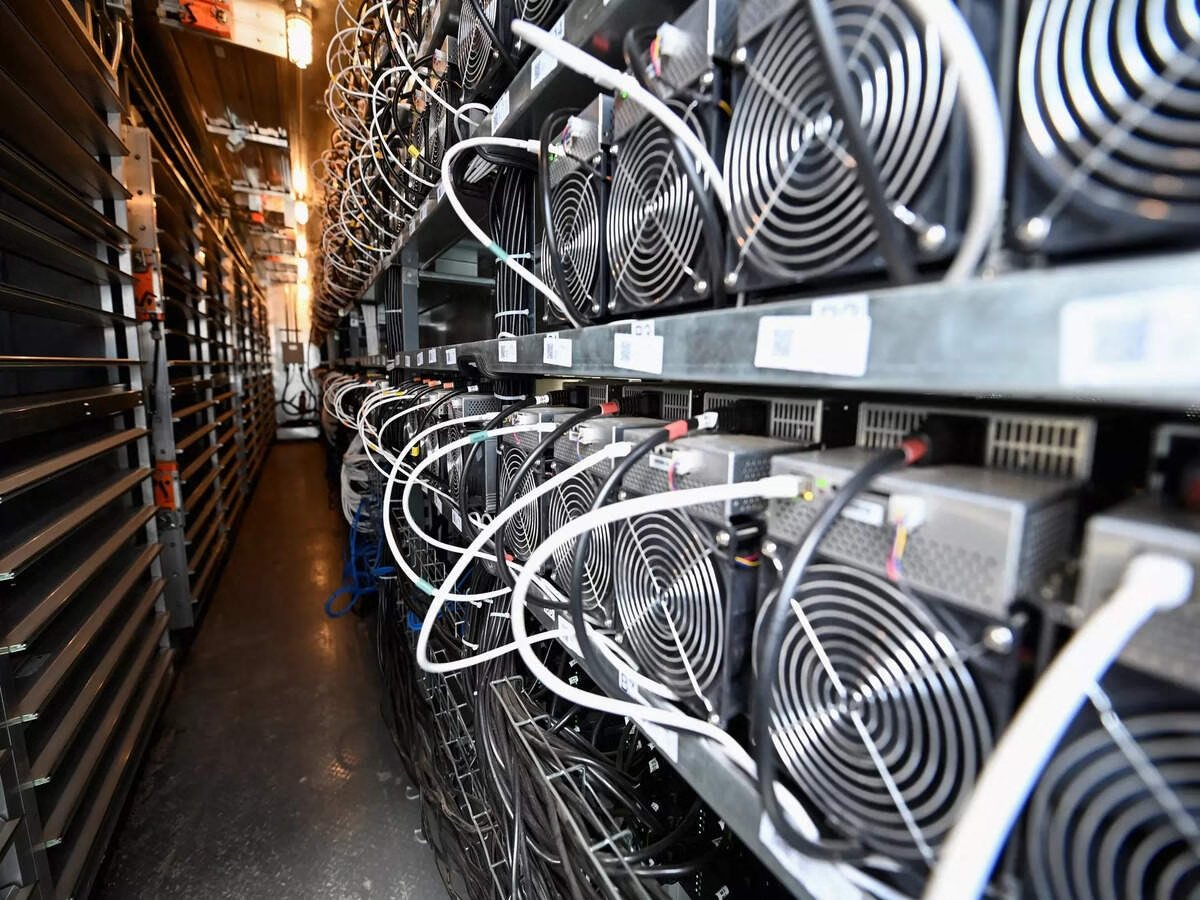
Bitcoin mining operations are operating at a loss for the first time in over a year, with the asset trading near $70,000—roughly 20% below the estimated $87,000 cost to produce a single coin.
The squeeze has triggered a 12% decline in network hash rate since October, the steepest sustained drop since China’s 2021 mining ban, while daily mining revenue has fallen from $45 million to just $28 million, according to CryptoQuant data.
Bitcoin miners profitability deteriorated rapidly as the network hash rate slid to approximately 970 exahashes per second, down 12% from its October peak of nearly 1.1 zettahashes, according to CryptoQuant.
That represents the steepest sustained hash rate decline in over three years. The contraction began in early October when Bitcoin was trading near $126,000, before the largest derivatives liquidation event on record triggered a prolonged sell-off.
CryptoQuant’s Bull Score Index has since collapsed to zero, underscoring the depth of bearish momentum now weighing on Bitcoin miners profitability.
The financial squeeze intensified in late January as daily mining revenue plunged from roughly $45 million to just $28 million, a yearly low.
CryptoQuant data shows output from the largest publicly traded miners dropped sharply—from 77 BTC per day to just 28 BTC—as falling prices collided with operational disruptions.
Severe U.S. winter storms forced several large-scale mining operations to curtail production, further denting Bitcoin miners profitability at a time when margins were already razor-thin.
As hash power went offline, average block times drifted to 11.6 minutes, well above Bitcoin’s 10-minute target. The slowdown reflects a meaningful reduction in active mining capacity.
CryptoQuant’s Miner Profit and Loss Sustainability Index has now fallen to 21, signaling that revenues are no longer sufficient to cover costs for a significant share of the network.
Older machines such as the Antminer S19 XP+ and MicroBT M60S are no longer profitable at current difficulty levels and average electricity prices of $0.08 per kilowatt-hour.
Even newer S21-series rigs are approaching shutdown levels, with breakeven prices estimated between $69,000 and $74,000.
Relief may be imminent. The next Bitcoin difficulty adjustment, expected around February 8, is projected to slash difficulty by roughly 14%, bringing it down to about 121 trillion from 141.67 trillion.
If confirmed, it would mark the largest negative adjustment since mid-2021 and could materially improve Bitcoin miners profitability for operators that remain online.
VanEck argues that sharp hash rate contractions have historically acted as contrarian signals.
“When hash rate compression persists over longer periods, positive forward returns tend to occur more often and with greater magnitude,” wrote Matt Sigel and Patrick Bush, digital asset analysts at VanEck, in a December research note.
The firm’s data shows negative 90-day hash rate growth has preceded positive 180-day Bitcoin returns 77% of the time, with an average gain of 72%.
Not all of the pressure on Bitcoin miners profitability may be cyclical. Several miners, including IREN and Core Scientific, are increasingly reallocating infrastructure toward AI and high-performance computing, which offer steadier cash flows than block rewards in the current environment.
VanEck estimates that up to 10% of Bitcoin’s hash rate could eventually migrate permanently to AI workloads.
At the same time, institutional demand has cooled. U.S. spot Bitcoin ETFs have turned net sellers in early 2026, unloading approximately 10,600 BTC year-to-date, compared with purchases of 46,000 BTC over the same period last year.
Bitcoin miners profitability now sits at a critical crossroads. While falling hash rate and an upcoming difficulty cut may lay the groundwork for recovery, structural shifts and waning institutional demand add fresh uncertainty.
For miners still standing, the coming weeks could determine who survives—and who is forced to unplug.



Copyright © 2025 - The Bit Gazette.

