

- Trending
- Comments
- Latest

A Chinese-language crypto laundering service processed nearly $17.9 billion in transaction volume after being banned from Telegram, demonstrating the resilience of illicit crypto infrastructure despite enforcement pressure, according to a new report by blockchain analytics firm TRM Labs.
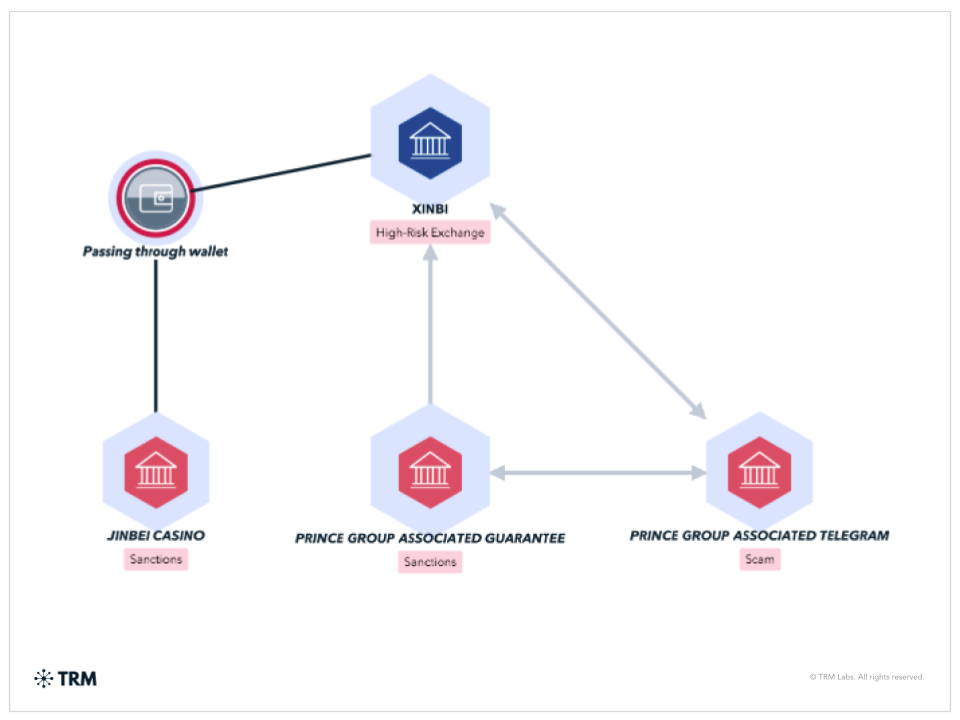
The findings, published this week, detail how the service continued operating in 2025 and early 2026 despite platform bans and U.S. enforcement actions targeting similar operations, highlighting the resilience of illicit crypto infrastructure.
TRM Labs said the activity occurred primarily after Telegram banned clusters of Chinese-language guarantee services in 2025, forcing actors to reorganize. The report focuses on what happened next: who was involved, what volume moved, when the activity rebounded, where it migrated to, and why enforcement pressure failed to fully dismantle the network.

According to TRM Labs, the crypto guarantee marketplace at the center of the report maintained significant transaction volumes by rapidly shifting operations away from Telegram. When bans took effect in 2025, Xinbi promoted alternative messaging platforms and launched an affiliated wallet service, XinbiPay, to support coordination and settlement.
TRM’s analysis shows that wallet activity tied to Xinbi declined briefly following the bans but rebounded by January 2026 as users transitioned to the new setup. The firm attributed this recovery to the service’s ability to fragment across platforms while retaining its core escrow-style functionality.
The report states that Xinbi allegedly played a central role in laundering proceeds from scam operations and cybercrime syndicates, including pig-butchering fraud schemes. However, TRM emphasized that enforcement actions reshaped — but did not eliminate — this layer of crypto-enabled laundering infrastructure.
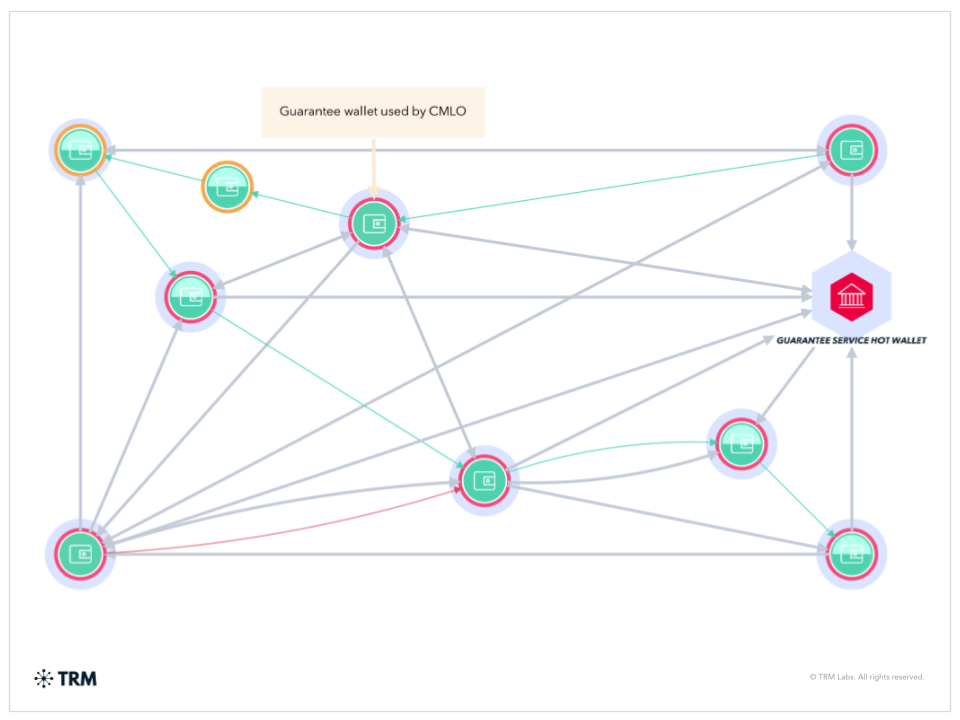
TRM Labs reported that wallets attributed to the crypto guarantee marketplace processed approximately $17.9 billion in gross onchain transaction volume. This figure includes inflows, outflows and internal transfers within Xinbi’s escrow and wallet systems.
Importantly, the analytics firm cautioned that the number does not represent confirmed illicit proceeds or net gains. Instead, it reflects total onchain movement, which may include internal recycling of funds — a common practice among guarantee services that intermediate transactions between buyers and sellers.
In a statement sent to Cointelegraph, Ari Redbord, global head of policy at TRM Labs, said the data illustrates how these services respond under pressure.
“Guarantee services like Xinbi are learning to survive enforcement by fragmenting across platforms and building their own infrastructure,” — Ari Redbord, Global Head of Policy, TRM Labs.
Redbord added that these platforms occupy a critical position in the broader scam ecosystem.
“These services sit at the center of the scam economy,” — Ari Redbord, Global Head of Policy, TRM Labs.
TRM said disrupting such intermediaries can expose entire networks that rely on them for laundering and settlement.

The TRM report noted that Xinbi began laying the groundwork for migration as early as mid-2025, well before Telegram bans intensified. This preparation allowed the crypto guarantee marketplace to accelerate its transition in January 2026, coinciding with additional actions against peer services and arrests linked to laundering networks.
TRM’s findings align with earlier warnings from blockchain analytics firms. In May 2025, Elliptic reported that wallets associated with Xinbi Guarantee had received at least $8.4 billion in stablecoins tied to money laundering and scam-related activity in Southeast Asia. That earlier report linked Xinbi to a Chinese-language marketplace selling laundering services, stolen data and scam-enabling tools.
According to TRM, recent enforcement actions demonstrate that while individual platforms can be disrupted, the underlying services often reconstitute themselves through new infrastructure and communication channels.
The continued operation of Xinbi underscores the challenges regulators face in dismantling a crypto guarantee marketplace embedded in cross-platform ecosystems. TRM Labs concluded that targeting these intermediaries remains critical because of their role in facilitating scams and laundering at scale.



Copyright © 2025 - The Bit Gazette.