
- Trending
- Comments
- Latest

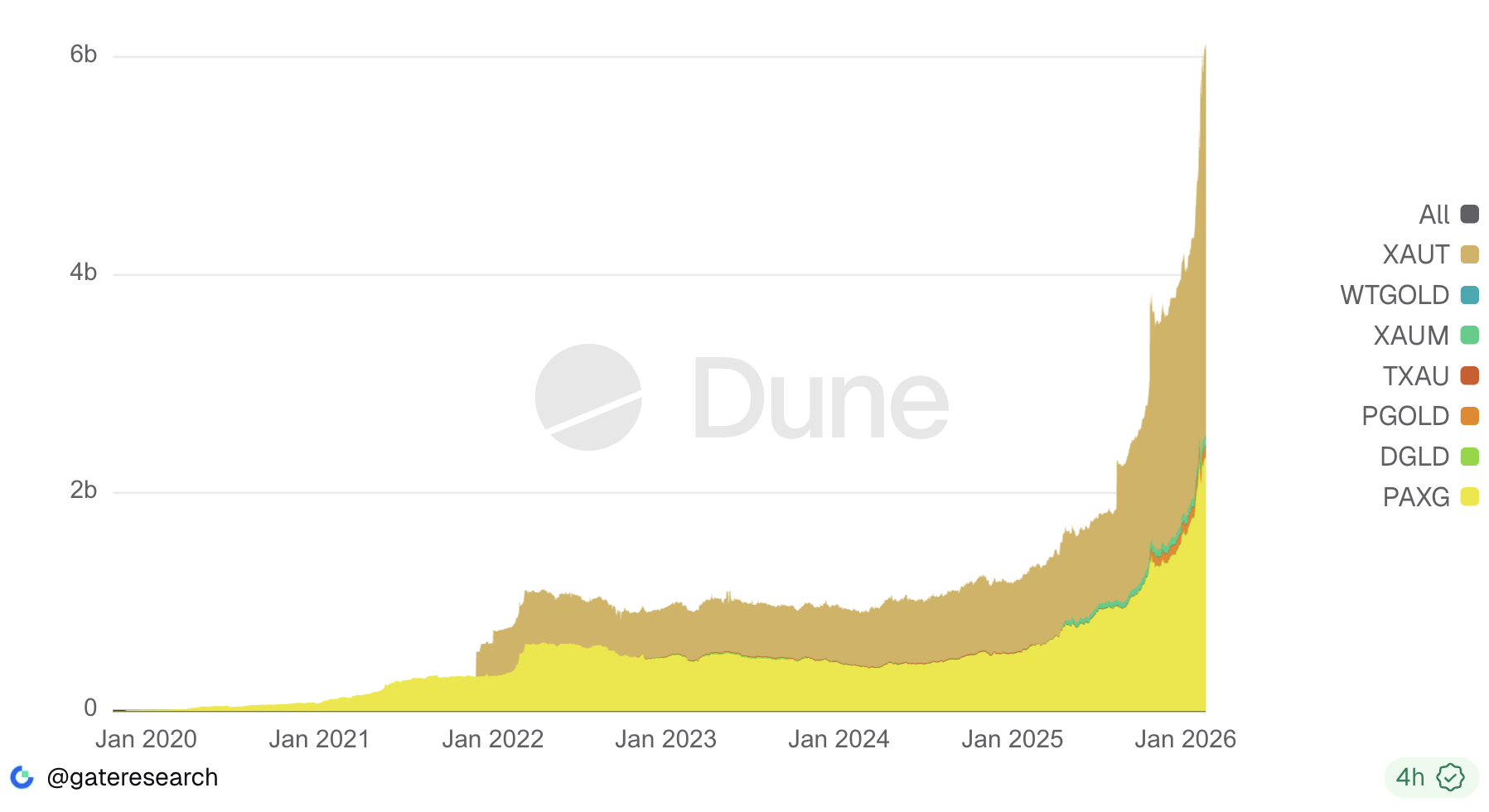
Tokenized gold has crossed $6 billion in market capitalization adding more than $2 billion since January, as demand for blockchain-based bullion accelerates even through one of the sharpest corrections in spot gold prices in recent memory, with physical gold shedding roughly $1,200 per ounce in days before partially recovering.
According to on-chain analytics, the Tokenized gold market now represents one of the fastest-expanding niches within digital assets, blending traditional safe-haven demand with the efficiency, portability, and transparency of blockchain infrastructure.
Data from Dune shows that the Tokenized gold market has grown by more than $2 billion since the start of the year, reaching approximately $6.12 billion at press time. More than 1.2 million ounces of physical gold are currently held in custody to back these digital representations of bullion.
This rapid expansion suggests that investors increasingly view the Tokenized gold market as a viable alternative to traditional gold ETFs, particularly during periods of macroeconomic uncertainty and inflation concerns.
Tether’s gold-backed token, XAUT, remains the clear leader within the Tokenized gold market, accounting for over half of total sector capitalization. XAUT’s market value currently stands near $3.5 billion.
According to Token Terminal, XAUT’s market capitalization has jumped more than 50% in the past month alone—an acceleration that has helped drive the broader Tokenized gold market to new highs.
Paolo Ardoino previously disclosed that Tether plans to raise gold exposure to between 10% and 15% of its overall investment portfolio, signaling a long-term strategic commitment to precious metals.
In the final quarter of 2025, Tether reportedly added 27 metric tons of gold to its exposure—outpacing several sovereign buyers, including Greece, Qatar, and Australia. The move further cemented Tether’s influence within the Tokenized gold market.
Tether has also expanded beyond token issuance. The company recently completed a $150 million strategic investment in Gold.com, acquiring roughly 12% ownership of the precious metals platform.
The partnership is designed to integrate XAUT into Gold.com’s ecosystem, expanding distribution across both digital-native and traditional channels. Tether said the collaboration would help “broaden access to gold across digital and traditional distribution channels,” reinforcing the real-world utility of the Tokenized gold market.
The firms are also exploring the possibility of allowing customers to purchase physical gold using digital currencies, including USD₮ and USA₮, a federally regulated, dollar-backed stablecoin.
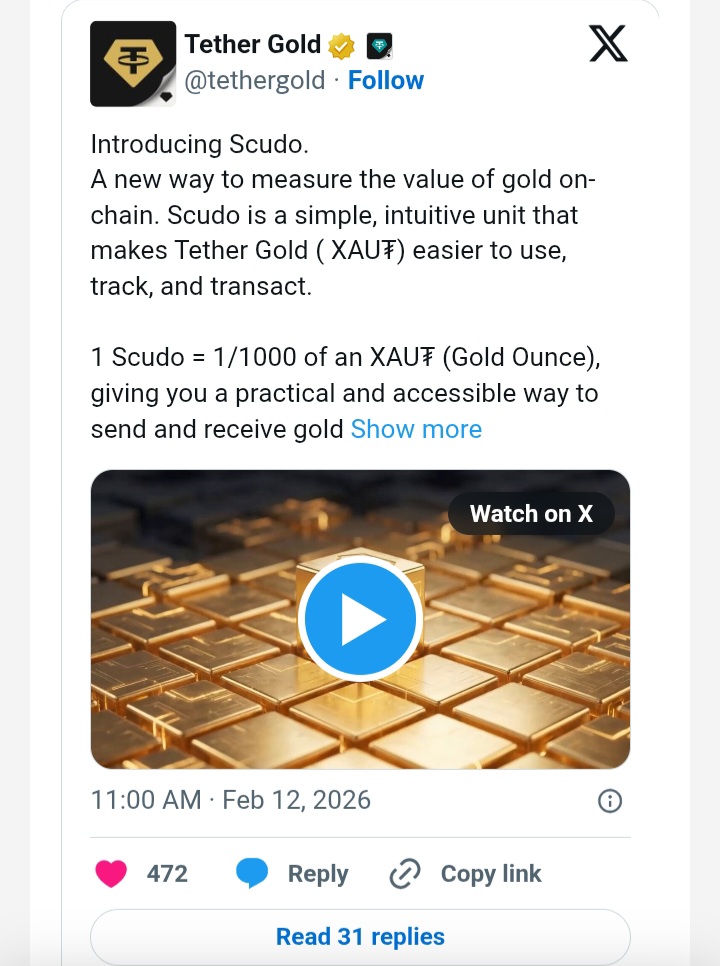
To improve usability, Tether introduced Scudo, a new unit of account equal to one-thousandth of an XAUT. The initiative aims to make participation in the Tokenized gold market more accessible to smaller investors.
“Introducing Scudo — a simple, intuitive unit that makes Tether Gold easier to use, track, and transact,” the company said in a public statement.
Paxos’s PAX Gold (PAXG) ranks second in the Tokenized gold market, with a capitalization of approximately $2.3 billion after rising more than 33% over the past month.
Together, XAUT and PAXG account for the vast majority of liquidity and trading activity in the Tokenized gold market, underscoring investor preference for fully backed, audited products with clear redemption mechanisms.
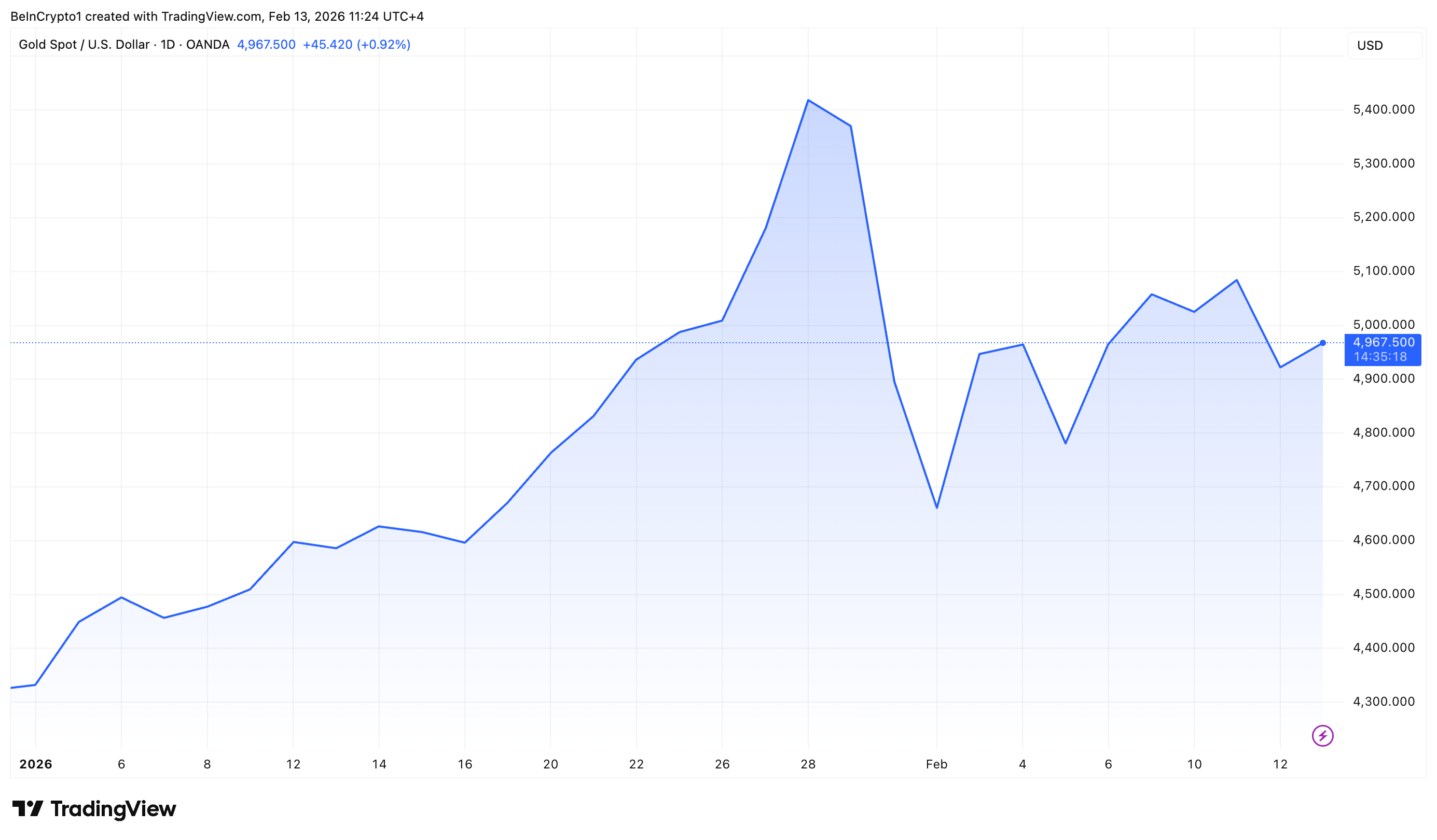
The expansion of the Tokenized gold market comes despite sharp fluctuations in physical gold prices. After reaching a record high of $5,602 per ounce on January 29, spot gold prices pulled back sharply, dipping to $4,402 by February 2.
Prices later rebounded but encountered renewed selling pressure amid broader economic stress. At last check, gold was trading near $4,967 per ounce, up modestly on a 24-hour basis.
Market analysts note that this volatility may actually be driving interest in the Tokenized gold market, as blockchain-based gold offers faster settlement, lower barriers to entry, and easier cross-border transfer compared to traditional bullion ownership.
Industry observers increasingly view the Tokenized gold market as part of a structural evolution in how investors access hard assets. Unlike paper derivatives, tokenized gold provides direct, on-chain claims backed by physical reserves while maintaining compatibility with decentralized finance infrastructure.
As regulatory clarity improves and institutional adoption grows, analysts expect the Tokenized gold market to continue expanding—potentially rivaling legacy gold investment vehicles in scale over the coming years.
For now, one message is clear: even in the face of price turbulence, the Tokenized gold market is proving resilient, liquid, and increasingly central to the future of digital asset investing.



Copyright © 2025 - The Bit Gazette.