







- Trending
- Comments
- Latest

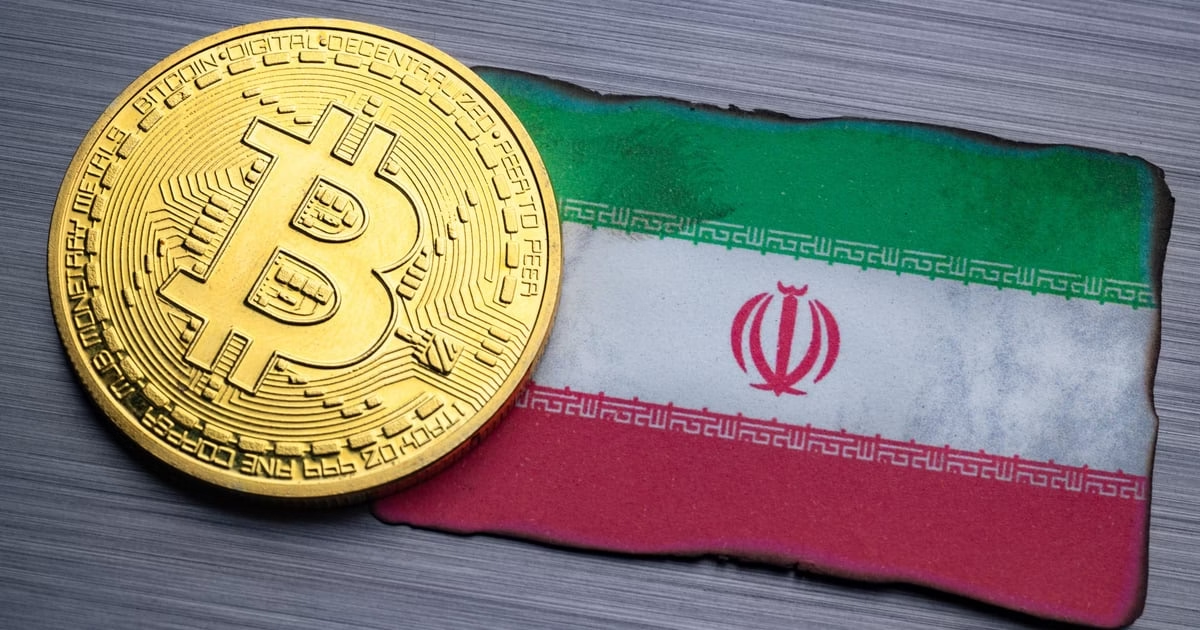
Binance has publicly denied a Fortune report alleging it processed more than $1 billion in transactions linked to Iranian entities, and that it fired at least five compliance investigators, some with law enforcement backgrounds, after they documented the activity.
The controversy centers on a report published Friday by Fortune, which cited unnamed sources alleging that Iran-linked transfers flowed through Binance between March 2024 and August 2025.
Binance has denied the Binance Iran sanctions allegation, stating that an internal review conducted with outside counsel found no sanctions violations.
According to the report, the transactions involved Tether’s USDt stablecoin on the TRON blockchain. Fortune also alleged that at least five compliance investigators, some with law enforcement backgrounds, were dismissed after documenting the activity. Binance strongly disputes those claims.
In a written response shared publicly by CEO Richard Teng, Binance categorically denied the Binance Iran sanctions allegation and rejected assertions that employees were terminated for flagging compliance risks.
“This is categorically false. No investigator was dismissed for raising compliance concerns or for reporting potential sanctions issues as there are no violations,” — Binance statement shared by Richard Teng, CEO.
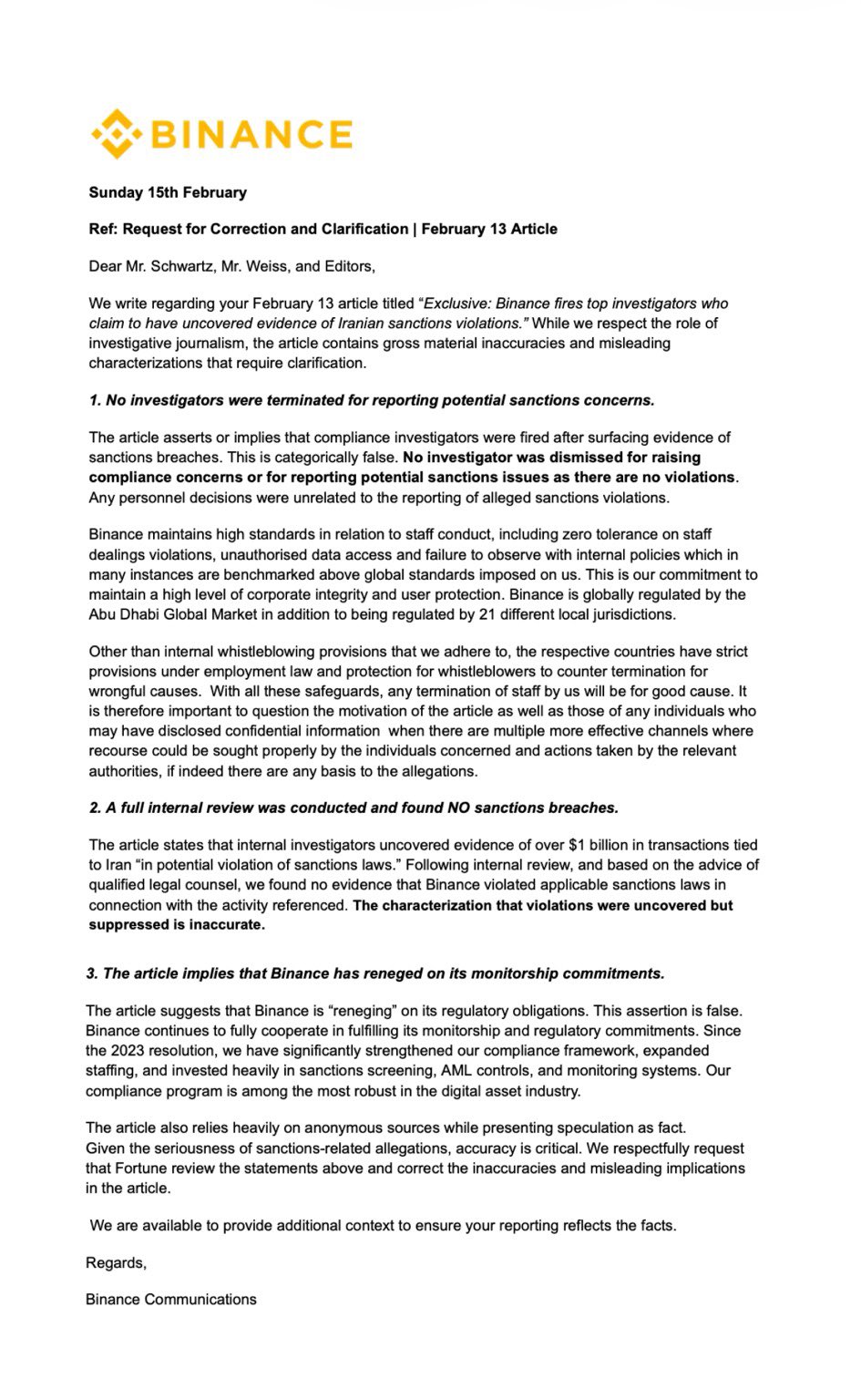
The exchange further stated that it conducted a comprehensive internal review with the assistance of external legal advisors and found no breach of applicable sanctions laws related to the transactions referenced in the report.
Addressing suggestions that it failed to meet oversight obligations, Binance added:
“The article suggests that Binance is ‘reneging’ on its regulatory obligations. This assertion is false,” — Binance statement.
The company maintains that it continues to operate under regulatory monitoring and oversight frameworks established after its 2023 settlement with U.S. authorities.
The renewed Binance Iran sanctions allegation comes against the backdrop of heightened regulatory scrutiny following Binance’s 2023 agreement with the U.S. Department of Justice and other agencies.
The exchange agreed to pay $4.3 billion to resolve investigations related to Anti-Money Laundering (AML) and sanctions compliance failures.
As part of that settlement, Binance founder Changpeng Zhao stepped down as CEO and later served a four-month prison sentence.
The company also agreed to enhanced compliance monitoring and pledged to strengthen its internal controls.
Given that context, the Binance Iran sanctions allegation raises questions about whether compliance reforms implemented after the settlement have been sufficient.
Binance insists that it remains fully compliant and cooperative under the terms of its monitoring agreements.
The current Binance Iran sanctions allegation follows earlier scrutiny from the Financial Times, which reported in December that certain suspicious accounts allegedly moved significant sums through Binance even after the 2023 plea agreement.
The Financial Times cited internal data suggesting that 13 user accounts conducted approximately $1.7 billion in transactions since 2021, including around $144 million after the settlement.
In response to that report at the time, a Binance spokesperson stated:
“We take compliance seriously and reject the framing of the Financial Times report,” adding that all transactions are assessed “based on information available at the time,” and that none of the referenced wallets were sanctioned when the activity occurred.
That earlier episode adds complexity to the current Binance Iran sanctions allegation, as regulators and market participants closely monitor whether post-settlement reforms are effectively preventing sanctions-related risks.
For crypto investors, the Binance Iran sanctions allegation carries broader implications beyond reputational concerns.
Binance remains a dominant global exchange by trading volume, and regulatory developments affecting its operations can influence liquidity, token listings and market stability.
Sanctions compliance remains a central pillar of global financial regulation, particularly in relation to jurisdictions subject to U.S. restrictions.
Any confirmed breach could expose firms to significant penalties, restricted market access or additional monitoring requirements.
Binance, however, maintains that the Binance Iran sanctions allegation lacks factual basis and that its internal review found no evidence of wrongdoing.
As scrutiny continues, investors and policymakers alike will be watching closely for further disclosures or official statements from regulators.
For now, the Binance Iran sanctions allegation underscores the ongoing tension between rapid crypto market growth and evolving regulatory expectations, particularly for exchanges operating at global scale under complex compliance regimes.



Copyright © 2025 - The Bit Gazette.

