







- Trending
- Comments
- Latest

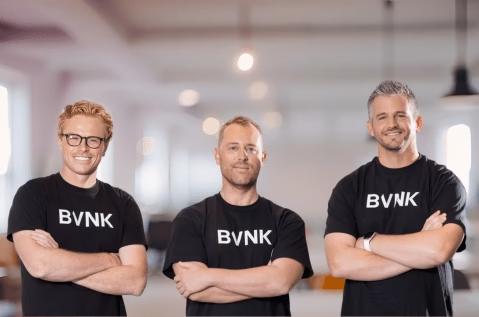
BVNK founders (from left) Chris Harmse, Jesse Hemson-Struthers, and Donald Jackson. Courtesy of BVNK
Seventy-seven percent of crypto users surveyed across 15 countries say they would open a stablecoin wallet if their bank offered one, yet traditional financial institutions remain largely absent from the sector, according to a report published Tuesday by payments infrastructure firm BVNK, which surveyed more than 4,600 crypto-active users in partnership with YouGov.
Published Tuesday and based on a survey of more than 4,600 crypto-active respondents across 15 countries, the BVNK Stablecoin Utility Report highlights how stablecoins are increasingly used for cross-border income, savings and payments rather than speculation. The findings suggest that while exchanges dominate service provision, trust in traditional banks remains high.
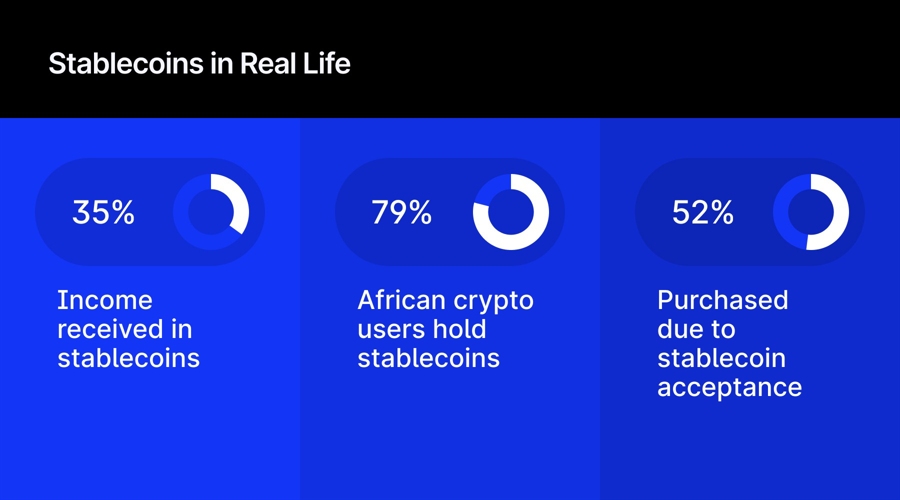
According to the BVNK Stablecoin Utility Report, freelancers and gig workers now receive 35% of their income in stablecoins. Among those respondents, 73% said stablecoins improved their ability to work with international clients, pointing to faster settlement and reduced currency friction as key advantages.
Regional trends were particularly pronounced. In Africa, 79% of surveyed crypto users reported holding stablecoins. Of that group, 92% cited their country’s economic conditions as a motivating factor, suggesting that macroeconomic pressures are accelerating adoption.
The BVNK Stablecoin Utility Report also found that merchant acceptance influences consumer behavior. More than half — 52% — of stablecoin holders surveyed said they made a purchase from a business specifically because it accepted stablecoin payments. This indicates that utility, rather than speculation, is increasingly shaping usage patterns.
The findings align with a broader shift in digital asset markets, where stablecoins have become a key bridge between local currencies and global commerce. By documenting these trends, the BVNK Stablecoin Utility Report positions stablecoins as practical financial infrastructure for a growing user base.
While centralized exchanges currently dominate stablecoin custody and transaction services, the BVNK Stablecoin Utility Report suggests that this leadership may reflect product availability rather than brand trust.
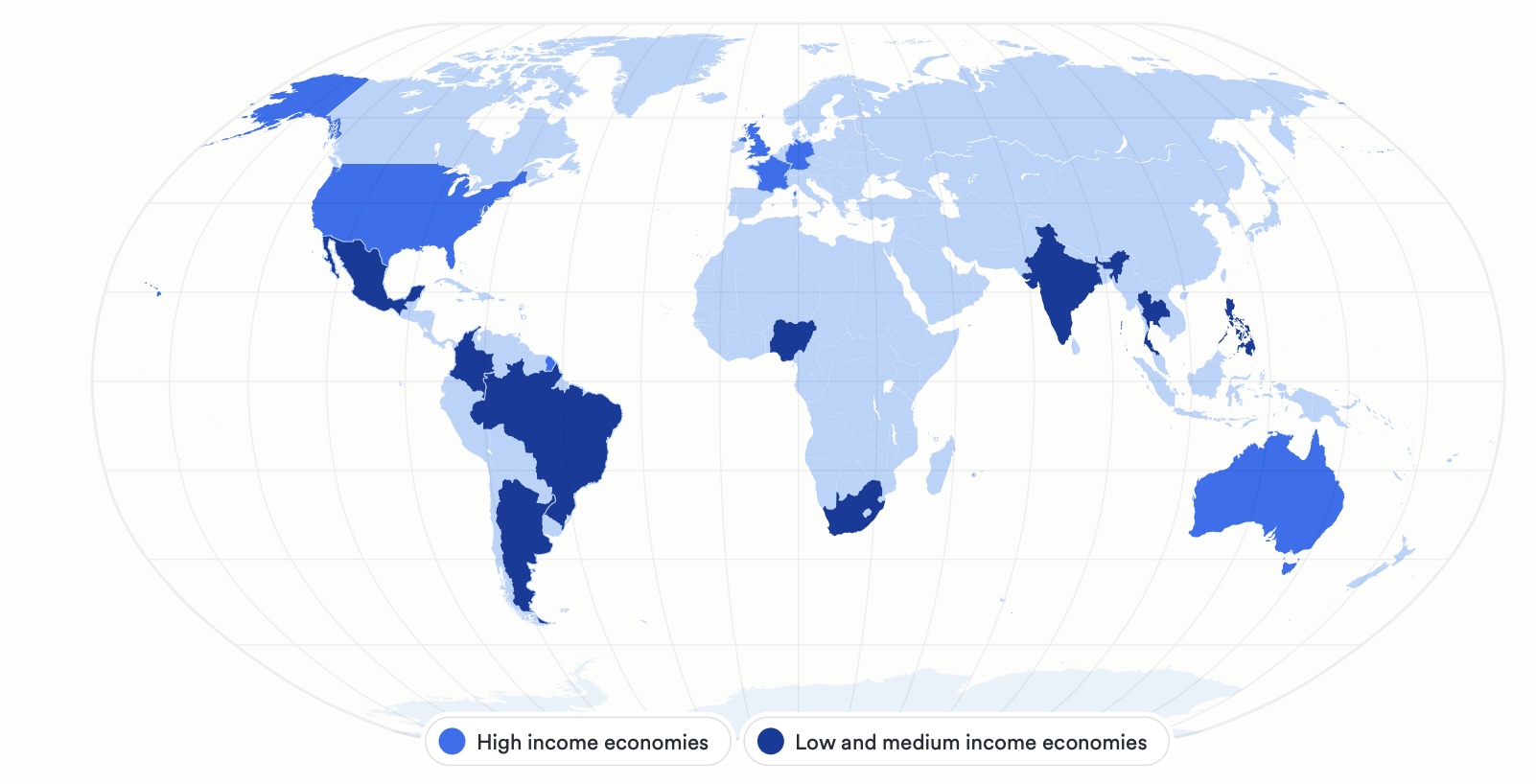
Seventy-seven percent of respondents said they would likely open a stablecoin wallet if offered by their primary bank or fintech provider. In low- and middle-income economies, that figure rises to 83%, according to the BVNK Stablecoin Utility Report.
The data indicates that regulated institutions have yet to capture significant stablecoin activity, even though consumer confidence in traditional brands remains strong. The gap between trust and product offering could represent a strategic opportunity for banks, brokers and payment firms that have so far remained cautious about stablecoins.
The report notes that traditional financial institutions have often viewed stablecoins as a high-risk niche. However, the behavioral data suggests users are integrating them into everyday financial workflows, including remittances, cross-border freelance payments and digital commerce.
Despite growing adoption, the BVNK Stablecoin Utility Report identifies persistent friction points. Thirty percent of respondents cited irreversible payments as a primary concern, while 22% pointed to process complexity. These findings suggest that even experienced crypto users want stablecoins to function more like familiar payment systems.
Respondents expressed demand for broader merchant acceptance, clearer consumer protections such as refund mechanisms, and a simplified user experience. The BVNK Stablecoin Utility Report indicates that mainstream financial behaviors rather than crypto-native complexity are driving expectations.
For banks and fintechs, the implications are significant. The BVNK Stablecoin Utility Report concludes that demand exists for integrated, regulated services that combine the efficiency of blockchain-based settlement with the safeguards and user experience standards of traditional finance.
The survey does not claim to represent the global population, but it provides a detailed snapshot of behavior among crypto-active users across diverse regions. As stablecoins continue to gain traction in cross-border commerce and savings, the report suggests that the next phase of growth may depend less on exchanges and more on whether established financial institutions decide to participate.
Whether banks move into the space and how they design their offerings could shape how stablecoin usage evolves in the coming years. The BVNK Stablecoin Utility Report makes clear that, at least among crypto-engaged consumers, appetite for bank-issued or bank-integrated stablecoin products is already firmly established.



Copyright © 2025 - The Bit Gazette.

