

- Trending
- Comments
- Latest

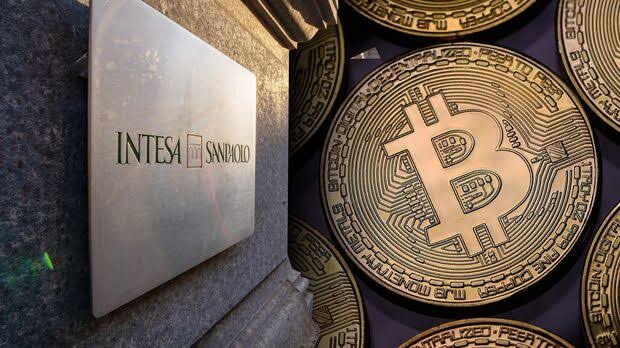
Italy’s Intesa Sanpaolo disclosed approximately $96 million in spot bitcoin ETFs through a U.S. SEC Form 13F filing, making it one of the most significant crypto allocations disclosed by a European bank to date. The positions, held as of December 31, 2025, are split between the ARK 21Shares Bitcoin ETF and BlackRock’s iShares Bitcoin Trust.
The revelation came through a U.S. Securities and Exchange Commission (SEC) Form 13F filing published in February 2026, detailing the bank’s holdings as of December 31, 2025.
According to regulatory filings reviewed by multiple crypto news outlets, Intesa Sanpaolo accumulated approximately $96 million in spot Bitcoin ETFs.
The majority of the exposure is concentrated in two U.S.-listed funds:
Together, these positions give the bank direct price exposure to Bitcoin without holding the underlying cryptocurrency, a structure many institutions prefer due to regulatory clarity and custody risk reduction.
Market analysts view the move as another milestone in the normalization of crypto assets within traditional banking portfolios.
“The disclosure marks one of the more notable entries into regulated crypto investment products by a major European bank.”
Analysts noted in coverage of the filing, highlighting how spot ETFs are becoming the preferred gateway between traditional finance and crypto markets.
The development reinforces a broader narrative: institutional adoption is increasingly happening through compliant financial instruments rather than direct token purchases.
Beyond its ETF purchases, Intesa Sanpaolo also revealed a sizable derivatives position tied to Strategy (formerly MicroStrategy), widely known as the largest corporate holder of Bitcoin.
The bank disclosed roughly $184 million in put options linked to Strategy shares, a move widely interpreted as a hedge against market volatility or potential overvaluation relative to Bitcoin holdings.
Market observers say the dual approach, long Bitcoin exposure through ETFs while hedging via equity options, reflects institutional risk management rather than outright speculation.
An analyst explained in coverage of the strategy, saying; the logic is straightforward, maintain exposure to Bitcoin’s upside while protecting against equity market dislocations.
The filing also revealed smaller allocations beyond Bitcoin. Intesa Sanpaolo reported a $4.3 million position in the Bitwise Solana Staking ETF, suggesting selective diversification into alternative blockchain ecosystems.
Industry watchers interpret this as an early signal that banks may gradually expand exposure beyond Bitcoin as regulated altcoin investment products mature.
European financial institutions have historically moved slowly toward crypto adoption, largely due to regulatory uncertainty.
However, ETF structures approved in the United States appear to be accelerating participation by offering familiar compliance frameworks.
This shift matters because institutional allocations often influence liquidity cycles, ETF inflows, and long-term price stability.
The timing of Intesa Sanpaolo’s investment is particularly notable. The disclosure arrived during a period of uneven ETF flows and heightened volatility in digital asset markets.
Rather than retreating, the bank expanded exposure, a move many analysts interpret as a long-term positioning strategy rather than a short-term trade.
Institutional adoption has historically been one of Bitcoin’s strongest bullish catalysts.
The entry of traditional banks signals growing confidence that regulated crypto products can coexist with conventional portfolio management frameworks.
The key takeaway is not just the dollar amount but who is buying: a systemically important European lender managing millions of clients and operating within strict regulatory oversight.
As regulated crypto investment vehicles mature, moves like this may increasingly blur the line between traditional finance and digital assets.



Copyright © 2025 - The Bit Gazette.