

- Trending
- Comments
- Latest

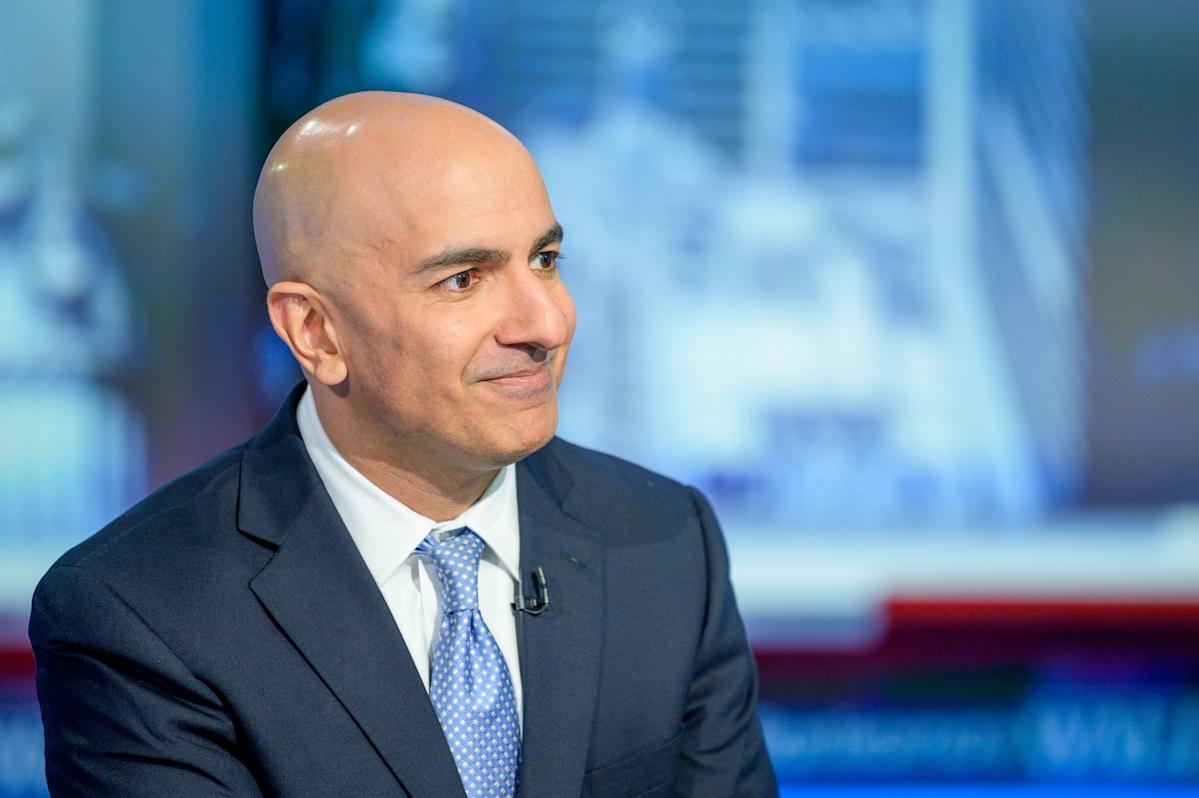
Neel Kashkari called cryptocurrency “utterly useless” Thursday, dismissing more than a decade of industry development as “word salad”, remarks that landed hours after CME Group announced plans to expand crypto derivatives trading around the clock.
Speaking at the regional economic conference, Kashkari questioned the real-world utility of digital assets and stablecoins, arguing that despite more than a decade of development, cryptocurrencies have failed to meaningfully integrate into the broader economy.
His comments underscore growing policy tensions as institutional adoption of crypto derivatives continues to expand.
Kashkari, who leads the Federal Reserve Bank of Minneapolis, contrasted crypto’s trajectory with rapid advances in artificial intelligence, suggesting the latter has demonstrated clearer economic value.
During a fireside chat, Neel Kashkari crypto skepticism was evident as he dismissed digital assets as lacking tangible functionality.
“Utterly useless,” — Neel Kashkari, President, Federal Reserve Bank of Minneapolis.
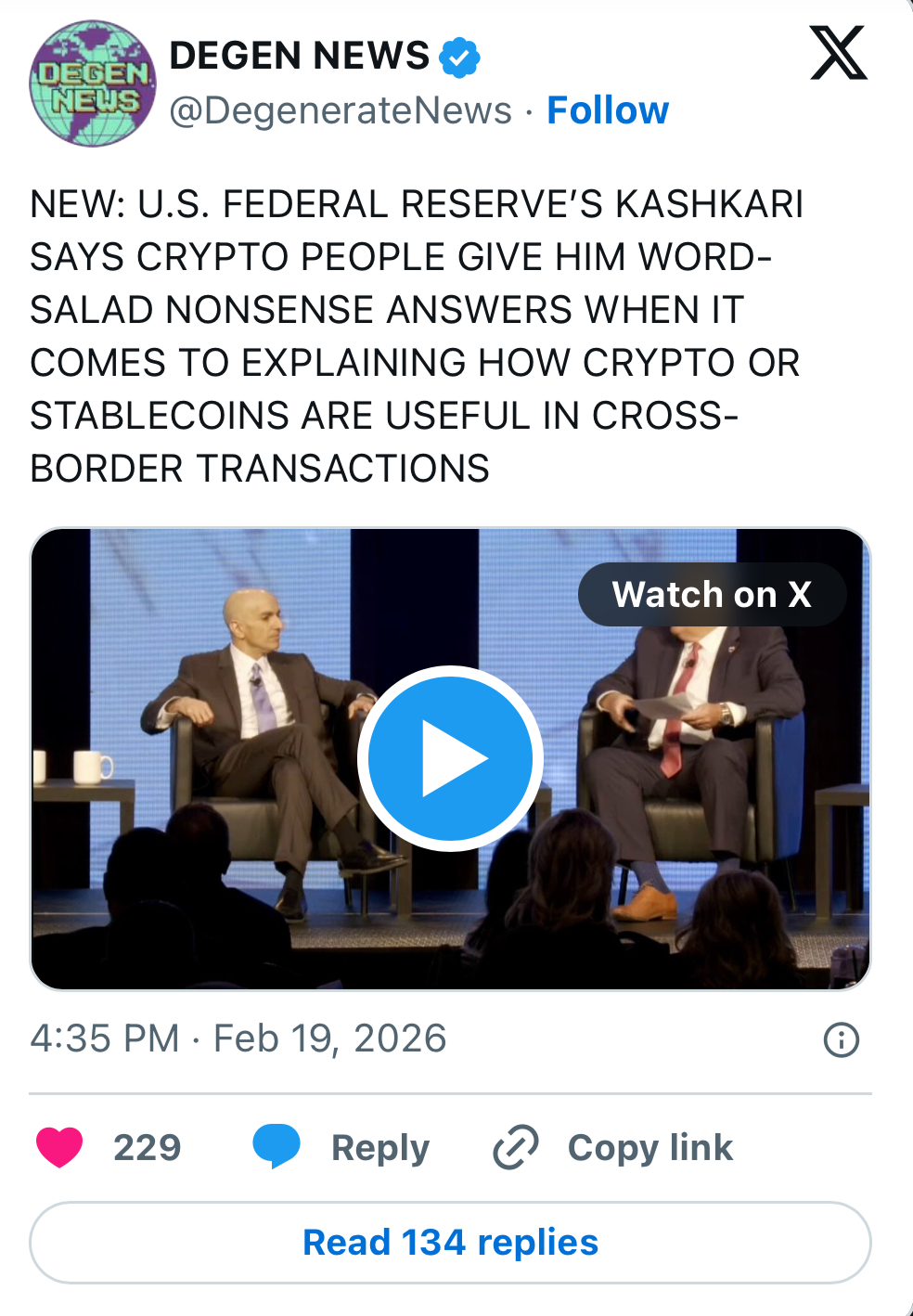
Kashkari argued that much of the industry’s marketing relies on abstract language rather than practical solutions.
He characterized the sector’s messaging as “word salad,” signaling frustration with what he described as unclear value propositions.
Neel Kashkari crypto skepticism centered on the claim that cryptocurrencies provide faster and cheaper cross-border payments.
While acknowledging the appeal of frictionless transfers, he questioned how such systems function at the consumer level.
“How does [a recipient] buy groceries with it?” — Neel Kashkari, President, Federal Reserve Bank of Minneapolis.
According to Kashkari, recipients must still convert digital assets into local fiat currency before spending, incurring fees and processing delays.
He argued that broader adoption would require countries to relinquish control over their monetary systems as a scenario he described as unrealistic.
“What advocates are really saying is that if everyone in the world used the same platform, friction would disappear, but nations are not going to abandon their own monetary policies,” — Neel Kashkari, President, Federal Reserve Bank of Minneapolis.
Neel Kashkari crypto skepticism extended to stablecoins, which are often marketed as practical digital payment tools.
He suggested that many of the services attributed to stablecoins are already handled efficiently through domestic payment platforms.
In the United States, systems such as Venmo and Zelle enable near-instant transfers between users within the banking system.
Kashkari argued that these established rails undermine the necessity of blockchain-based alternatives for everyday transactions.
“Ask the most basic questions and don’t settle for nonsense,” — Neel Kashkari, President, Federal Reserve Bank of Minneapolis. “Whenever I make people really explain how this thing actually works, there’s just nothing there.”
Neel Kashkari crypto skepticism reflects a broader cautious stance among some Federal Reserve officials who question whether digital assets provide incremental improvements over existing financial infrastructure.
The timing of Neel Kashkari crypto skepticism remarks is notable. His comments came hours after CME Group announced plans to expand cryptocurrency derivatives trading to 24 hours a day, seven days a week, pending regulatory approval.
That expansion highlights continued institutional demand for regulated crypto exposure, even as some policymakers express doubt about underlying utility.
The divergence underscores a widening gap in 2026 between regulatory skepticism and commercial integration.
While central bankers debate macroeconomic implications and consumer protection concerns, exchanges and asset managers continue building products tied to Bitcoin and other digital assets.
Neel Kashkari crypto skepticism therefore illustrates a policy debate that remains unresolved: whether crypto represents foundational financial innovation or speculative infrastructure with limited economic contribution.
For policy makers, Neel Kashkari crypto skepticism reinforces calls for rigorous scrutiny of digital-asset claims.
His remarks suggest that regulators may continue demanding clearer demonstrations of economic benefit before endorsing broader integration into the financial system.
For crypto investors, the comments highlight ongoing reputational and regulatory headwinds, even as institutional trading volumes rise.
Divergent views between central bankers and market participants could influence future regulatory frameworks, disclosure standards and risk oversight.
Neel Kashkari crypto skepticism ultimately reflects a central question confronting the industry in 2026: can digital assets prove durable real-world utility beyond trading and speculation?
As policymakers weigh systemic risk, consumer protection and monetary sovereignty, the debate between skepticism and adoption appears set to intensify.



Copyright © 2025 - The Bit Gazette.