






- Trending
- Comments
- Latest


The surge of Tron based scam tokens has prompted a warning from the Federal Bureau of Investigation (FBI), after fraudsters began distributing fake tokens on the Tron blockchain to impersonate the agency and deceive users.
The alert, issued by the FBI’s New York Field Office on Thursday, details how Tron based scam tokens are being used to target crypto holders by falsely claiming their wallets are under investigation and pressuring them into revealing sensitive information.
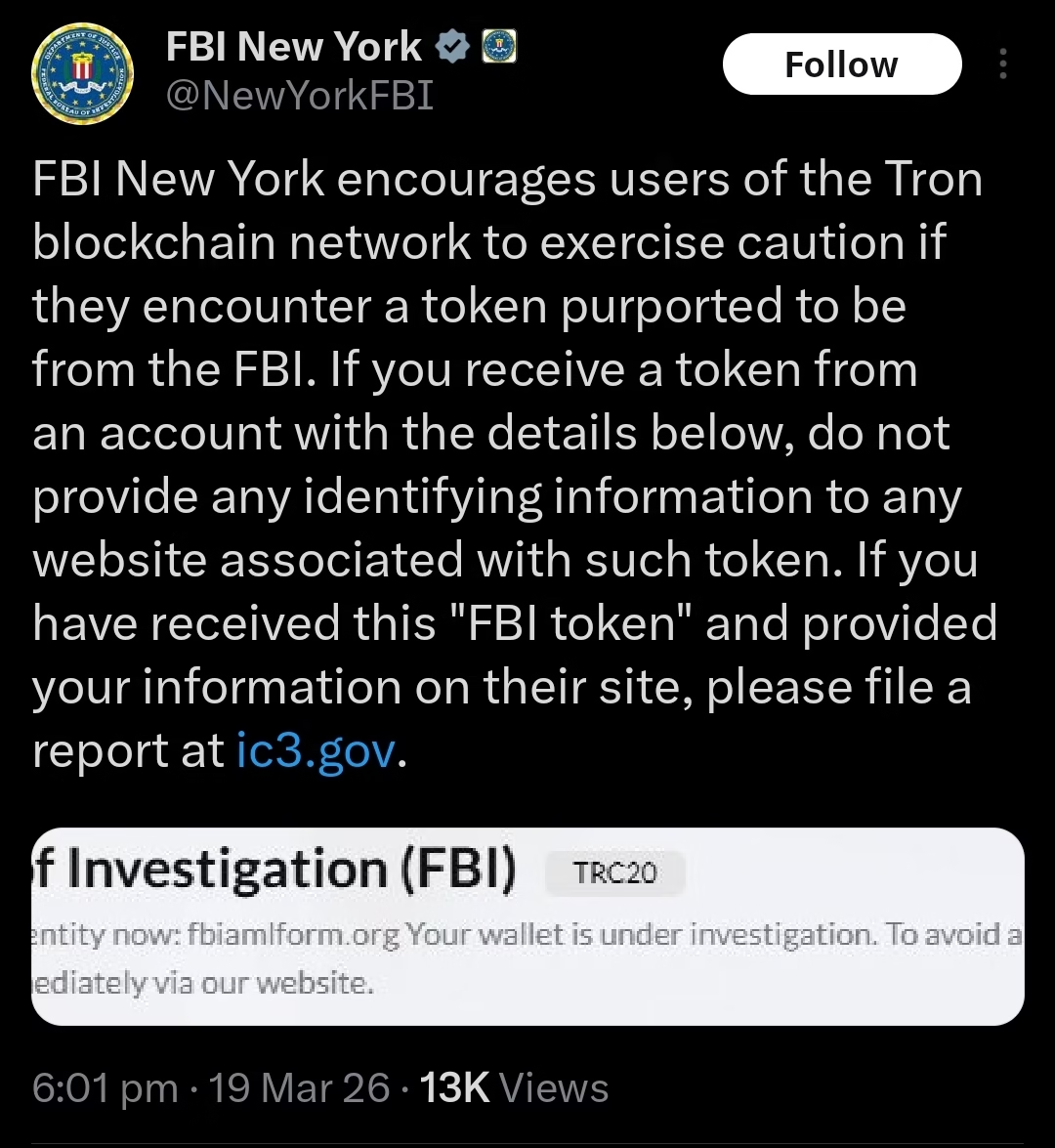
According to the FBI, these Tron based scam tokens are part of a phishing campaign designed to exploit users’ fear of regulatory action. The tokens have already reached at least 728 wallets, some of which reportedly hold over $1 million in USDT, indicating that high-value accounts may be among the targets.
The FBI warning outlines a scheme in which Tron based scam tokens are sent directly to users’ wallets. Once received, the token includes a message claiming that the recipient’s wallet is under investigation by authorities.
Victims are then directed to a fraudulent website, where they are instructed to complete an anti-money laundering (AML) verification process. The message warns that failure to comply could result in a “total block” on their assets.
“FBI New York encourages users of the Tron blockchain network to exercise caution if they encounter a token purported to be from the FBI,” — FBI New York Field Office.
The agency further advised users not to provide “any identifying information to any website associated with such [a] token.” These instructions underscore the growing sophistication of Tron based scam tokens, which rely on impersonation and urgency to manipulate victims.
The mechanics behind Tron based scam tokens reflect a broader trend in phishing attacks. By creating a sense of urgency—such as threats of asset freezes or regulatory penalties—scammers increase the likelihood that users will act quickly without verifying authenticity.
On the malicious websites linked to these tokens, victims are told that “current sanctions” can be avoided if they immediately complete the requested verification. This tactic mirrors common phishing strategies where attackers use time pressure to override caution.
Security analysts note that Tron based scam tokens are particularly effective because they leverage blockchain transparency. Since tokens can be sent directly to wallets without prior interaction, attackers can reach a wide range of users, including those holding significant funds.
Data from Tronscan shows that the fraudulent token has already been distributed to hundreds of wallets. The presence of high-value holdings among these wallets suggests that attackers may be selectively targeting users with substantial balances.
Authorities have urged anyone affected by Tron based scam tokens to report incidents promptly. Users who may have shared personal information are advised to file complaints through the FBI’s Internet Crime Complaint Center to assist ongoing investigations.
The FBI emphasized that it has no involvement with the fraudulent token, distancing itself from the scheme and reinforcing that legitimate agencies do not request sensitive information through unsolicited blockchain messages.
In a related development, the FBI has previously used blockchain tools in enforcement efforts. The agency created a token known as NexFundAI during “Operation Token Mirrors,” a sting operation aimed at exposing a market manipulation network engaged in wash trading. While that initiative targeted illicit activity, the current case highlights how similar technologies can be misused by bad actors.
The emergence of Tron based scam tokens reflects a broader increase in phishing attacks across the cryptocurrency sector. These schemes have become one of the most common attack vectors, often resulting in significant financial losses.
By combining impersonation, technical delivery methods, and psychological pressure, attackers continue to refine their tactics. Tron based scam tokens demonstrate how fraudsters are adapting to user behavior and exploiting concerns about compliance and regulation.
As the crypto ecosystem expands, the FBI’s warning serves as a reminder that vigilance remains critical. Users are encouraged to verify any communication, avoid sharing sensitive information, and treat unsolicited tokens with caution.



Copyright © 2025 - The Bit Gazette.

