







- Trending
- Comments
- Latest

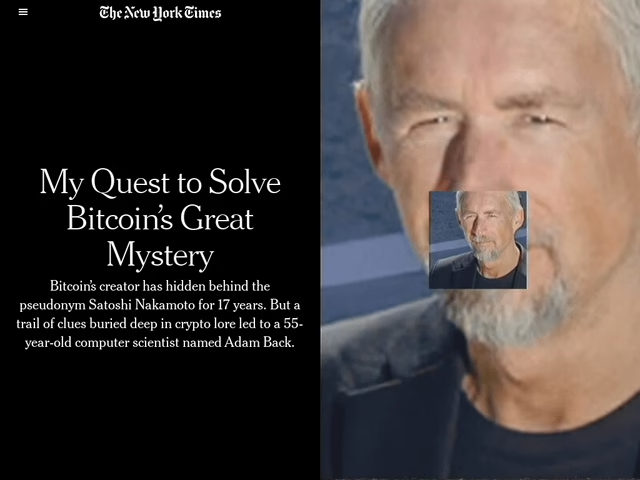
We’ve been here before!
In 2014, Newsweek splashed a retired engineer named Dorian Nakamoto across its cover as Bitcoin’s mysterious creator. Wrong.
In 2024, an HBO documentary pointed dramatically at a 23-year-old Canadian developer named Peter Todd. Also wrong and Todd had photo evidence to prove it. Now the New York Times has entered the chat, and this time the name on the dartboard is British cryptographer Adam Back.
To be fair, this one is harder to laugh off than the others.
Pulitzer Prize-winning journalist John Carreyrou, the man who brought down Elizabeth Holmes and Theranos spent over a year digging through decades of cryptography mailing list archives.
Working alongside AI specialist Dylan Freedman, he analyzed writing patterns from roughly 34,000 contributors and compared them against everything Satoshi Nakamoto ever publicly wrote. The result was a 12,000-word investigation that lands squarely on Back as the most likely person behind the pseudonym that changed finance forever.
The linguistic case is genuinely interesting. Satoshi and Back both use two spaces between sentences. Both misuse hyphens in identical ways adding them where they don’t belong, dropping them where they do. Both alternate between British and American spellings. Both end sentences with the word “also.”
When the analysis narrowed from 34,000 suspects down to eight, Back was reportedly the only one who matched every single quirk on the list. The investigation also notes that Back went largely silent on the Cryptography mailing list during the exact window Satoshi was most active then resurfaced on Bitcoin forums six weeks after Satoshi’s final message in April 2011.
And Back isn’t some random name. He invented Hashcash in 1997, the proof-of-work system that Bitcoin’s entire mining architecture is built on. Satoshi literally emailed him before publishing the white paper to confirm a citation. The intellectual DNA between Back’s early work and Bitcoin’s design is undeniable.
But here’s where the story starts to wobble.
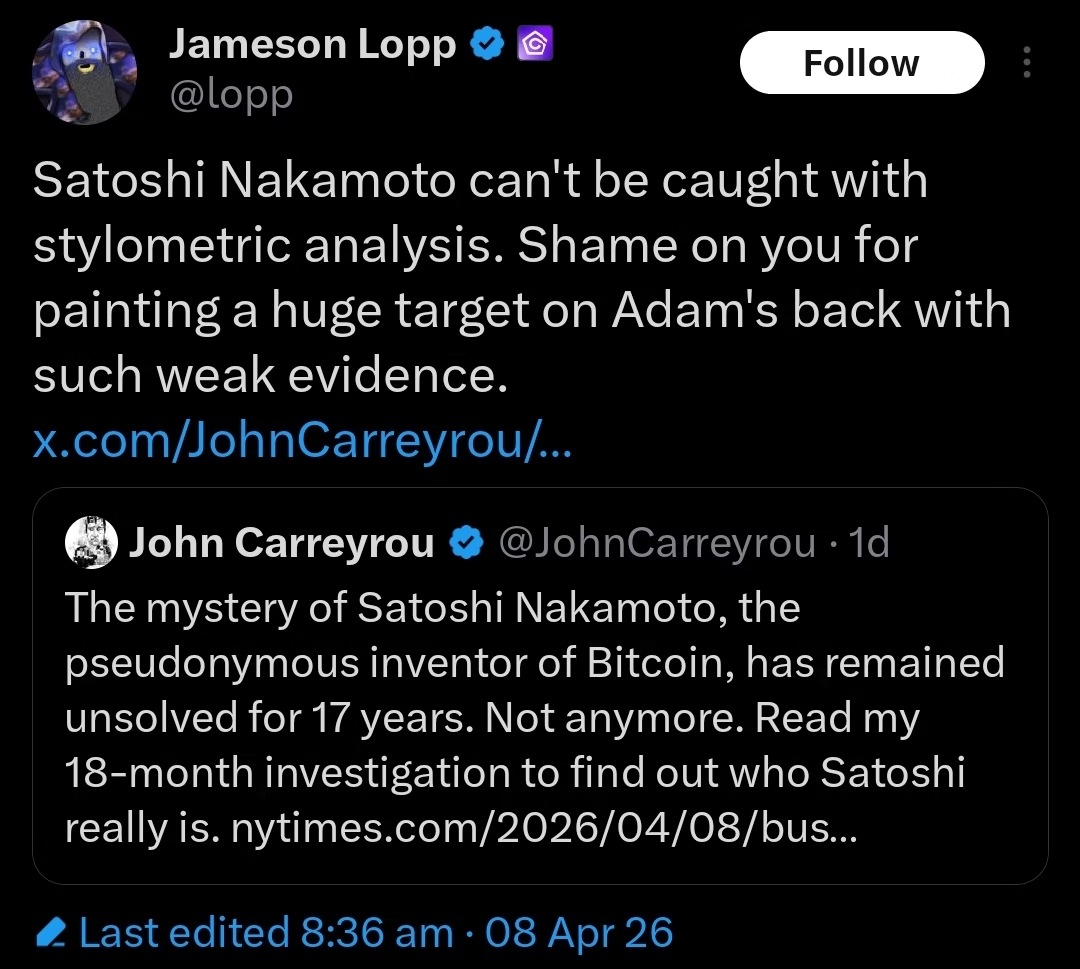
Jameson Lopp, co-founder and CSO of Casa and one of Bitcoin’s most respected contributors, didn’t mince words: “Satoshi Nakamoto can’t be caught with stylometric analysis. Shame on you for painting a huge target on Adam’s back with such weak evidence.”
Alex Thorn, head of research at Galaxy Digital, was even blunter: “Another journo oneshotted by the Satoshi mystery, the New York Times continues to publish garbage, never ceases to amaze.”
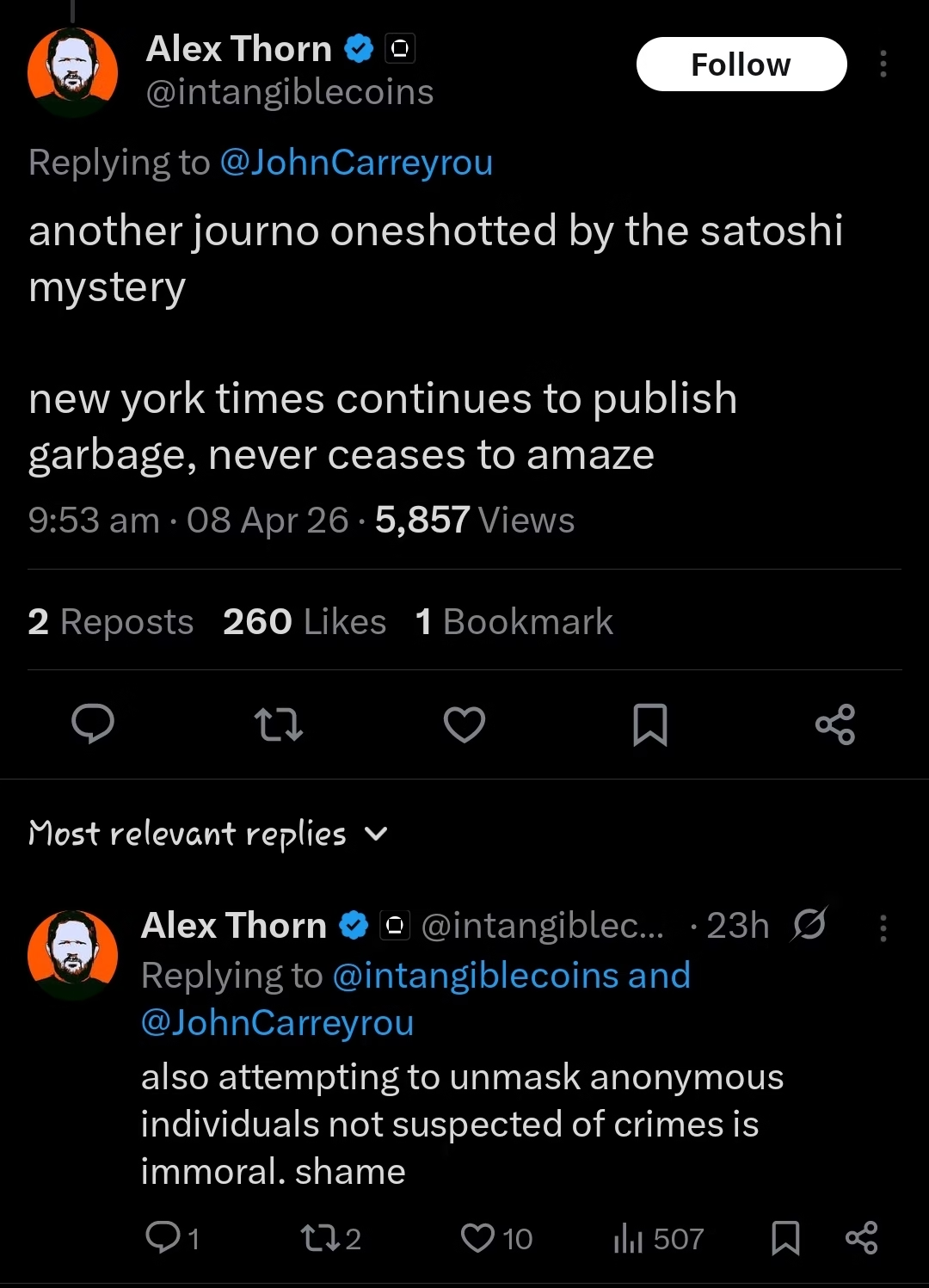
These aren’t Bitcoin randos on Reddit. These are serious, deeply embedded voices in the space. When they’re not convinced, that matters.
Michael Saylor added a point worth sitting with: the contemporaneous emails between Satoshi and Back produced during the Craig Wright fraud trial in London suggest the two were distinct individuals.
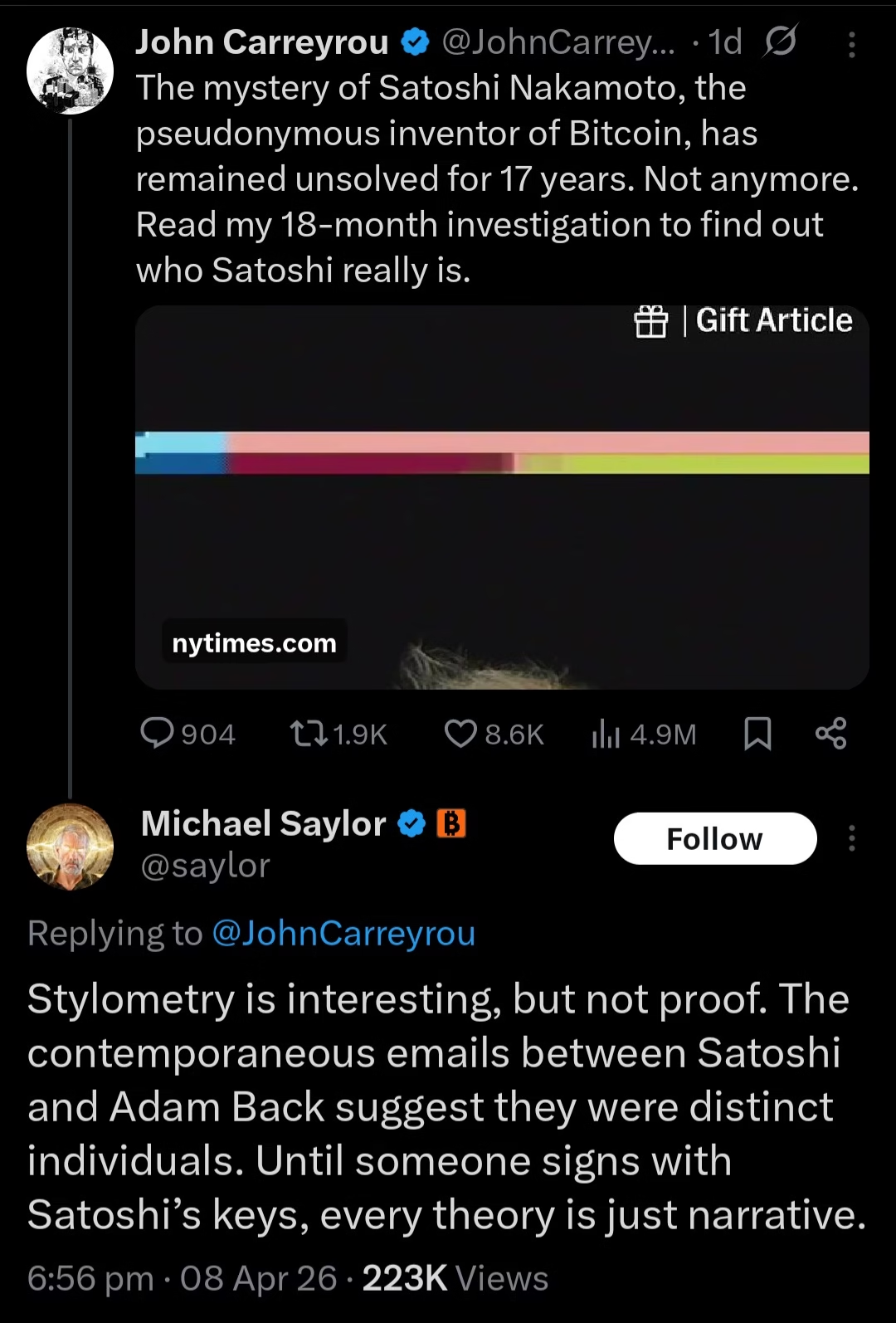
Carreyrou’s counter-theory is that Back sent those emails to himself as an elaborate cover. He offers no evidence that actually happened. That’s a significant logical leap to ask readers to make.
Adam Back himself denied the claim more than six times over a two-hour interview in El Salvador. On X, he wrote that his decades of work in cryptography and electronic cash simply explains why his writing keeps surfacing as a match.
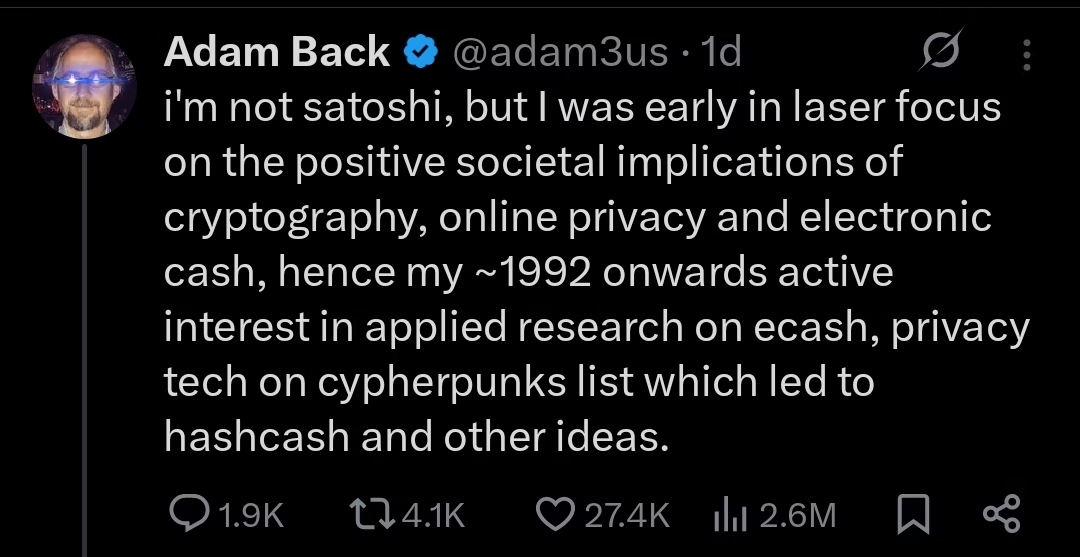
“The rest is a combination of coincidence and similar phrases from people with similar experience and interests.”
Then there’s the ethical dimension that the Times breezes past rather quickly. Nicholas Gregory, a U.K.-based early Bitcoin participant who knows Back personally, said publicly that even if the theory were correct, pointing this loudly at someone who controls an estimated 1.1 million Bitcoin worth roughly $70 billion could put that person and their family in genuine physical danger. That’s not a hypothetical concern. That’s a real consequence of this kind of journalism, and it deserved more than a footnote.
I’ll be honest with you. I haven’t been covering this space long enough to have strong priors on who Satoshi is. But I’ve been here long enough to know that the Bitcoin community has one standard of proof, and one standard only move the coins.
Sign a message with Satoshi’s private keys. Everything else, no matter how sophisticated the AI or how talented the journalist, is circumstantial. And even then, questions can still be raised.
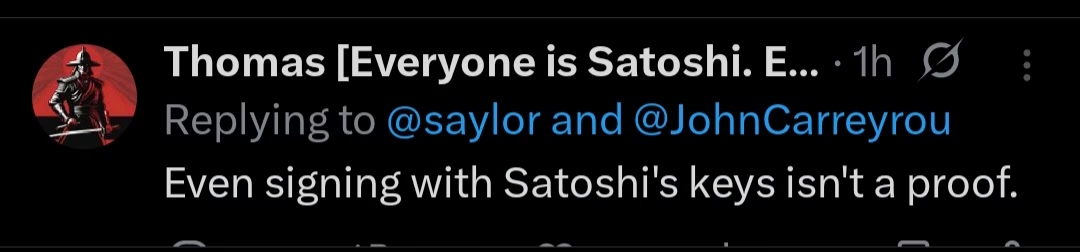
Carreyrou himself acknowledges this in the piece. The case is not definitive. It’s the strongest circumstantial argument built to date and it may well be right. But “may well be right” and “finally solved” are very different things, and the way this story is being packaged in headlines risks doing real harm to a real person on the basis of writing quirks and body language.
The mystery of Satoshi is one of the most fascinating stories in modern technology. It deserves rigorous pursuit. It just also deserves more than a hyphen.
The Bit Gazette covers crypto news and culture for the people actually living in it. This commentary reflects my personal views, not those of The Bit Gazette. The full New York Times report is available on their website or via the link on their Instagram page



Copyright © 2025 - The Bit Gazette.

