





- Trending
- Comments
- Latest

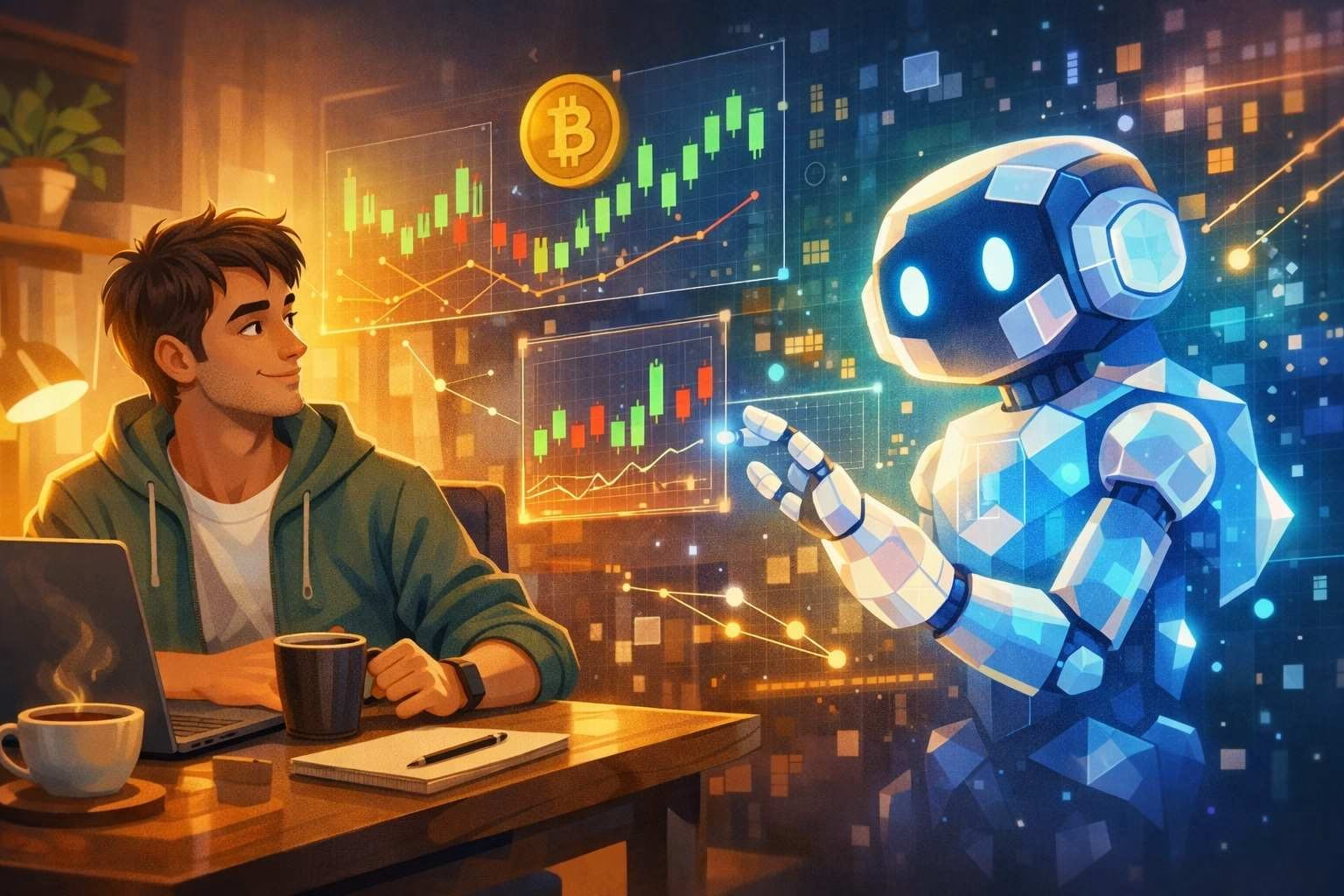
Remember that late-night scroll, the one where your thumb pauses mid-flick, the screen glow the only light in the room, and something you read makes the future feel like it arrived a little too fast. That moment usually comes when you realize AI might already be trading crypto.
The first time that thought lands, it does not feel dramatic. It feels unsettling. A quiet flip in the stomach. Not fear exactly, more like the sense that the rules may have shifted while you were not looking.
I remember mine clearly. A half-focused scroll, somewhere between curiosity and fatigue, when I stumbled on a post about bots learning market behavior faster than humans ever could. Not just executing trades. Learning. Adapting. Improving. The kind of thing that makes you stop and wonder whether you are still playing the same game you thought you signed up for.
Here is the part that rarely gets said plainly enough. An AI crypto trade is not a hostile takeover of the market. It is not a sci-fi villain quietly draining human wallets while no one is watching. It is a tool. A powerful one, yes, but still bound by rules, data, and incentives. Once you understand what AI actually does inside markets, the fear loses its grip and turns into something far more useful: perspective.
So take a breath, grab a coffee, and let us walk through it together. No panic. No hype. Just the parts that actually matter.
Most people imagine AI trading as some hyper-intelligent entity “outsmarting” humans at every turn. That framing makes the whole thing feel personal, almost adversarial. But markets don’t work that way.
An AI crypto trade doesn’t wake up with intent. It doesn’t feel greed, fear, or conviction. It reacts to patterns. It optimizes for rules it has been given. Speed, probability, arbitrage, execution efficiency. That’s it.
Humans trade with stories. With beliefs. With emotions and narratives about where the market should go. AI trades with math. That difference matters more than raw intelligence ever will.
Let’s demystify this quickly.
AI systems excel at:
This is why most AI crypto trade activity lives in places humans rarely want to operate anyway: high-frequency environments, tight spreads, and tiny margins repeated thousands of times. It’s less “genius trader” and more “relentless pattern follower.” That’s impressive, but it’s not omniscient.
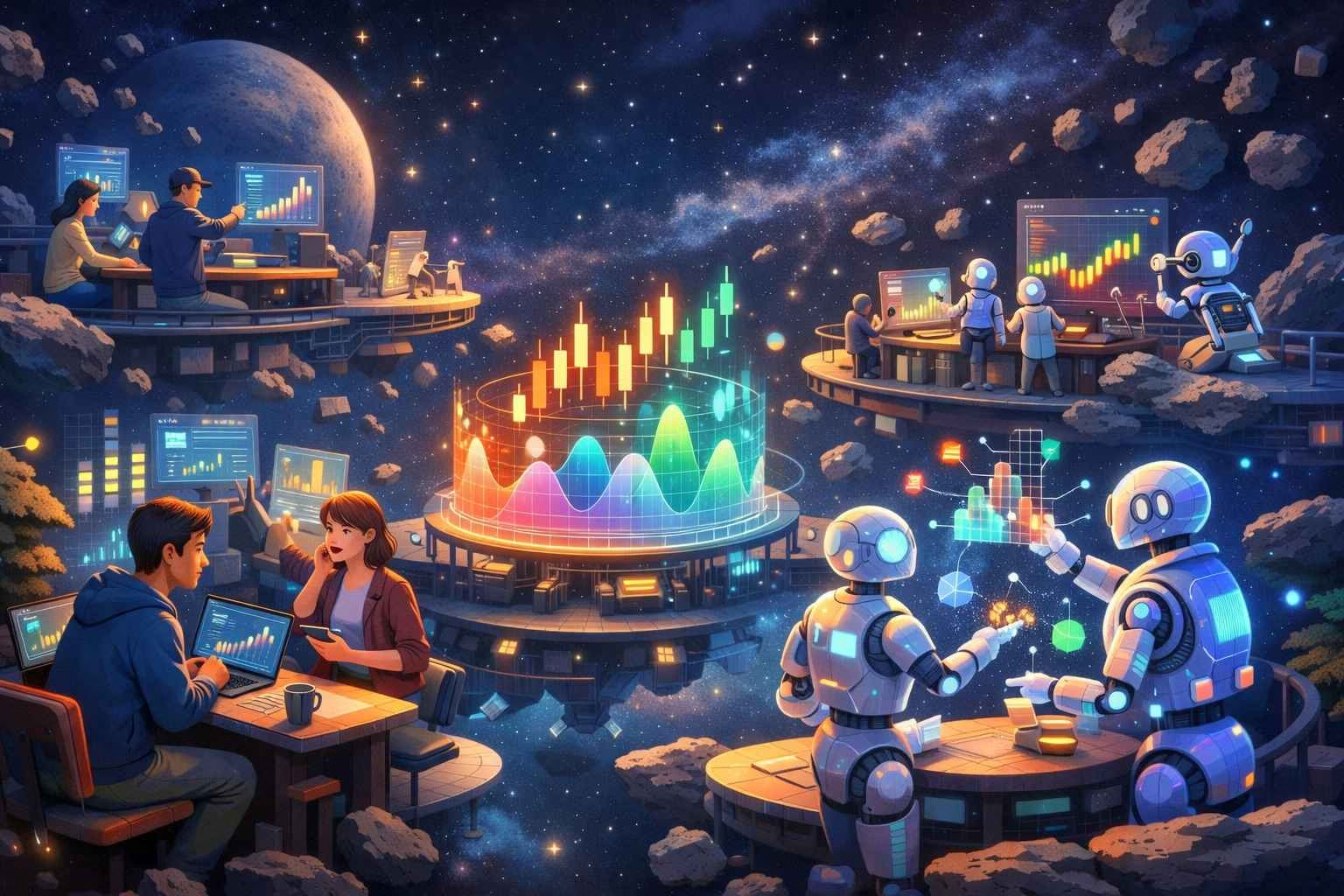
Here’s the quiet truth that gets lost in the fear cycle.
AI struggles with:
When markets move because of sentiment, belief, or social momentum, AI often lags. It reacts after patterns appear. Humans feel those shifts before they show up cleanly in data. That’s why even in an ecosystem full of AI crypto trade strategies, markets still overshoot, panic, euphorize, and behave strangely. Those are human fingerprints.
There’s a popular worry that AI creates an unfair market where humans can’t compete. In reality, markets have always been uneven. Institutions had better data before AI. Faster connections before AI. Larger balance sheets before AI. None of that is new.
What AI does is compress advantage into speed and consistency. It doesn’t eliminate opportunity. It changes where opportunity lives. Humans lose edge when they try to out-robot robots. Humans win when they lean into context, patience, and judgment.
This is the part worth paying attention to.
Humans still dominate:
An AI crypto trade fires because a condition is met. A human sometimes wins because they recognize that the conditions don’t matter anymore. That discretion is not a weakness. It’s an advantage.
One of the most misleading ideas floating around is that markets are “choosing” AI over humans. Markets don’t care who you are.
They reward alignment with reality. Sometimes that means speed. Sometimes it means patience. Sometimes it means doing nothing while everyone else overreacts. AI increases efficiency in some areas. Humans remain essential to others. The ecosystem expands instead of replacing.
You don’t need to outsmart AI. That’s not the goal. The goal is to stop competing on the wrong battlefield. If you’re trying to scalp milliseconds, yes, an AI crypto trade will beat you every time. That was never a fair fight.
If you’re focused on understanding cycles, spotting structural shifts, managing risk, and staying solvent long enough for trends to play out, AI is not your enemy. It’s background noise.
The best response to AI in markets isn’t fear. It’s clarity. Notice where automation dominates and step aside. Notice where human judgment still matters and lean in.
Next time you hear about AI trading, don’t ask, “Is this bad for humans?”
Ask, “What kind of trading does this replace?” That single shift changes everything.
AI didn’t end trading. It didn’t end the opportunity. It didn’t end human relevance. It just raised the bar for mindless behavior. An AI crypto trade doesn’t understand the meaning. It doesn’t understand why something matters. It doesn’t understand tomorrow. You do.
And that’s still the most valuable edge in the market. So don’t panic. This isn’t humans versus machines. It’s humans learning where they still belong.



Copyright © 2025 - The Bit Gazette.

