






- Trending
- Comments
- Latest

American investors’ willingness to take substantial financial risks has fallen from 12% to 8% since 2021, with younger adults showing the sharpest decline, according to a new survey from the FINRA Investor Education Foundation.
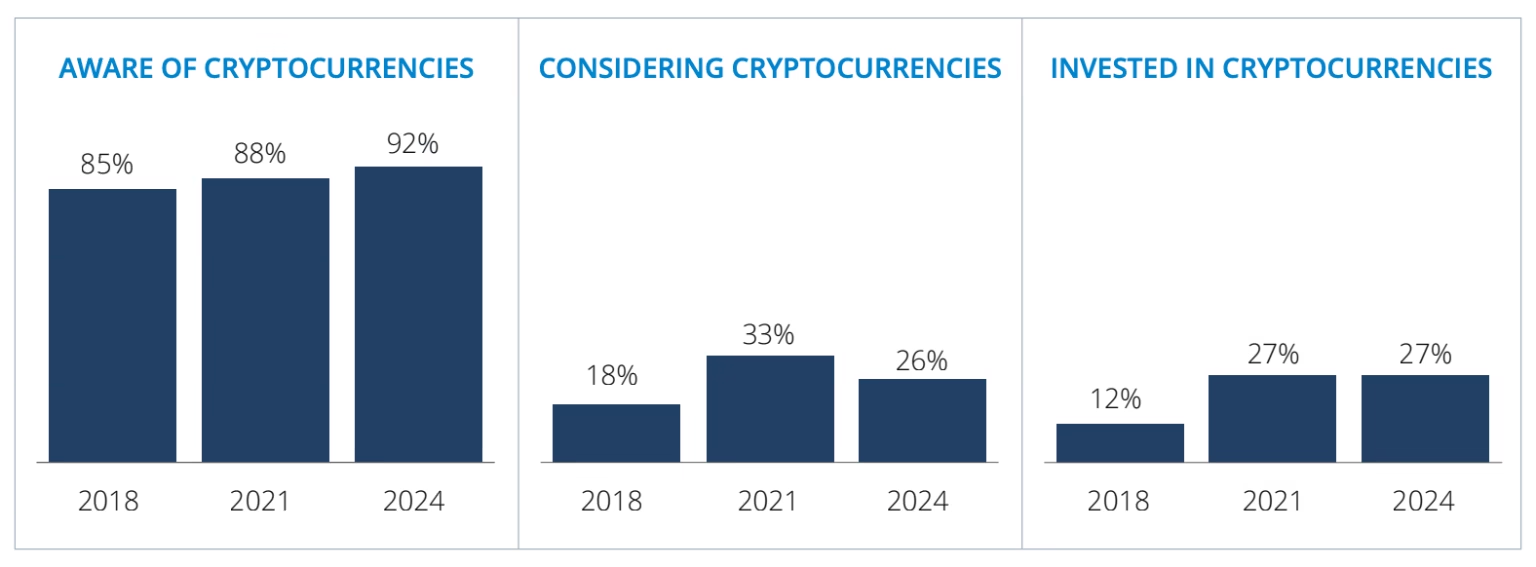
Despite the retreat from risk-taking, 27% of the 2,861 non-retirement investors surveyed still own cryptocurrency—unchanged from three years ago—even as interest in purchasing new digital assets dropped from 33% to 26%.
The findings reveal a growing tension: investors are increasingly cautious, yet 34% believe they must take significant risks to meet their financial goals.
Fresh data reveals a steady contraction in crypto risk appetite, marking a notable shift from the post-pandemic period when speculative enthusiasm ran high.
In 2021, 12% of investors said they were comfortable taking substantial risks; today, that figure has fallen to just 8%. Among adults under 35—traditionally seen as the risk-embracing group—the drop is even sharper, from 24% to 15%.
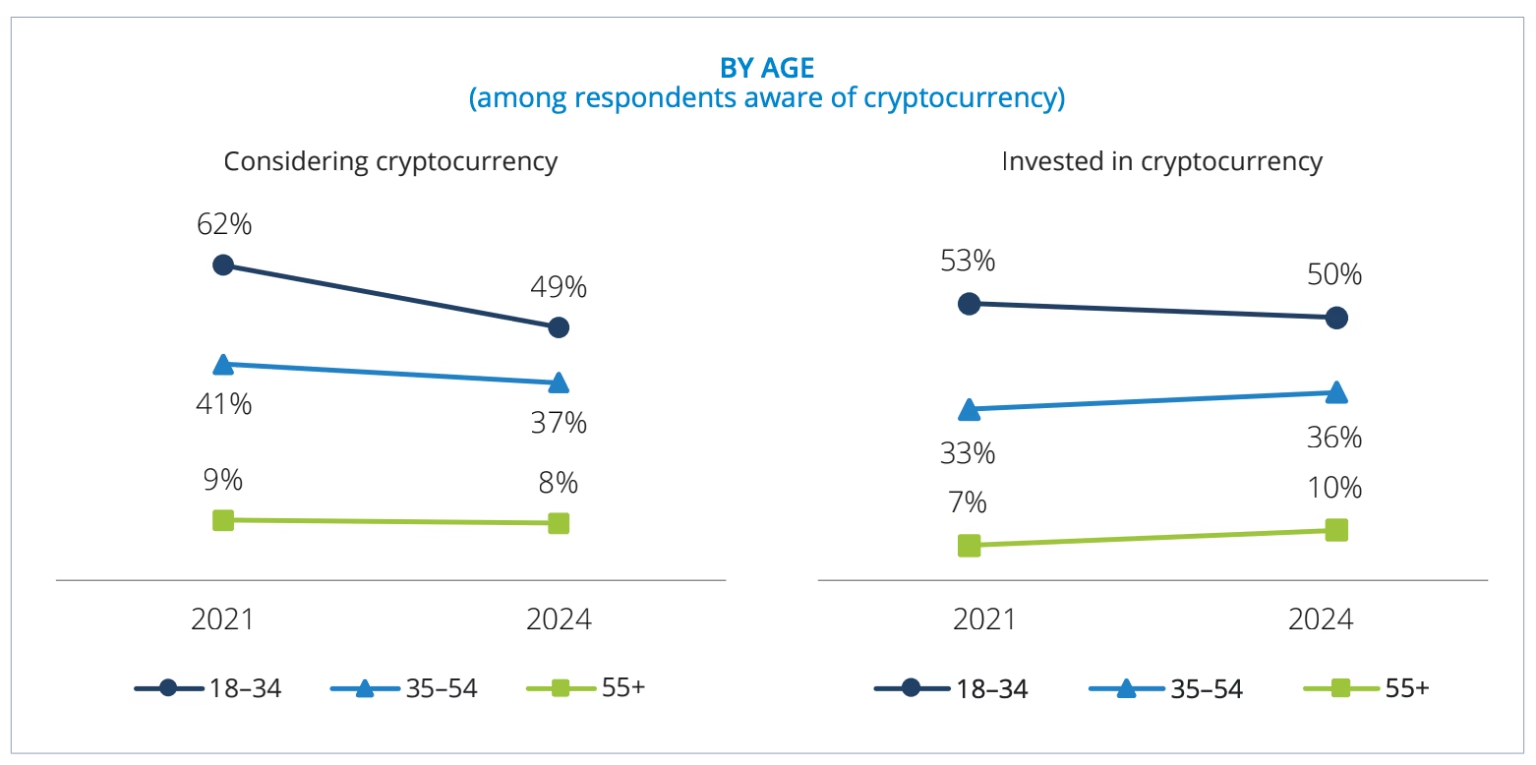
Yet despite this retreat, many investors believe high-risk exposure remains necessary. Roughly 34% of respondents said they must take on significant risk to reach their financial goals, and that belief rises to 62% among younger adults. This conflict underscores how crypto risk appetite has evolved: less about eagerness, more about perceived financial pressure.
Jonathan Sokobin, Chief Economist at FINRA, noted the significance of the study.
“The latest FINRA Foundation research on investors provides rich insights into how market conditions, technology, and generational shifts are changing the profile of investing and reshaping investor behaviors and attitudes,” he said.
Sokobin added that the research “can serve as a roadmap and essential resource for policymakers, researchers, educators, firms and financial professionals as they continue their efforts to help educate and protect investors.”
Although 27% of investors still own digital currency—a figure unchanged since 2021—interest in purchasing new crypto assets has fallen from 33% to 26%. This suggests that while ownership remains steady, fresh enthusiasm and crypto risk appetite are waning.
A significant decline in new market entrants further illustrates shifting sentiment. Only 8% of investors began investing in the past two years, compared with 21% in the two years prior to FINRA’s 2021 report.
Demographic shifts also point to a contraction: the share of young adults with non-retirement investments fell from 26% to 21%, men from 43% to 40%, and people of color from 36% to 29%.
These declines suggest that the broader environment of low crypto risk appetite is not merely about asset preference but extends to overall market participation.
Despite hesitation, younger investors still engage disproportionately in high-risk strategies, highlighting a complex relationship between behavior and sentiment.
Options trading, for instance, is reported by 43% of investors under 35, compared with just 10% of those 55 and older. Margin trading follows a similar pattern: 22% of young investors use margin, compared with only 4% of older adults.
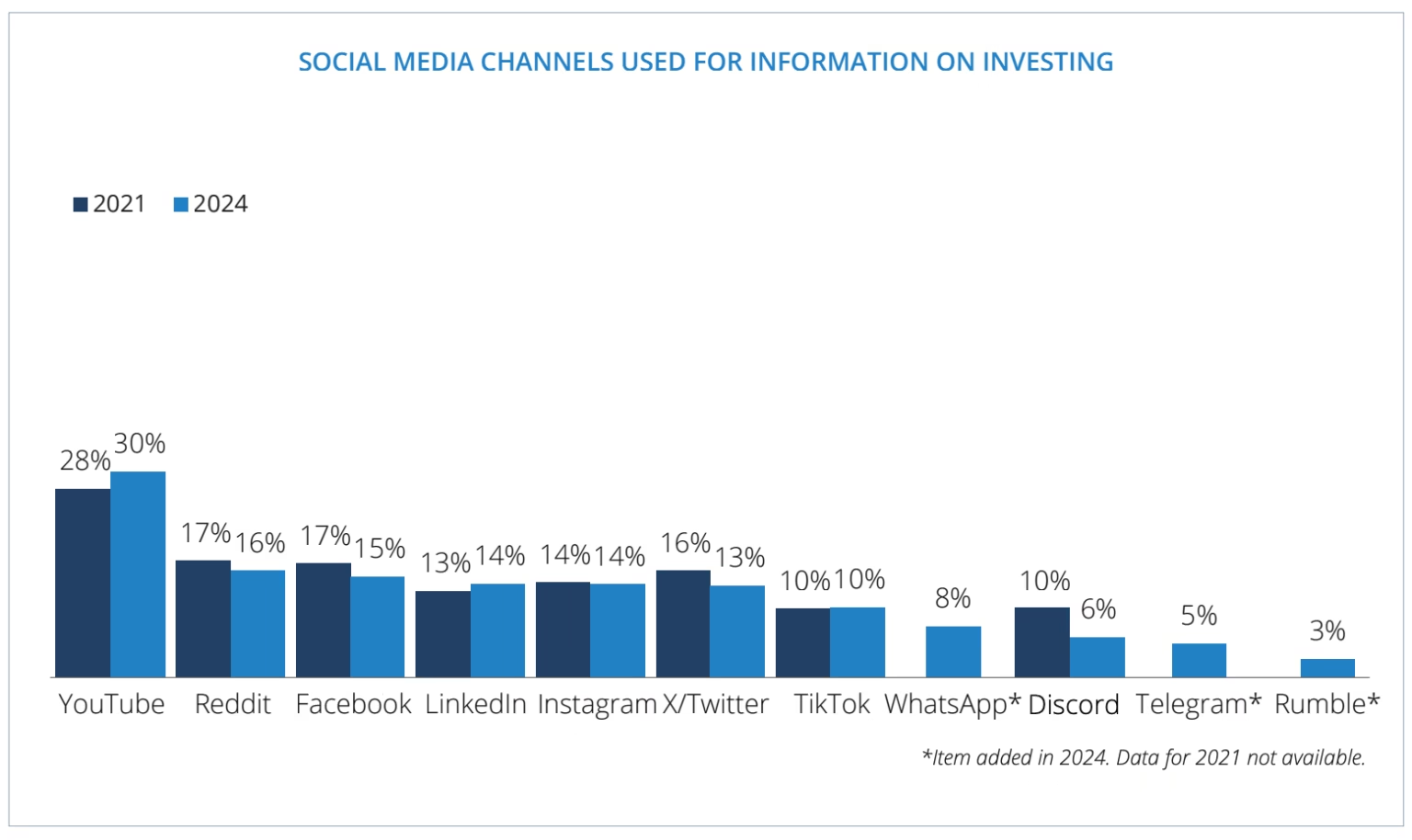
Social media has become a dominant force shaping younger investors’ decisions. Twenty-nine percent of all respondents rely on social platforms for financial information, with YouTube serving as the primary source for 30% of all investors and 61% of those under 35.
Influencer advice plays a central role as well: 26% of all investors report following “finfluencers,” a number that climbs to 61% for young adults and 57% for those with less than two years of experience.
This dynamic reveals that while crypto risk appetite may be declining in principle, high-risk behaviors persist in practice—especially among younger demographics influenced by digital content.
More traditional sources of insight still dominate overall. Seventy-five percent of respondents rely on brokerage research tools, 69% consult financial professionals, 67% read business and finance articles, and 65% discuss markets with friends or colleagues.
These habits suggest that even as digital culture reshapes investing, conventional sources continue to anchor decisions for a broad audience seeking clarity amid shifting crypto risk appetite.
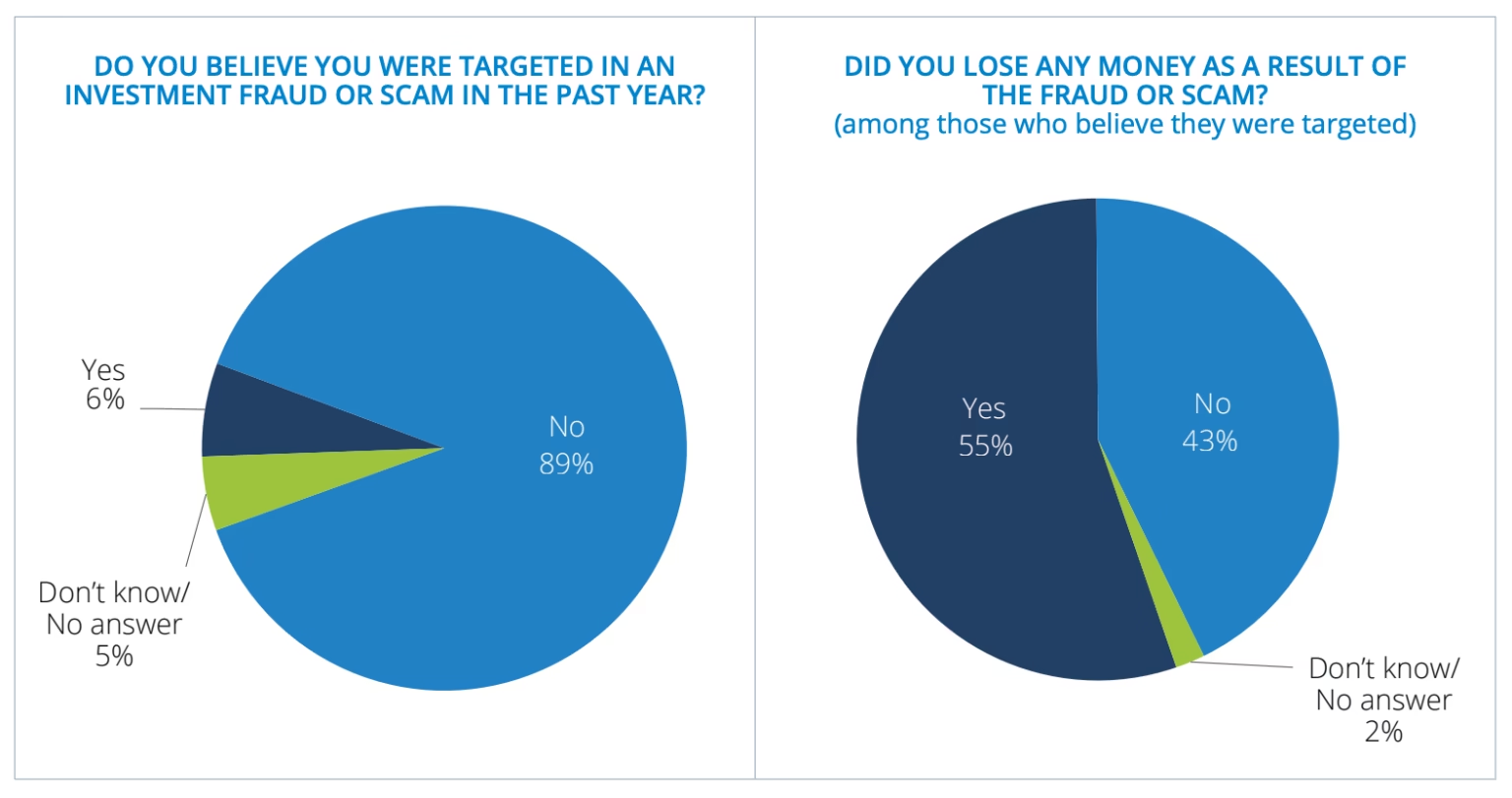
The FINRA report also highlights increasing anxiety about fraud. Thirty-seven percent of investors now express concern about being scammed, up from 31% in 2021. Despite this, 89% say they have not personally experienced attempted fraud.
However, knowledge gaps remain a major challenge. Investors answered only 5.3 out of 11 questions correctly on a financial literacy quiz. Concepts such as margin trading and short selling were particularly poorly understood: 55% and 54% answered those questions incorrectly, respectively.
Alarmingly, 75% of those who actively buy on margin failed to answer the margin question correctly, exposing a disconnect between crypto risk appetite, risky behavior, and actual comprehension.
As policymakers evaluate next steps, and as crypto investors and the general public navigate volatile markets, the findings point to a clear takeaway: declining crypto risk appetite reflects not just caution, but confusion—reinforcing the need for stronger investor education, clearer regulation, and more reliable information in a rapidly evolving financial landscape.



Copyright © 2025 - The Bit Gazette.