


- Trending
- Comments
- Latest

Base network experienced elevated transaction delays and drops on January 31 after a recent infrastructure configuration change created a feedback loop in its transaction pipeline, forcing developers to roll back the update to restore normal service.
The incident on the Coinbase-backed Ethereum layer-2 network caused intermittent transaction inclusion delays during a period of volatile network fees, temporarily disrupting user experience and raising fresh questions about scaling reliability under real-world congestion.
According to the Base team, the incident stemmed from a configuration adjustment affecting how transactions propagated through the network’s infrastructure.
Under conditions of rapidly rising base fees, the block builder repeatedly attempted to fetch transactions that could not be executed.
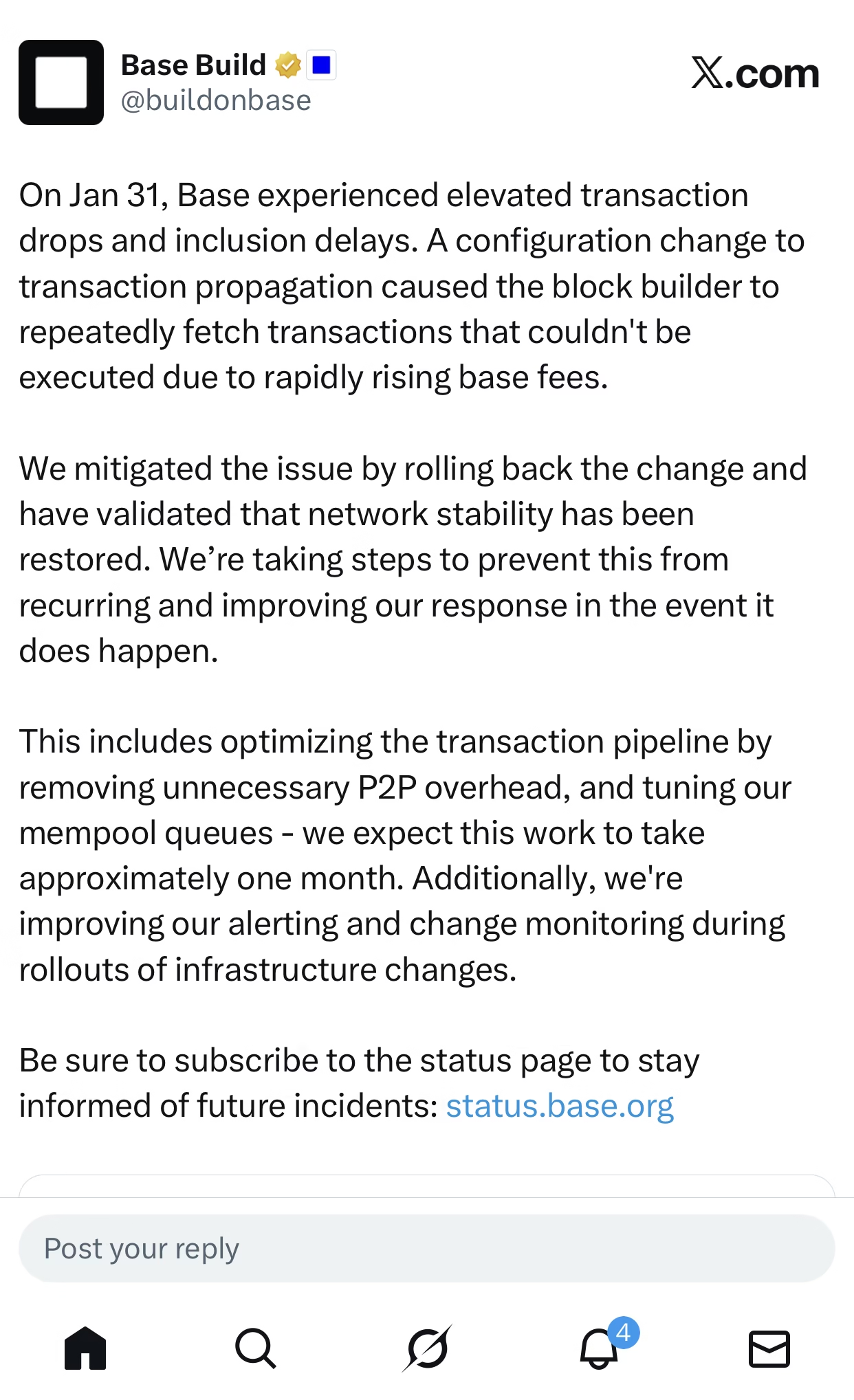
This feedback loop strained the transaction pipeline, leading to inefficient reprocessing, elevated transaction drops, and delayed inclusion during peak congestion periods — a direct hit to Base network stability at a time of heightened user activity.
“On Jan. 31, Base experienced elevated transaction drops and inclusion delays,” the Base team said in a public update.
“The propagation change created a feedback loop in the transaction pipeline under volatile fee conditions.”
Base confirmed that rolling back the configuration change immediately restored Base networks stability, allowing normal transaction processing to resume.
Developers validated the fix internally and reassured users that the underlying protocol remained secure throughout the event.
“We have validated the fix restored overall network stability,” Base said, while acknowledging that short-term congestion could still cause intermittent delays.
The episode underscores a broader industry challenge: as Layer-2 adoption accelerates, maintaining Base networks stability under real-world congestion remains a moving target — particularly when infrastructure tweaks intersect with unpredictable fee markets.
In response, Base announced plans to conduct a full root cause analysis (RCA) and publish a public postmortem in the coming days — a move widely viewed as essential for restoring developer confidence and transparency.
The team also outlined a series of infrastructure improvements designed to harden Base network stability.
These include optimizing the transaction pipeline by removing unnecessary peer-to-peer overhead and tuning mempool queue behavior to improve transaction inclusion during stress events.
Base estimates these upgrades will take approximately one month to implement.
Beyond pipeline optimization, Base said it is strengthening internal alerting systems and change-management processes to detect transaction propagation issues earlier during future rollouts.
These improvements aim to reduce the risk of silent failures and ensure that Base network stability is preserved even as the network scales.
As Ethereum Layer-2 networks compete for users, liquidity, and institutional deployments, Base network stability has become a defining benchmark.
Developers building consumer-facing applications expect near-instant confirmations, while enterprise users demand predictable performance during peak demand.
Base encouraged users to monitor its official status page for ongoing updates and transparency around future incidents.
With congestion events likely to increase as adoption grows, the network’s ability to maintain Base network stabilityduring stress tests may ultimately determine its long-term competitiveness in the Layer-2 race.



Copyright © 2025 - The Bit Gazette.