






- Trending
- Comments
- Latest

Bhutan has transferred more than $22 million worth of bitcoin over the past week through wallets controlled by its sovereign investment arm, continuing a drawdown that has reduced the country’s reserves from roughly 13,295 BTC in October 2024 to approximately 5,700 BTC today.
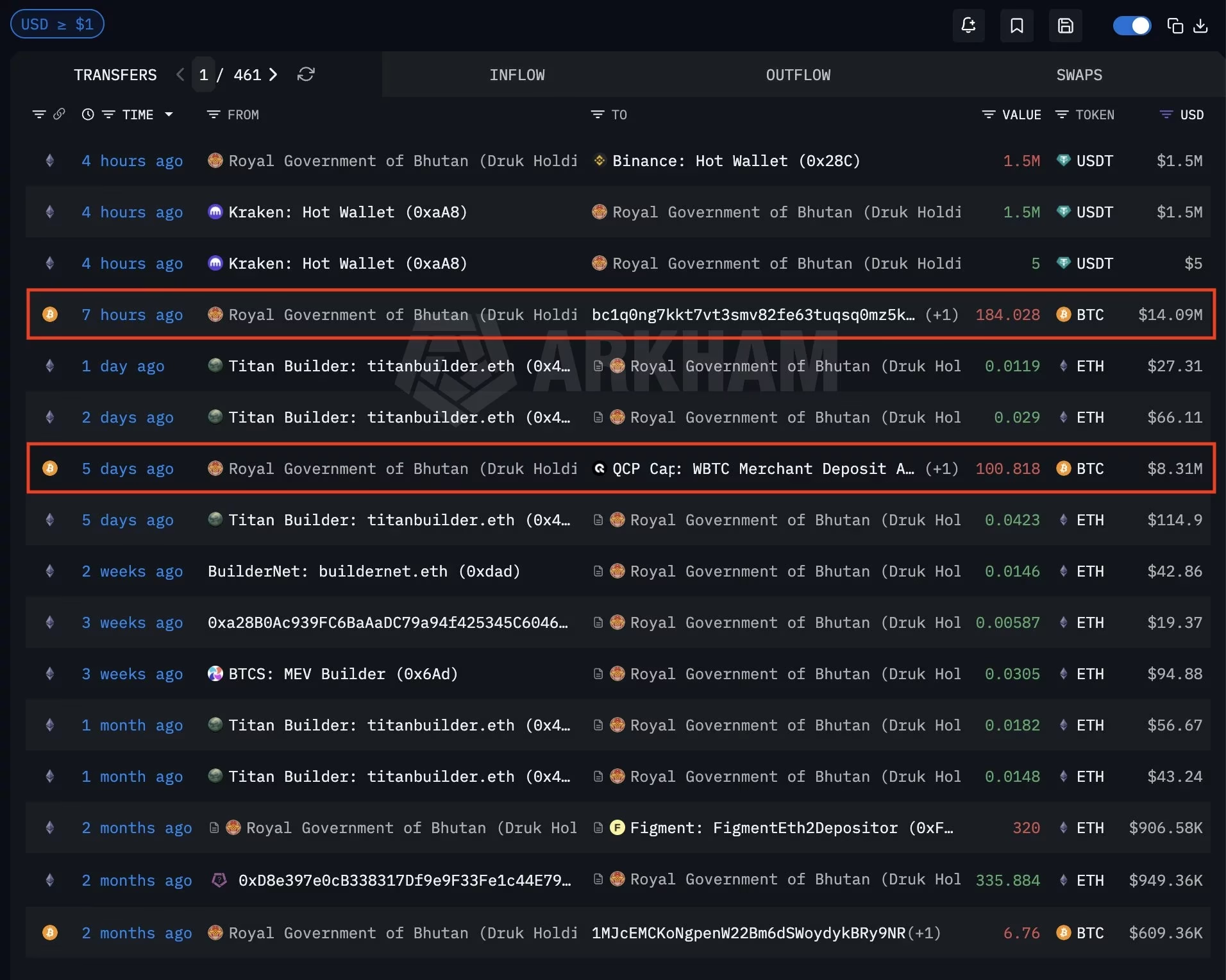
The transfers, tracked by Arkham Intelligence, included a $14 million movement to institutional trading infrastructure on Thursday, raising questions about how the Himalayan nation is managing digital assets accumulated through state-backed hydroelectric mining operations.
The most notable transaction tied to Bhutan Bitcoin holdings occurred approximately seven hours before reporting, when a wallet linked to Bhutan transferred 184.028 BTC, valued at about $14.09 million at prevailing prices.
On-chain labels identify the wallet as being associated with state-controlled entities under DHI.
Earlier in the week, a separate Bhutan-linked wallet moved an additional 100.818 BTC, worth roughly $8.31 million, to an address labeled as a QCP Capital WBTC merchant deposit.
Such addresses are typically associated with institutional trading infrastructure, custody services, or intermediary liquidity providers.
These transactions do not, on their own, confirm a sale. However, deposits to merchant or broker-linked wallets are often viewed by market participants as precursors to rebalancing or off-market execution.
As a result, Bhutan Bitcoin holdings are increasingly monitored alongside other sovereign-linked crypto wallets due to their potential influence on market psychology.
Arkham Intelligence, which tracks the wallets, noted that Bhutan’s transfers follow a recognizable pattern.
“From our observations, Bhutan periodically sells BTC in clips of around $50 million,” — Arkham Intelligence, on-chain analytics firm.
The firm added that a particularly active selling window occurred between mid and late September 2025, reinforcing the view that Bhutan Bitcoin holdings are actively managed rather than held indefinitely.
According to Arkham’s estimates, Bhutan Bitcoin holdings have declined substantially from their peak.
The country’s Bitcoin reserves reportedly stood at approximately 13,295 BTC in October 2024 but have since fallen to around 5,700 BTC at the time of reporting.
The reduction does not necessarily indicate a shift away from Bitcoin, analysts caution, but rather suggests an evolving treasury strategy that balances long-term exposure with periodic monetization.
Sovereign actors managing digital assets often face competing objectives, including fiscal needs, market conditions, and political considerations.
Because Bhutan Bitcoin holdings are not derived from seizures or enforcement actions, unlike those of several Western governments, their movements are often interpreted differently by the market.
Bhutan’s reserves are widely believed to originate from state-backed Bitcoin mining operations powered by surplus hydroelectric energy, making the holdings closer to a strategic asset than a confiscated one.
This distinction has contributed to sustained interest in Bhutan Bitcoin holdings, particularly during periods of heightened volatility when large transfers can amplify uncertainty.
Beyond Bitcoin, Bhutan-linked wallets also recorded smaller but notable movements in other digital assets.
On-chain data showed multiple Ethereum transactions over the same period, suggesting broader portfolio activity rather than isolated Bitcoin repositioning.
In addition, approximately $1.5 million in USDT was transferred between exchange-linked wallets and addresses associated with Bhutan within the last several hours.
Analysts interpret such stablecoin flows as indicative of treasury operations, including liquidity provisioning or internal reallocation.
These multi-asset movements reinforce the view that Bhutan Bitcoin holdings are part of an actively managed digital asset portfolio rather than a static reserve.
As sovereign participation in crypto markets grows, such activity is increasingly difficult for investors to ignore.
The latest transfers underscore a broader trend in which governments and state-linked entities are becoming more visible participants in crypto markets.
Bhutan Bitcoin holdings, in particular, stand out due to their origin in renewable energy-backed mining and their consistent interaction with institutional infrastructure.
As Bitcoin continues to navigate a volatile market environment, the actions of sovereign holders like Bhutan are likely to remain under close observation, not because they dictate price direction, but because they shape expectations around supply, liquidity, and long-term adoption.



Copyright © 2025 - The Bit Gazette.