





- Trending
- Comments
- Latest

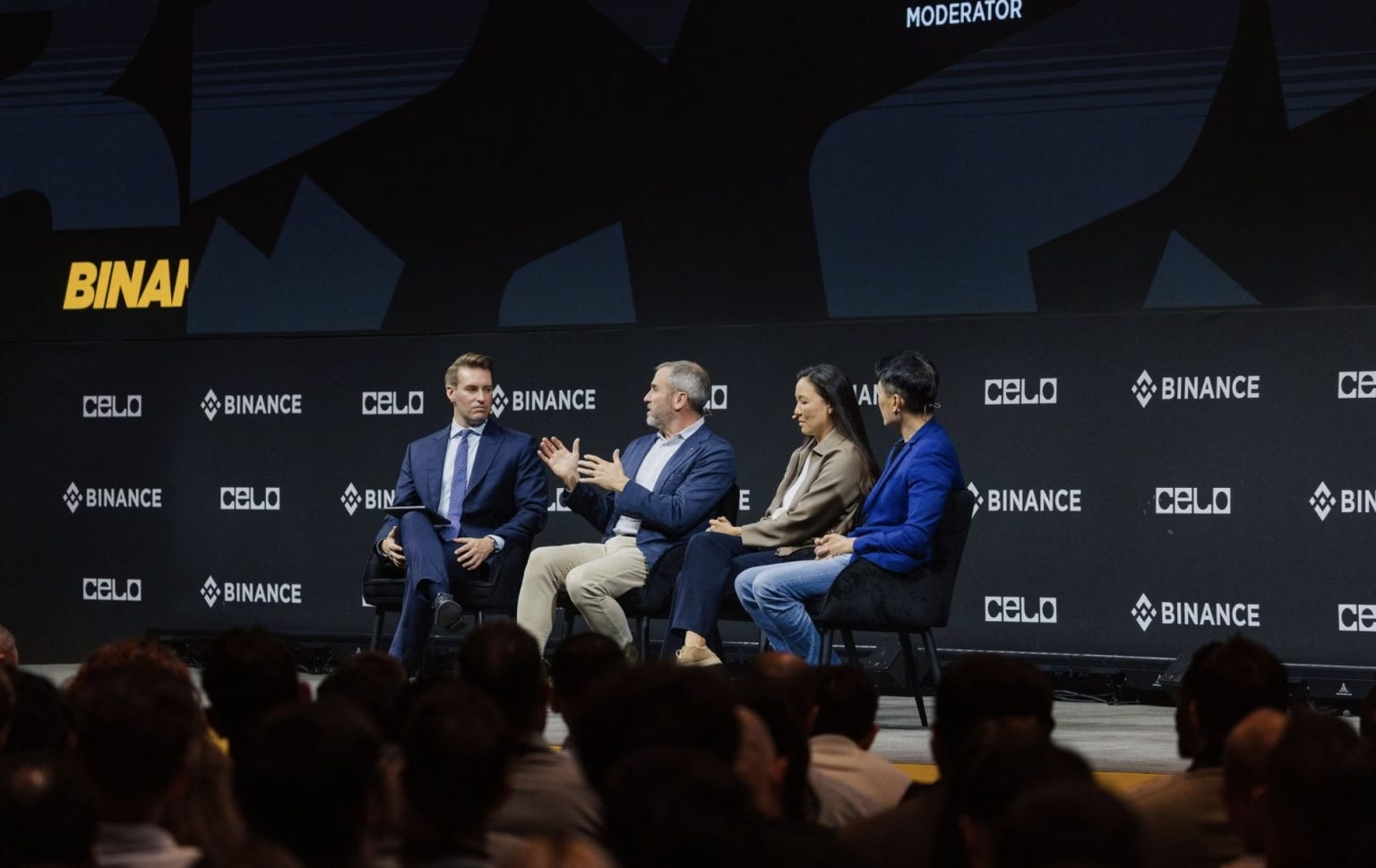
Stablecoin adoption is accelerating faster than expected, with market capitalization climbing 50% in 2025 as institutions embrace blockchain-based payments, executives from Binance, Ripple and Solana said Tuesday.
Speaking at Binance Blockchain Week in Dubai, Ripple CEO Brad Garlinghouse said the company’s acquisition of stablecoin treasury manager G Treasury has attracted “remarkable interest” from corporations, while Binance CEO Richard Teng noted wallet numbers are growing alongside stablecoin supply.
The executives framed recent Bitcoin volatility—including $20 billion in liquidated leverage positions—as healthy market correction rather than systemic weakness. Bitcoin has recovered 8% over the past week to reclaim $90,000 after trading nearly 30% below its October peak.
Garlinghouse said US stablecoin legislation is gaining bipartisan momentum, though he didn’t specify which bills. Solana Foundation President Lily Liu said daily ETF inflows signal institutional conviction despite short-term price swings.
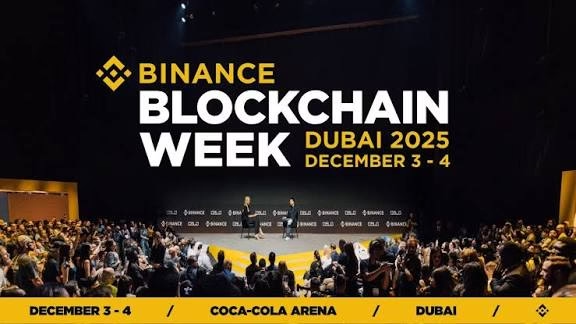
Binance Blockchain Week entered full throttle as Murphy opened with Bitcoin’s turbulent yet resilient price action. Despite trading nearly 30% below its October peak, Bitcoin has rebounded 8% in the past week, reclaiming the $90,000 threshold.
This recovery came after a dramatic $20 billion leverage flush-out, wiping out over-extended positions and sending negative funding rates across perpetual markets.
Lily Liu emphasized that volatility is not a threat—but a feature: The selloff was amplified by an irrational liquidity window, but volatility should be embraced, not feared, Liu said.
She added that since the early Bitcoin forums, the pillars have always remained the same: speed, cost, programmability, and liquidity.
Garlinghouse agreed, noting that market resets strengthen long-term foundations.
The Binance Blockchain Week panel moved into one of the hottest topics of the year: institutional inflows. Murphy highlighted that Bitcoin and Solana ETFs continue to attract steady investment—despite short-term volatility.
Richard Teng drove home the impact of booming stablecoin activity:
Stablecoin market capitalization has risen 50% this year, and wallet numbers have climbed right alongside it, Teng revealed.
Stablecoins massively improve capital efficiency—they’re cheaper, faster, and institutions are finally waking up to that.
Brad Garlinghouse pointed to U.S. regulatory progress, particularly around the emerging Gensler Act, as a turning point:
People finally recognize stablecoins are stable and far easier to manage—especially in this region, Garlinghouse said.
He added that Ripple’s acquisition of G Treasury has sparked “remarkable interest” among corporations exploring stablecoin-powered payments.
Binance Blockchain Week also put the spotlight on Solana’s long-term ambition. Liu reiterated the project’s transformative goal of becoming the “TCP/IP for money”, enabling instant, global capital flows.
She explained that the next adoption wave will be shaped not by hype—but by: speed, cost efficiency, liquidity, and real-world utility.
Daily inflows into Solana ETFs, she noted, signal strong institutional conviction.
Liu added: We’re building for financial inclusion across emerging markets. Crypto’s role in digitizing capital markets is only just beginning.
Regulation was a recurring theme throughout Binance Blockchain Week, underscoring how governments worldwide are shifting from skepticism to strategy.
Teng pointed to Abu Dhabi and Dubai as prime examples, Regulators here understand that digital assets are part of national financial infrastructure, he said.
Garlinghouse echoed optimism about U.S. progress, The Clarity Act is gaining real traction. Collaboration between regulators and industry is essential to unlock the next chapter of institutional adoption.
Beyond market mechanics, Binance Blockchain Week highlighted the transformative power of cross-industry collaboration.
Panelists stressed that the convergence of fintech, traditional finance, and decentralized networks is accelerating faster than anyone anticipated.
Garlinghouse noted that corporate adoption is no longer hypothetical—companies are actively exploring blockchain-powered payments and treasury management.
Liu emphasized that this ecosystem-level integration is the catalyst for global financial democratization, signaling that crypto’s impact is moving well beyond speculative trading into real-world infrastructure.