





- Trending
- Comments
- Latest

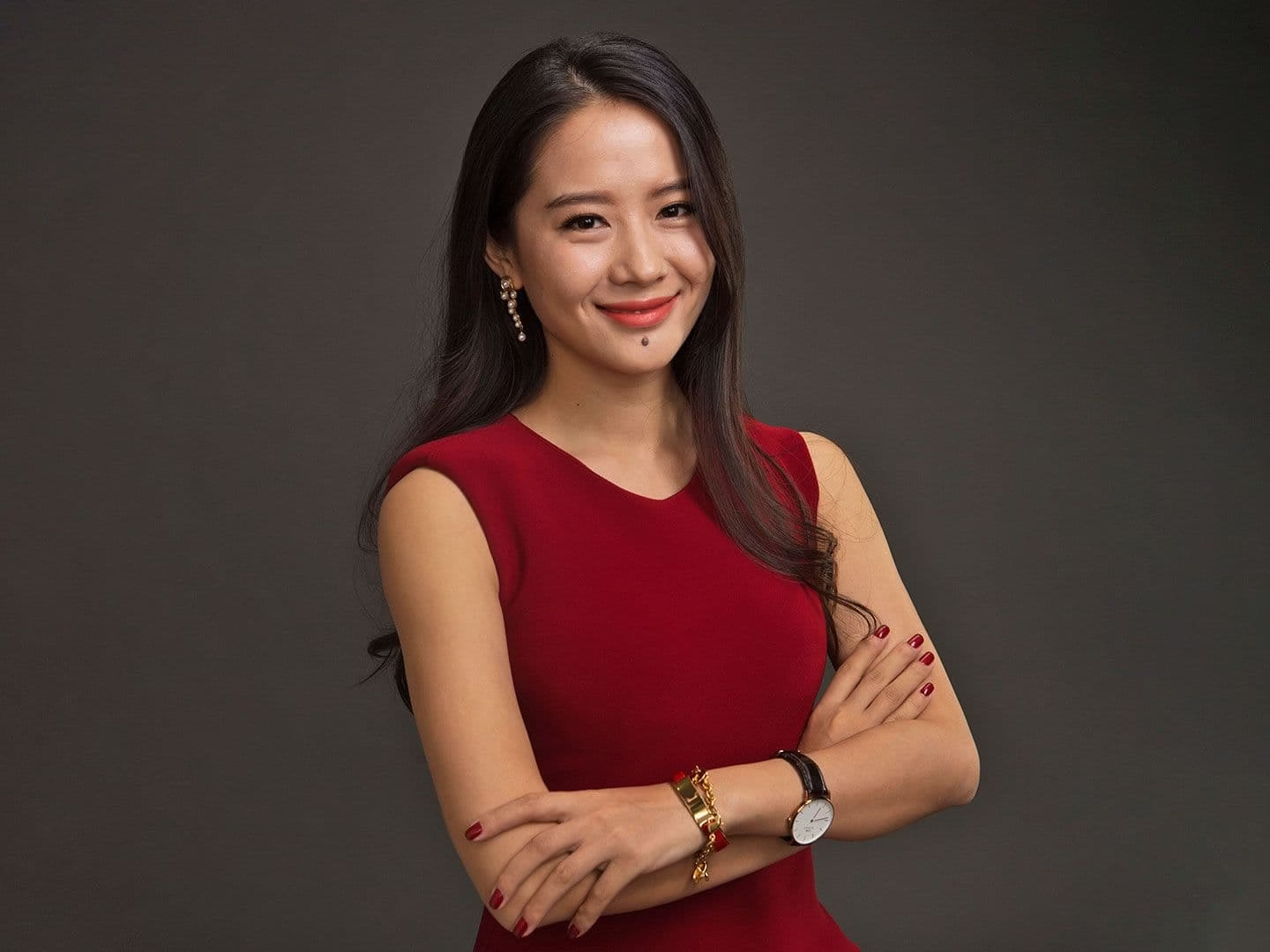
Binance has elevated co-founder Yi He to co-CEO, pairing her with current chief Richard Teng in a dual-leadership structure announced Wednesday at Binance Blockchain Week.
The move formalizes Yi He’s role after years as chief marketing officer and signals a strategic shift: combining her crypto-native expertise—she co-founded OKX and launched Binance in 2017—with Teng’s regulatory background from Singapore’s financial watchdog.
The exchange says the split-CEO model will help it navigate mounting regulatory pressure while pursuing institutional growth.
Under the new arrangement, Yi He previously Binance’s Chief Marketing Officer and a co-founder since 2017 ascends to co-CEO alongside Richard Teng.
Teng described the appointment as “a natural progression,” noting that “He has been an integral part of the executive leadership team since the launch of Binance.” The announcement, published in the official Binance press release, underscores the company’s intent to formalize roles after a turbulent period of leadership shifts.
Yi He said the dual-leadership model allows Binance to leverage “two very different perspectives,” combining her deep crypto industry experience with Teng’s background in regulated financial markets. This signals a shift toward a hybrid leadership philosophy likely intended to restore trust among regulators, institutional investors and the broader crypto community.
The Binance co-CEO model pairs complementary strengths. Yi He, a crypto native, helped establish Binance in 2017 alongside Changpeng “CZ” Zhao and previously led business, marketing and the firm’s venture arm, Binance Labs. She also has a track record that includes co-founding OkCoin (now OKX) in 2014, giving her extensive industry insight and entrepreneurial chops.
Richard Teng, by contrast, brings institutional and regulatory experience: before joining Binance, he spent 13 years at the Monetary Authority of Singapore (MAS) including senior stints in corporate finance and worked earlier at the auditing firm PricewaterhouseCoopers (PwC).
Teng took over as sole CEO in late November 2023 after CZ resigned amid legal challenges. The pairing of a fintech-savvy founder with a compliance-minded executive suggests Binance is attempting to bridge legacy crypto culture with the expectations of regulated finance.
Analysts view the combination as potentially stabilizing. As one independent market observer noted,
“This co-CEO structure gives Binance both credibility and vision exactly what it needs to revive institutional trust.”
With its new Binance co-CEO leadership, Binance is reinforcing efforts to broaden its appeal beyond retail crypto users. Recent initiatives include a concierge-style service tailored for family offices, asset managers and private funds unfamiliar with crypto.
The exchange has also begun accepting institutional collateral such as funds from BlackRock to allow more secure, off-exchange custody for large investors.
In September, Binance rolled out a “crypto-as-a-service” (CaaS) solution aimed at licensed banks, brokerages and exchanges seeking to offer digital assets to their clients.
That was preceded by a partnership with Spain’s major bank BBVA to act as an independent custodian for institutional funds. Company insiders say these moves reflect a long-term strategy under the Binance co-CEO model as one that prioritizes regulated expansion, risk management, and offering enterprise-grade services while retaining crypto-native product agility.
While the new structure offers promise, it also presents challenges. Shared executive power can create confusion over responsibility and reduce agility in crisis situations particularly given the regulatory pressures that have dogged Binance in multiple jurisdictions.
As regulators worldwide ramp up scrutiny on digital asset exchanges, the success of the Binance co-CEO model will depend heavily on internal coordination, compliance rigor and ability to deliver transparent operations.
For crypto investors and institutions watching closely, this leadership overhaul may serve as a litmus test. If Binance can leverage the complementary strengths of its co-CEOs to deliver institutional-quality service, it could redefine how major exchanges operate globally. If not, the dual-head structure may exacerbate governance ambiguity potentially undermining investor confidence when clarity is most needed.
As Binance moves ahead under the co-CEO banner, the eyes of regulators, institutional investors and the crypto community are fixed on whether this shift marks resurgence or further volatility under a new leadership paradigm.



Copyright © 2025 - The Bit Gazette.