


- Trending
- Comments
- Latest

Binance will remove 19 spot trading pairs on January 23 at 3:00 a.m. UTC, eliminating direct Bitcoin and Ethereum markets for tokens including Filecoin, dYdX and Yearn Finance. The affected tokens will remain listed on the exchange and tradable through USDT, BNB and FDUSD pairs.
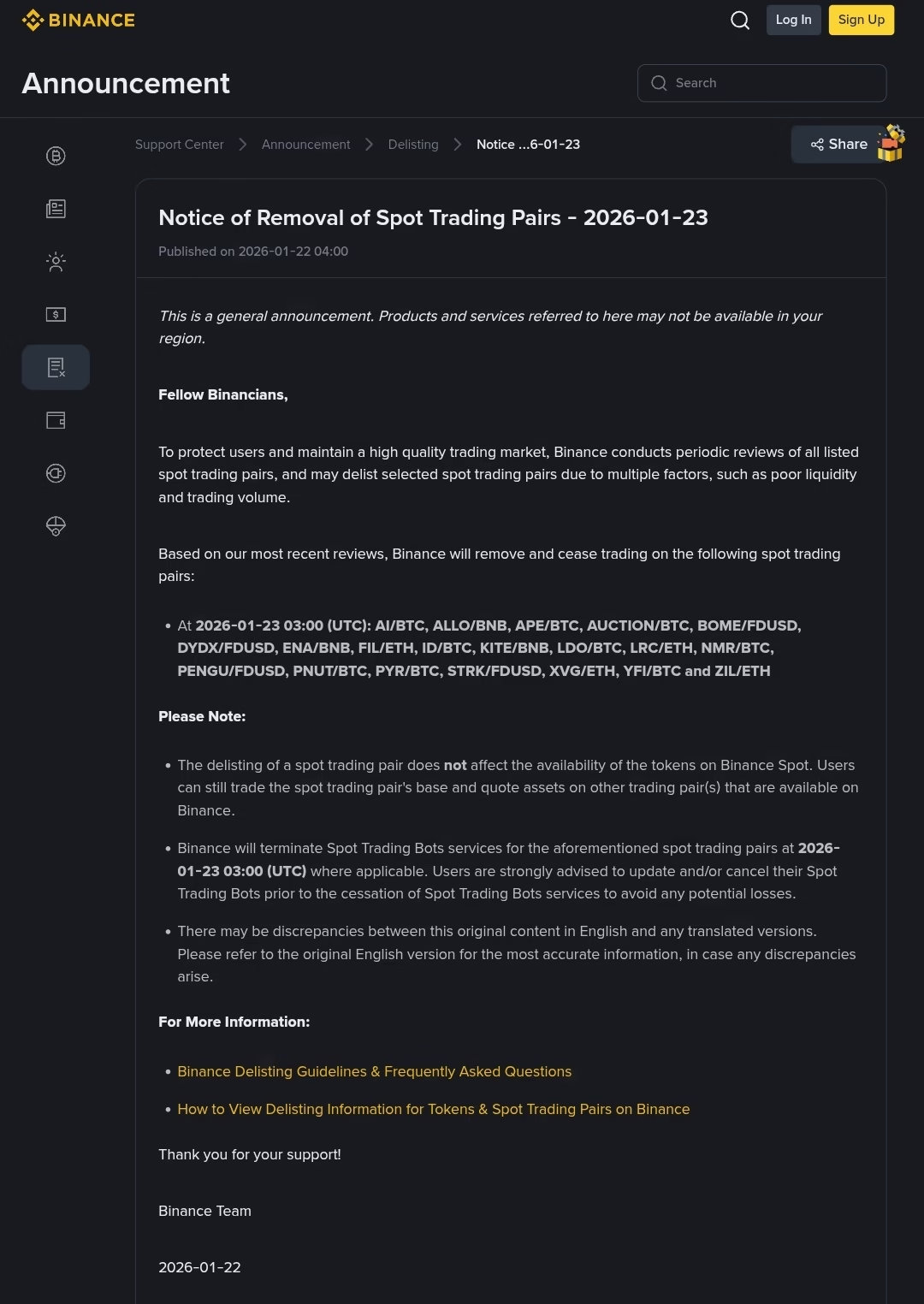
The newly announced Binance delisting focuses on spot market pairs rather than full token removals. According to the exchange, trading pairs such as AI/BTC, FIL/ETH, DYDX/FDUSD, LRC/ETH, XVG/ETH and YFI/BTC will no longer be supported once the changes take effect. While Bitcoin and Ethereum remain listed assets, their role as quote currencies in several markets has been reduced.
This Binance delisting means traders who previously relied on direct BTC or ETH pairings will now need to route trades through alternative quote assets such as USDT, BNB or FDUSD. Binance noted in its announcement that most of the affected tokens will still be available through these stablecoin or exchange-native pairs.
“Starting Jan. 23 at 3:00 a.m. UTC, Binance is going to stop supporting a number of spot trading pairs,” — Binance, exchange announcement.
The decision underscores a broader shift in market structure on the platform, where stablecoin-denominated trading has increasingly overtaken BTC and ETH pairs in terms of volume and depth.
The Binance delisting spans a wide range of crypto sectors. Prominent decentralized finance projects such as Lido (LDO), dYdX (DYDX) and Yearn Finance (YFI) are included, alongside infrastructure tokens like Filecoin (FIL), Zilliqa (ZIL) and Verge (XVG). Meme coins Book of Meme (BOME) and Peanut (PNUT) are also among those losing specific pairings.
In addition, less conventional assets such as Ethena (ENA) and Numeraire (NMR) were named in the delisting list. Despite the breadth of affected tokens, Binance emphasized that none are being removed entirely from the platform.
“None of the tokens are being delisted entirely — just stripped of specific quote assets,” — Binance, statement on market changes.
This clarification is central to understanding the Binance delisting strategy. Rather than signaling a loss of confidence in the projects themselves, the exchange appears focused on reducing underused markets and consolidating liquidity into fewer, deeper trading pairs.
Binance has framed the delisting as part of what it calls “market quality” optimization, pointing to changes in user behavior and declining activity in certain BTC- and ETH-quoted markets.
“Binance calls this ‘market quality’ optimization,” — Binance, exchange communication.
For manual traders, the immediate effect of the Binance delisting is reduced flexibility in executing strategies that depend on direct Bitcoin or Ethereum pairings. For automated traders, the impact is more direct: Spot Trading Bots connected to the affected pairs will automatically terminate unless users intervene before the delisting takes effect.
The exchange also warned that strategies involving liquidity routing, pair arbitrage or hedging may require adjustment, as fewer direct paths now exist between certain assets and BTC or ETH. This reinforces a growing trend in which stablecoins, rather than flagship cryptocurrencies, serve as the primary liquidity base on centralized exchanges.
Beyond the immediate operational changes, the Binance delisting highlights a structural evolution in crypto trading. BTC and ETH pairs, once considered the default liquidity standard, appear to be giving way to USD-pegged alternatives that offer more predictable pricing and tighter spreads.
For traders, the message is clear: while assets remain tradable, access routes are narrowing. For the broader market, the move reflects Binance’s preference for depth over breadth as it manages an increasingly complex ecosystem.
As the January 23 deadline approaches, users are being urged to review open orders, bot strategies and portfolio structures to avoid unexpected disruptions linked to the Binance delisting.



Copyright © 2025 - The Bit Gazette.