


- Trending
- Comments
- Latest

Bitcoin ETF inflow returned sharply at the start of 2026, signaling renewed institutional appetite for regulated crypto exposure after a brief year-end sell-off.
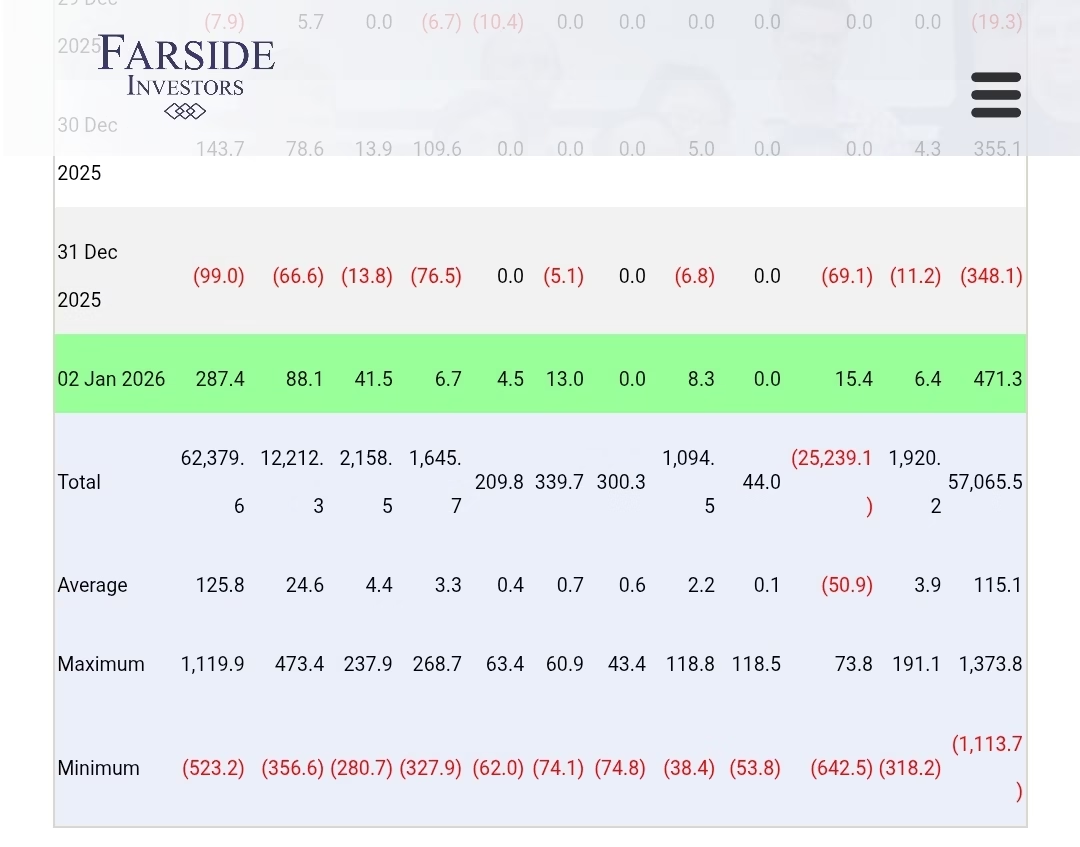
On the first trading day of the new year, US-listed spot Bitcoin exchange-traded funds recorded approximately $471 million in net inflows, according to data from Farside Investors.
The rebound followed a $348 million outflow on December 31, marking a swift turnaround in market sentiment as Bitcoin prices recovered and broader crypto markets stabilized.
“US-listed spot Bitcoin exchange-traded funds attracted about $471 million in inflows on the first trading day of the year,” — Farside Investors data.
The early-January Bitcoin ETF inflow marked a decisive reversal from the final trading session of 2025, when the sector experienced a notable pullback. On December 31, spot Bitcoin ETFs collectively recorded $348 million in net outflows, reflecting profit-taking and portfolio rebalancing typically associated with year-end positioning.
That weakness proved short-lived. By the next trading session, buying pressure returned across the board, with no spot Bitcoin ETF posting net losses. Market participants interpreted the shift as evidence that demand had been delayed rather than derailed, with investors re-entering positions as the calendar turned.
The sharp contrast between the two sessions highlights the sensitivity of Bitcoin ETF inflow trends to short-term market dynamics.
While year-end flows are often distorted by tax considerations and balance-sheet adjustments, the first trading days of a new year can provide a clearer signal of underlying demand.
BlackRock’s iShares Bitcoin Trust (IBIT) emerged as the clear leader in the latest Bitcoin ETF inflow wave. The fund attracted approximately $287 million in net inflows during the opening session of 2026, accounting for more than half of the total inflows recorded across all spot Bitcoin ETFs.
Funds managed by Fidelity and Bitwise also posted strong gains, reinforcing the concentration of demand among the largest and most established issuers. Together, these products have consistently dominated Bitcoin ETF inflow figures since spot ETFs were approved, benefiting from brand recognition and deep distribution networks.
“BlackRock’s IBIT led the group with inflows of approximately $287 million,” — Farside Investors data.
The dominance of a few major players reflects investor preference for liquidity and scale, particularly during periods of heightened market volatility. As competition among issuers intensifies, daily Bitcoin ETF inflow data continues to shape narratives around market leadership and investor trust.
The resurgence in Bitcoin ETF inflow coincided with a broader recovery across digital asset markets. Bitcoin climbed back above the $90,000 level during the same period, while Ethereum advanced past $3,100, supporting risk-on sentiment across the sector.
According to CoinGecko, total cryptocurrency market capitalization rose by roughly 2% over the past 24 hours to approximately $3.1 trillion.
Ethereum-focused products also mirrored the recovery seen in Bitcoin ETF inflow trends. After recording a $72 million outflow on the final day of 2025, US-listed spot Ethereum ETFs returned to positive territory, attracting around $174 million in fresh capital.
The bulk of those inflows were driven by funds managed by Grayscale and BlackRock, underscoring the continued influence of major asset managers across crypto-linked investment vehicles.
The parallel rebound suggests that Bitcoin ETF inflow is part of a broader reassessment of crypto exposure rather than an isolated development. As prices stabilized and volatility eased, investors appeared more willing to reallocate capital into regulated products tied to digital assets.
Looking ahead, analysts will closely monitor whether the early-January Bitcoin ETF inflow marks the beginning of a sustained trend or merely a short-term bounce following year-end distortions.
For now, the data points to renewed confidence, with spot ETFs once again serving as a primary channel for capital entering the crypto market at the start of 2026.



Copyright © 2025 - The Bit Gazette.