


- Trending
- Comments
- Latest

Bitcoin’s consolidation below $100,000 has sparked debate over whether quantum computing poses a near-term threat to the cryptocurrency, but prominent analysts say the concerns are overblown and distract from more immediate market dynamics.
Glassnode’s chief analyst James Check dismissed quantum risk as the driver of recent price weakness, pointing instead to sustained selling pressure from long-term holders as Bitcoin trades near $90,000.
“Quantum risk is real in theory, but it is not what’s driving current price weakness,” Check said. “This market has been dominated by sustained selling pressure from long-term holders.”
While many Bitcoiners dismiss the quantum angle, Bitcoin price slump anxiety has found traction among traditional finance executives.
Jefferies strategist Christopher Wood recently removed Bitcoin from his widely followed Greed & Fear portfolio, citing long-term quantum security risks.
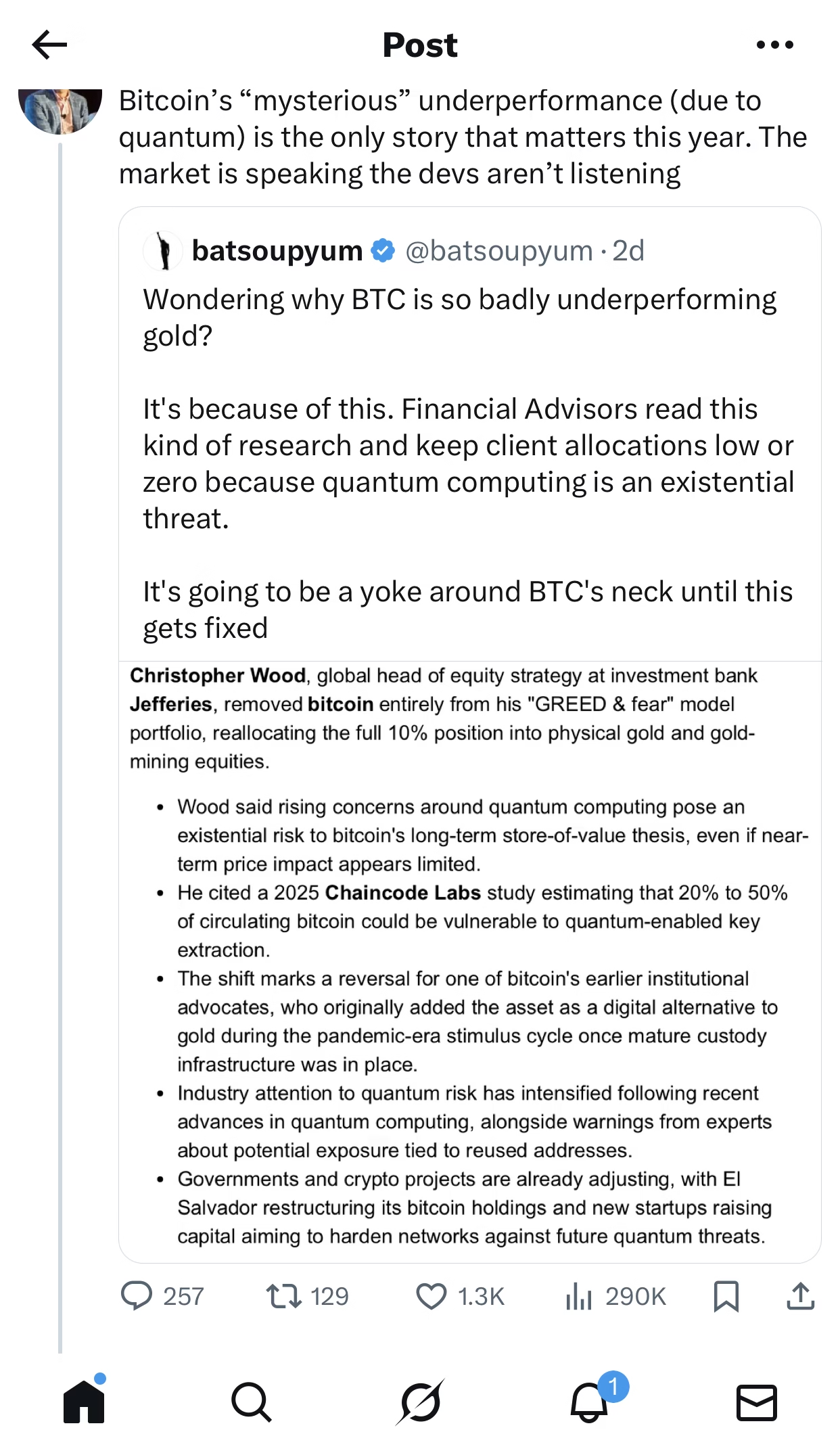
Wood’s move sent ripples across the industry, signaling that Bitcoin price slump fears linked to quantum computing are entering institutional risk frameworks.
“Quantum breakthroughs could challenge the cryptographic foundations of blockchains,” Wood noted, explaining his decision to step aside from BTC exposure.
That decision intensified debate over whether quantum concerns are a genuine risk—or simply a convenient narrative for Bitcoin’s stalled momentum.
According to Cryptopolitan, quantum computing relies on qubits, which process information differently from classical computers. While still in its infancy, recent milestones have reignited Bitcoin price slump fears.
Google claimed progress toward practical quantum applications, while IBM successfully entangled 120 qubits in a stable GHZ state with a reported fidelity of 0.56.
Some researchers argue such advances could one day threaten elliptic curve cryptography (ECC), which underpins Bitcoin’s security.
Yet experts stress that breaking Bitcoin’s ECC remains far beyond current capabilities.
Contrary to alarmist narratives, several crypto-native analysts argue the Bitcoin price slump is being driven by supply dynamics—not quantum science.
Vijay Boyapati, a respected Bitcoin author, dismissed the idea that quantum fears explain BTC’s stagnation.
“Quantum computing is a legitimate long-term concern,” Boyapati said, “but it does not explain current price action. The real issue is supply unlocking once certain price thresholds are hit.”
Boyapati pointed to whale behavior and profit-taking as more plausible explanations for Bitcoin’s muted performance.
Some market observers believe the Bitcoin price slump debate reflects a widening gap between institutional caution and crypto-native conviction.
Jamie Coutts, chief crypto researcher at Real Vision, acknowledged that while quantum risks do not directly correlate with price movements, perception matters.
“Markets don’t need quantum computers to be functional today,” Coutts said. “They just need to believe the risk is coming.”
Coutts added that Wood’s move signals that quantum risk is already influencing institutional decision-making, even if broader consensus remains divided.
At the time of publication, Bitcoin was trading near $89,800, flat over 24 hours and up roughly 6% on the week. Still, the Bitcoin price slump remains evident, with BTC trapped in a tight range between $87,000 and $97,000 since the start of the year.
James Check emphasized that a brutal $19 billion market drawdown last October crushed bullish momentum multiple times, leaving Bitcoin vulnerable to prolonged consolidation.
“That sell-off killed every prior bull thesis—three times over,” Check said.
While quantum computing poses a long-term challenge worth preparing for, analysts agree it is not the immediate culprit behind the Bitcoin price slump.
For now, heavy selling pressure, shifting institutional sentiment, and market structure remain the dominant forces shaping Bitcoin’s trajectory.



Copyright © 2025 - The Bit Gazette.