






- Trending
- Comments
- Latest

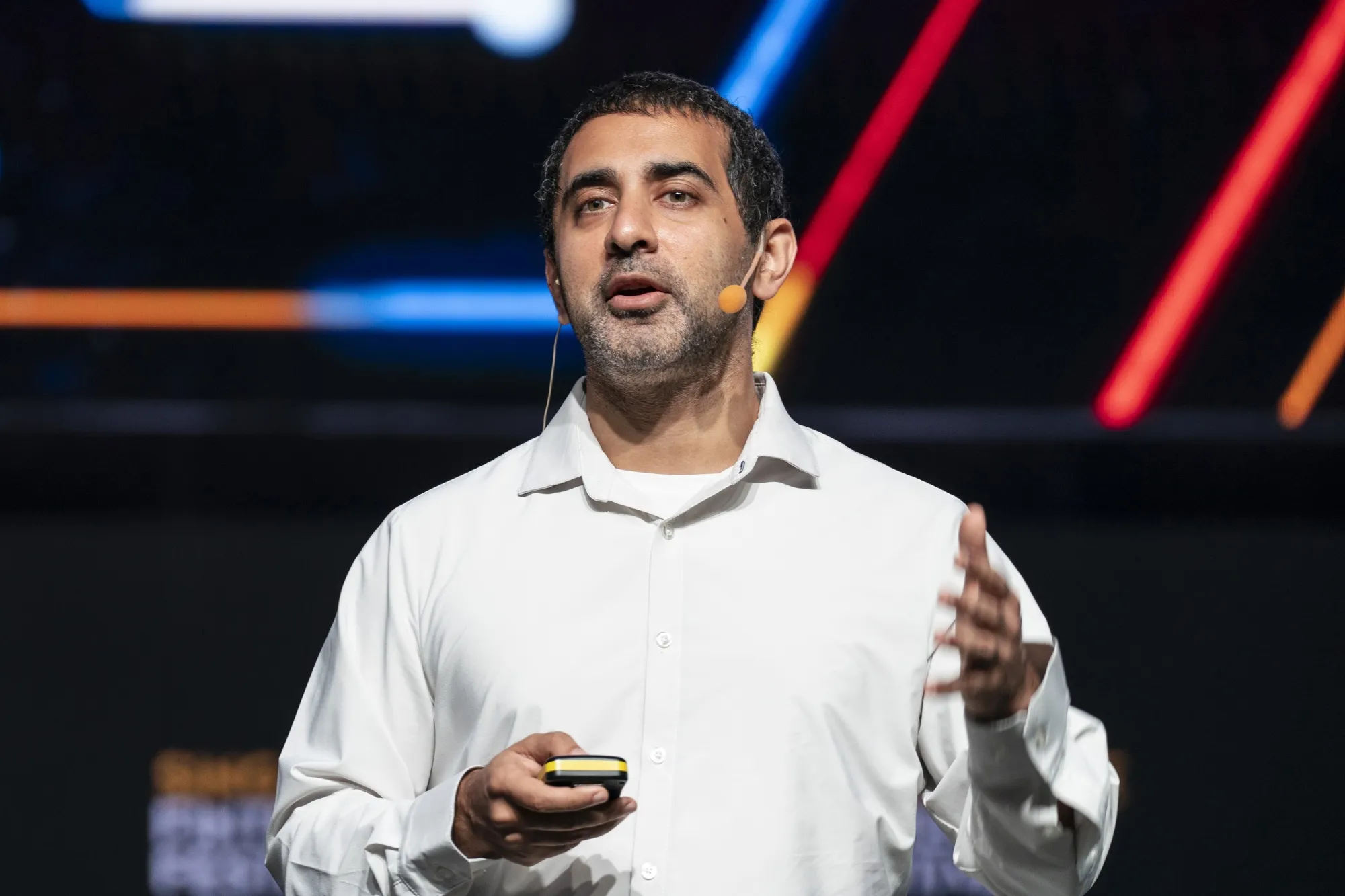
Tech investor and former Coinbase chief technology officer Balaji Srinivasan has called on the crypto industry to develop additional financial infrastructure for displaced individuals and stateless populations.
In a Saturday post on X (formerly Twitter), Srinivasan highlighted the rising number of refugees driven by conflict and economic migration.
“We should build more crypto tools for refugees and stateless people,” Srinivasan wrote, emphasizing blockchain’s ability to operate when traditional financial systems fail.
He cited Ukrainians fleeing war and migrant workers leaving Gulf countries amid regional tensions as key examples of communities that could benefit from decentralized financial systems.
Srinivasan described crypto as “wartime mode for the internet,” arguing that decentralized networks are resilient to cyberattacks, infrastructure failures, and financial restrictions.
“Public blockchains can continue processing transactions even if centralized systems face disruptions,” he added. This capability, he said, makes crypto an essential tool in crisis situations where conventional banking is inaccessible.
Despite the clear need, many in the crypto sector have yet to create dedicated solutions for displaced populations.
Andi Duro, founder of research site TwoCents, noted that while crypto has potential, companies seldom prioritize refugees as users.
“It’s very unfortunate that crypto is a great solution for refugees who are stateless and forced to interact with crumbling institutions and payment rails,” Duro wrote. “But nobody in crypto builds for refugees because they’re not useful consumers for gambling.”
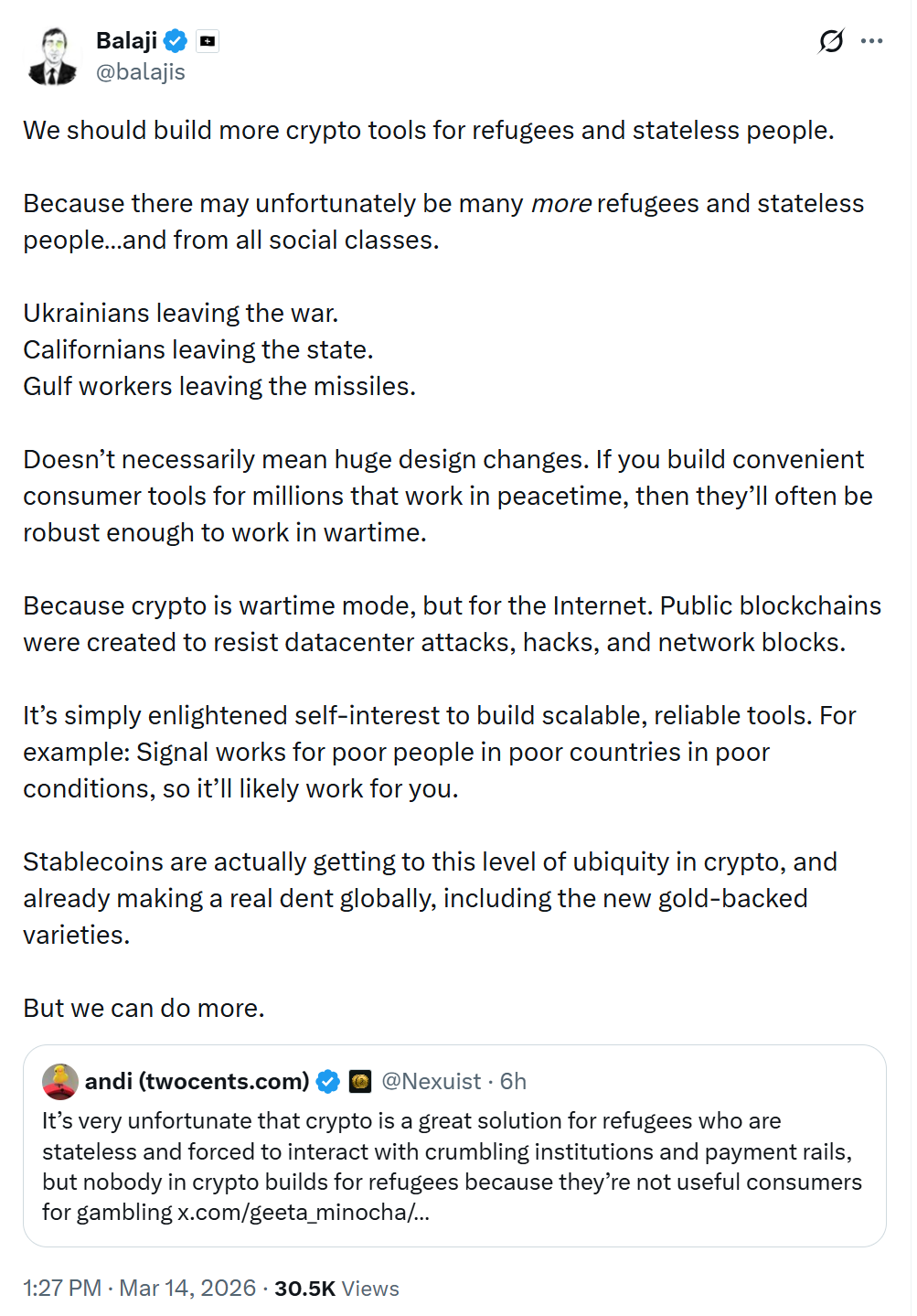
Srinivasan acknowledged these limitations but pointed to early successes. Stablecoins, such as USDC, already provide a form of borderless digital money that can reach populations often excluded from traditional financial systems.
“But we can do more,” he said, urging the sector to innovate further and tailor services specifically for displaced communities.
Market movements suggest that stablecoins could serve as an effective tool for global mobility.
Cointelegraph reported that the market capitalization of USDC is approaching a record $80 billion, with circulating supply reaching roughly $79.2 billion up from around $70 billion in early February.
One Dubai-based analyst attributed part of the surge to capital flight from the United Arab Emirates amid turbulence in the real estate sector.
The DFM Real Estate Index has declined sharply since the start of the war, prompting investors to move funds into stablecoins.
This trend demonstrates how crypto for refugees and global migrants could provide an accessible and stable alternative when local financial systems are unstable.
Srinivasan emphasized that beyond stablecoins, the crypto industry has opportunities to design financial products explicitly for stateless or displaced people.
He highlighted the resilience of decentralized networks, noting their ability to process transactions even when governments or banks are unable to maintain reliable services.
“Blockchain can be the backbone for financial inclusion in crises, allowing refugees to maintain access to funds, send remittances, and transact securely across borders,” Srinivasan said.
Duro added that broader adoption will require a shift in priorities: “The industry must start considering refugees not as niche users but as essential beneficiaries of crypto innovation.”
As conflicts and economic migration continue to displace millions, the call for crypto for refugees is likely to intensify.
By creating tools that prioritize accessibility, stability, and decentralization, the crypto sector could play a critical role in supporting stateless populations worldwide.
With global demand rising and the success of stablecoins such as USDC as proof of concept, industry observers say there is a clear opportunity for blockchain developers to lead the charge in financial inclusion for refugees.



Copyright © 2025 - The Bit Gazette.

