

- Trending
- Comments
- Latest

Coinbase CEO Brian Armstrong is meeting with bank executives at the World Economic Forum in Davos this week to salvage stalled U.S. crypto legislation, days after his company withdrew support for a Senate bill it called “materially worse than the current status quo” and triggered the collapse of a planned markup vote.
The meetings come as lawmakers, regulators, banks and crypto firms struggle to agree on how digital assets should be governed in the United States, and who should benefit most from the emerging financial infrastructure.
Armstrong’s presence in Davos from Jan. 19 to 23 marks a shift away from Washington-centered lobbying toward behind-the-scenes diplomacy on the global stage.
The market structure bill under discussion is intended to define regulatory boundaries for crypto markets, including oversight responsibilities and the treatment of stablecoins. However, disagreements between the crypto industry and traditional banks have stalled progress.
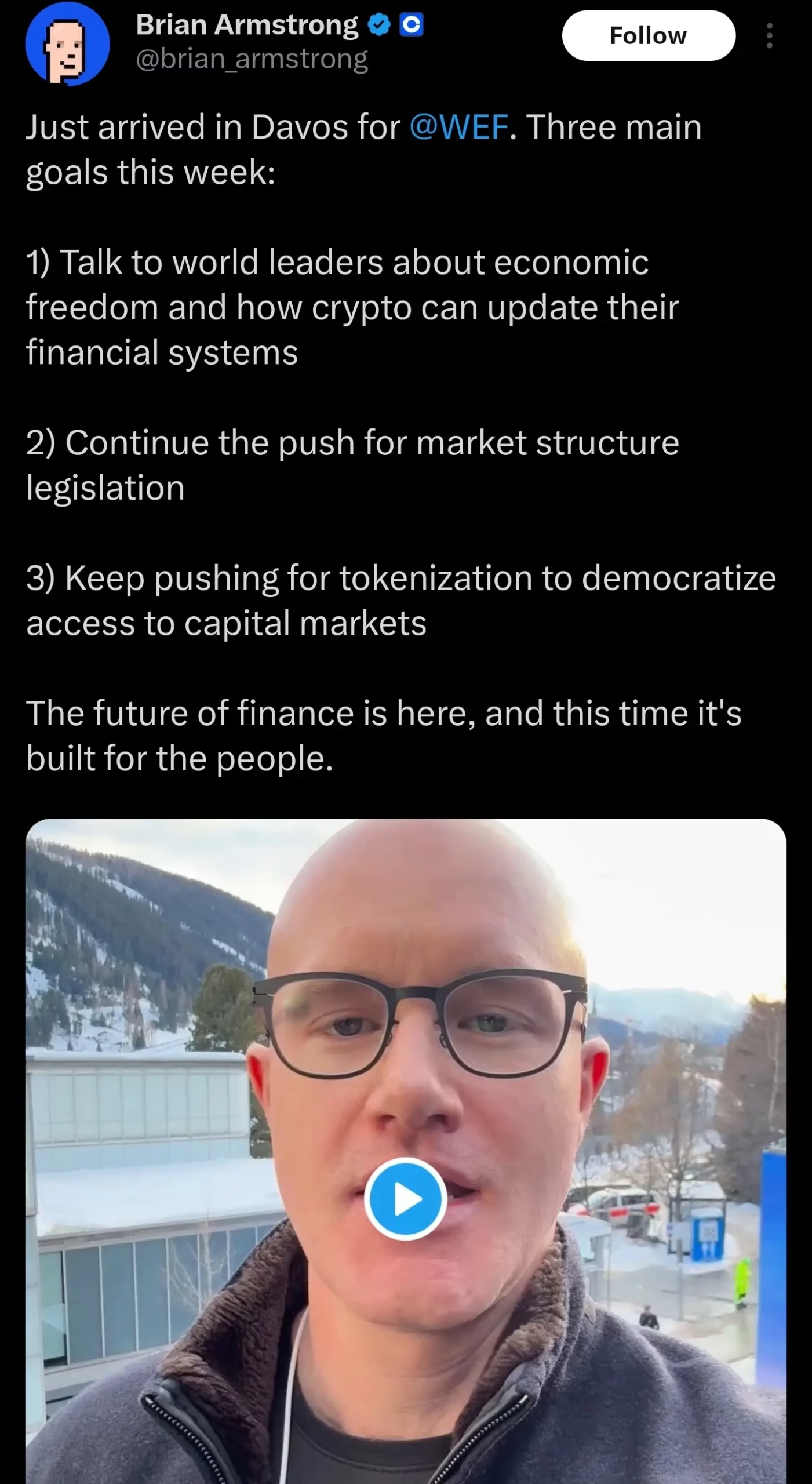
In a video shared Monday on X, Armstrong signaled that his engagement in Davos would extend beyond U.S. lawmakers.
“I’m talking to different world leaders about economic freedom and how crypto can update their financial system,” — Brian Armstrong, CEO, Coinbase.
He added that global conversations were increasingly important as countries reassess how financial systems can evolve in the digital era.
The Davos meetings are expected to include discussions with bank chief executives who have raised concerns that elements of the bill could weaken traditional financial institutions. Armstrong has argued that the current draft of the legislation risks undermining innovation while favoring incumbents.
The renewed push follows Coinbase’s decision last week to withdraw its support for a revised draft of the CLARITY Act, a legislative vehicle closely tied to the market structure bill. The 182-page Senate Banking Committee draft was circulated just days before a scheduled markup vote, giving industry stakeholders limited time to review its implications.
After examining the text, Armstrong said the proposed changes were “materially worse than the current status quo,” arguing that they would restrict core crypto activities rather than provide clarity. One of the most contentious provisions involved limits on stablecoin yields, which banking groups have warned could pull deposits away from traditional banks.
“Stablecoins should be an opportunity for both banks and crypto companies as long as we’re all treated on a level playing field,” — Brian Armstrong, CEO, Coinbase.
He maintained that the draft language would stifle innovation in the stablecoin sector while granting an unfair advantage to legacy financial institutions.
Armstrong also raised alarms about expanded government access to financial data and a proposed shift in regulatory authority from the Commodity Futures Trading Commission to the Securities and Exchange Commission.
These concerns, he said, collectively justified pulling Coinbase’s support, a move that led Senate leaders to postpone the markup indefinitely.
The setback underscored how fragile consensus remains around the market structure bill, particularly as banks and crypto firms defend competing interests. Banking executives have argued that allowing yield-bearing stablecoins could destabilize deposit bases, while crypto companies counter that such products are essential to competing globally.
With legislative momentum stalled, Davos has become a neutral venue to reassess the bill’s economic implications away from domestic political pressure. According to Reuters, U.S. President Donald Trump is expected to attend the forum, though it remains unclear whether digital asset policy will feature on his agenda.
Armstrong indicated that his discussions with banks would focus on compromise rather than confrontation.
“We’re going to continue to work on the market structure legislation, and meet with some of the bank CEOs to figure out how we can make this a win-win,” Brian Armstrong, CEO, Coinbase.
The comment reflects a strategic shift toward collaboration after weeks of public disagreement.
Beyond U.S. legislation, Armstrong plans to use the forum to discuss how crypto technologies can modernize outdated financial infrastructure worldwide. Tokenization, he has argued, could broaden access to capital markets and lower barriers for participation, particularly in emerging economies.
While the immediate goal is to unblock talks on the market structure bill, the broader debate in Davos highlights a growing recognition that digital assets are no longer a fringe issue.
Instead, they are increasingly viewed as a structural component of future financial systems. Whether the current impasse can be resolved will depend on whether banks and crypto firms can align on shared economic benefits without compromising their core interests.
As negotiations continue, the fate of the market structure bill is likely to shape not only U.S. crypto regulation but also global perceptions of how adaptable traditional financial institutions can be in the face of rapid technological change.



Copyright © 2025 - The Bit Gazette.