
- Trending
- Comments
- Latest

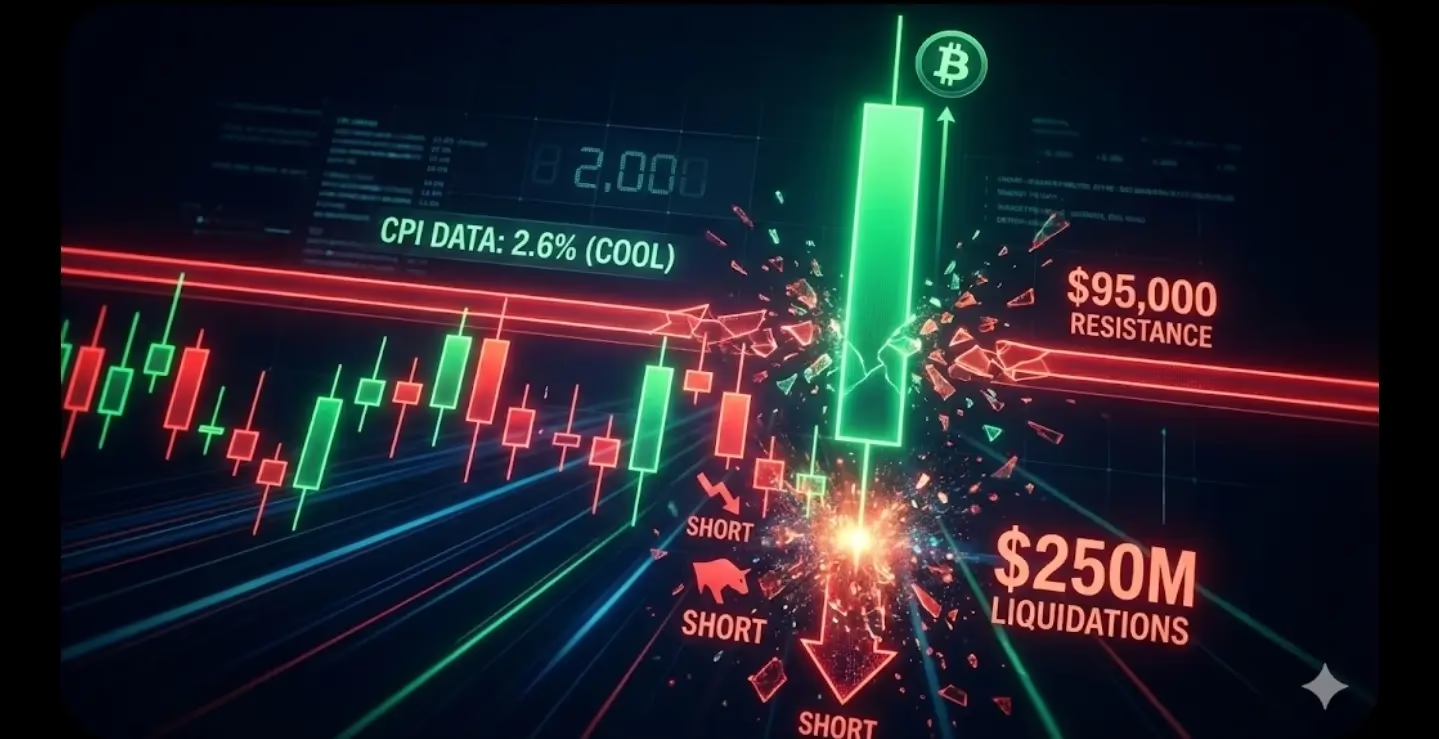
A lower-than-expected core inflation reading on Tuesday triggered a violent short squeeze across cryptocurrency markets, liquidating over $250 million in bearish positions as bitcoin surged past $95,000, according to data from CoinGlass.
The December CPI report showed core inflation at 2.6%—a tenth of a percentage point below forecasts, setting off a cascade of forced buy orders that shattered a five-day consolidation range.
For the last five days, bitcoin had been trapped in a narrow range between $90,000 and $92,000. On-chain data showed that while retail investors were selling out of boredom, whales had quietly accumulated over 56,000 BTC since mid-December. This created a massive liquidity gap above the market.
The U.S. Bureau of Labor Statistics released the December CPI data yesterday morning. The numbers delivered a bullish surprise:
In the world of high-leverage trading, that tenth of a percentage point proved to be a death sentence for bears.
As soon as the 2.6% figure hit the wires, the algorithms took over. Bitcoin didn’t just move; it exploded.
Within minutes, BTC shredded through the resistance wall at $93,000. As the price breached that level, it triggered stop-loss orders for thousands of short sellers. These stop-losses forced them to buy bitcoin to close their positions, which pushed the price even higher, triggering more liquidations in a classic cascade effect.
By late afternoon, BTC had rocketed past $95,000 and briefly touched $96,000. By the time the dust settled, over $250 million in short positions were wiped out, CoinGlass data shows.
While bitcoin grabbed the headlines, XRP saw a freakish 1,122% short-side liquidation imbalance, according to CoinGlass. Traders were so heavily positioned against a breakout that when the price moved up, the short-to-long liquidation ratio hit a staggering 11-to-1 asymmetry.
This isn’t just about price action; it’s about shifting market dynamics. With the Fed Chair currently under a DOJ investigation, bitcoin is being repriced by some market participants as a non-sovereign international reserve asset.
The timing is notable: Michael Saylor’s purchase of 13,627 BTC, announced just 24 hours prior to the rally, is already showing millions in paper gains.
The December CPI reading may have been the immediate trigger, but the magnitude of the short squeeze reveals how heavily positioned traders were against a breakout—a bet that cost them a quarter of a billion dollars in a single trading session.



Copyright © 2025 - The Bit Gazette.