






- Trending
- Comments
- Latest

Steve Beckett’s hands were shaking as he stood inside a Circle K convenience store in Indiana, staring at a glowing Bitcoin ATM.
The 66-year-old ordained minister and volunteer firefighter had been on the phone for hours with people he believed were from Microsoft, his bank, and even the Federal Reserve.
They told him his accounts were compromised. The only way to “secure” his money, they said, was to feed cash into the machine in front of him.
According to an ICIJ/CNN investigation, Beckett deposited nearly $7,000. Roughly $2,000 disappeared instantly in fees. The rest was gone forever.
Today, Beckett says he can’t afford birthday gifts for his daughters.
When I left traditional finance and tech journalism to cover crypto, I expected to write about innovation—faster rails, financial inclusion, perhaps even a reimagined relationship between people and money.
Instead, my early focus has been on scams and hacks. And more recently, I’ve found myself investigating something far darker: an industry segment that appears to generate enormous profits by looking the other way while vulnerable people are systematically defrauded.
Crypto ATMs were sold as a bridge into digital finance. What they’ve become, in practice, is a toll booth for scams.
The numbers are not just bad. They are staggering.
According to the FBI’s 2024 Internet Crime Report, complaints involving crypto ATM and kiosk fraud jumped 99% year over year, reaching nearly 11,000 reports and $247 million in losses. That figure alone would make crypto ATMs one of the fastest-growing fraud vectors in the United States.
And it’s getting worse. In a subsequent FBI alert covering 2025 activity, the bureau reported that losses tied to crypto ATMs had already exceeded $333 million between January and November, signaling that the curve is still steeply upward.
State-level investigations paint an even more disturbing picture. An analysis cited in the Iowa Attorney General’s lawsuit found that more than 50% of Bitcoin Depot transactions in Iowa were linked to scams.
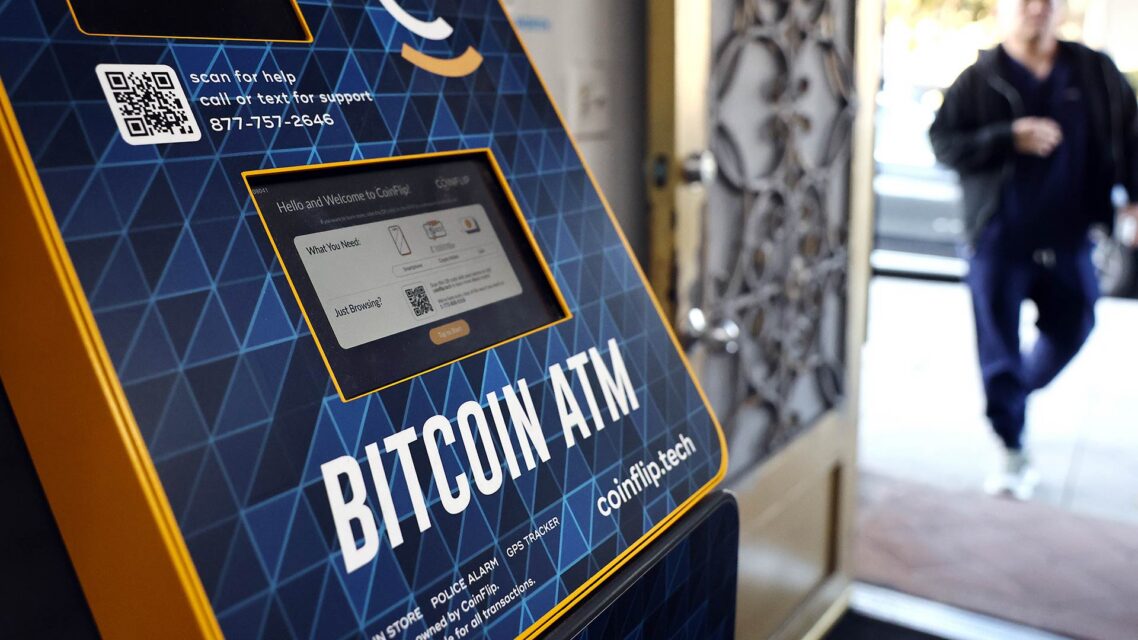
In the same court filings, rival operator CoinFlip was alleged to have an even higher rate—up to 90% of transactions connected to fraud.
Perhaps most damning are the words of industry insiders themselves. A former Bitcoin Depot employee told investigators that
“if we were to eliminate scams 100%, we would be hurting,” a quote documented in the ICIJ investigation. DigitalMint founder Marc Grens went further, admitting that in the company’s largest transactions, “95% of the customers were victims.”
I’ve read about financial fraud before—credit card skimming rings, insider trading, even complex derivatives abuses. I have never seen an industry where former executives so openly concede that eliminating crime would undermine the business model itself.
To understand why crypto ATM scams are so pervasive, you have to understand how the economics work.
Take Bitcoin Depot, the largest crypto ATM operator in the United States. According to its SEC filings, the company has placed machines in more than 750 Circle K stores, paying host retailers roughly $700 per machine per month.
That partnership alone accounted for about 25% of Bitcoin Depot’s 2024 revenue, making Circle K not a passive bystander but a core distribution partner.
Then there are the fees. Bitcoin Depot discloses transaction fees that can range from 15% to as high as 50%, depending on the location and transaction size, as outlined in the same SEC documents. Detective Gerard Lotz, who has investigated numerous cases, put it bluntly in the ICIJ report: “I don’t know any investment firm anywhere that charges 30%.”
Bitcoin Depot’s pitch to retailers has historically promised “ZERO RISK. ZERO COST. MONTHLY REVENUE,” language cited in the ICIJ investigation. The risk, of course, is simply outsourced—to elderly customers, immigrants, and first-time crypto users who are panicked, isolated, and manipulated.
Warnings on machines do little to stop this. As Peachtree City detective Brad Williams explained in the same investigation, “These scams can go on for days… when a victim has been broken down psychologically, it doesn’t matter what’s in front of them.”
From the vantage point of mainstream finance and tech reporting, this looks like an alternate reality—one where an intermediary can watch fraud occur 50–90% of the time and still collect fees without consequence.
Even in legacy finance, flawed as it is, there’s an expectation of remediation. In the crypto ATM sector, indifference seems structural.
Circle K’s role exposes the industry’s favorite escape hatch: “It’s not our machine.”
Despite mounting evidence of abuse, Circle K extended its contract with Bitcoin Depot through mid-2026 in January 2025, a decision confirmed in the ICIJ/CNN investigation.
By that point, the damage was already undeniable. Since January 2024, more than 150 victims reported losing over $1.5 million at Circle K and Holiday stations, according to the same reporting.
Even Circle K employees see the harm firsthand. One district manager told police, “I hate these machines. I’d like to get them out,” a remark documented by investigators. Another store witnessed a victim return with a sledgehammer, attempting to smash open the ATM after realizing his life savings were gone.
Then there’s Debbie Joy, an assistant manager at a Circle K in Georgia. According to the ICIJ investigation, Joy has personally intervened in more than 10 attempted scams, keeps a local detective’s number on hand, and even received a community award for her efforts. Yet she sums up corporate policy simply: “Circle K policy is it’s not our machine, it’s not our problem.”
That defense collapses under scrutiny. Circle K collects rent every month. Its stores provide the physical space and legitimacy scammers rely on. Hiding behind ownership technicalities while profiting from the fallout isn’t neutrality—it’s complicity.
There have been attempts to fix this.
Marc Grens tried to establish a voluntary code of conduct for crypto ATM operators. Only one company joined, a failure he acknowledged in the ICIJ report. Meanwhile, at least 18 U.S. states have passed laws aimed at curbing crypto ATM fraud, as tracked by consumer advocates and state regulators.
But scammers adapt faster than lawmakers. Minnesota’s law, which caps daily transactions at $2,000, has been easily circumvented through multiple same-day transactions, as outlined in state regulatory guidance.
Refund mechanisms are equally broken—victims miss narrow deadlines, can’t find forms, or are told they should have “known better,” all detailed in the ICIJ investigation.
Bitcoin Depot’s standard defense is that it “cannot be held liable for the criminal acts of third-party scammers,” a claim repeated in court filings cited by investigators. That argument rings hollow when internal analyses show that a majority of transactions may be fraudulent.
At some point, ignorance stops being plausible.
I didn’t come to crypto journalism to call for bans. I came to cover innovation. But what I’ve found here isn’t innovation—it’s exploitation dressed in digital clothing.
A few steps are unavoidable:
First, a temporary moratorium on new crypto ATM installations until enforceable federal standards exist.
Second, mandatory cooling-off periods—24 to 48 hours—for first-time users over 60.
Third, retailer liability. If Circle K profits from these machines, it should share legal exposure when scams occur.
Fourth, fee caps. No legitimate financial service should charge 30–50%. Cap fees at 5% or ban the machines outright.
Finally, reverse the burden of proof. Victims shouldn’t scramble for police reports. Operators should have to prove a transaction wasn’t fraudulent.
Bitcoin Depot reported $126 million in revenue in 2024, according to its SEC filings. Steve Beckett lost everything.
The crypto industry loves to talk about “banking the unbanked” and “financial freedom.” But when your profits depend on elderly ministers being deceived into feeding cash into a machine, you’ve recreated the very system crypto once promised to disrupt.
The industry can do better. It must do better. And if it won’t police itself, regulators will—before the next Steve Beckett walks into a Circle K.