





- Trending
- Comments
- Latest

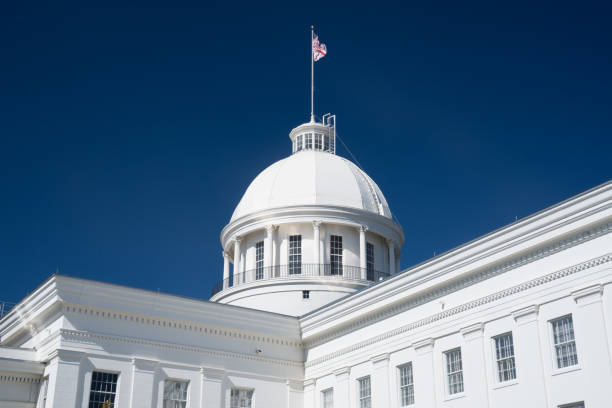
Crypto super PAC Fairshake has deployed $5 million to support U.S. Representative Barry Moore in Alabama’s Republican Senate primary, marking one of the industry’s first major investments in the 2026 midterm cycle.
The Trump-endorsed congressman has positioned himself as a leading pro-crypto voice in the House, backing key digital asset legislation including the GENIUS Act stablecoin framework.
The funds deployed by Defend American Jobs, a Republican-aligned affiliate of the crypto-industry Super PAC Fairshake, will underwrite a five-week advertising campaign featuring television spots across broadcast networks.
The messaging is designed to elevate Moore’s profile ahead of the May 19 Republican primary for Alabama’s open U.S. Senate seat.
Fairshake, which has amassed a political war chest far larger than most industry PACs, sees the Alabama contest as a strategic opening.
According to available disclosures, the crypto-political operation has raised upwards of $193 million ahead of the 2026 midterms, dwarfing the $130 million it spent in the 2024 cycle on pro-crypto candidates.
Barry Moore, who represents Alabama’s 1st Congressional District in the U.S. House, has cultivated a reputation within industry circles as a reliable supporter of digital-asset legislation.
He backed key measures passed in 2025, including the GENIUS Act (a stablecoin regulation framework, now Public Law 119-27) and efforts to clarify the regulatory regime for digital commodities, outcomes hailed by many in the crypto sector.
Moore’s campaign has leaned into that identity. On social media, he dismissed scepticism about digital assets, declaring:
“Crypto is not a fad. It is part of our future. It is part of Alabama’s future.” — Barry Moore, U.S. Representative.
Industry supporters argue that electing policymakers familiar with blockchain technology and digital finance is essential to fostering growth and maintaining US leadership in the sector.
In its announcement of the ad buy, Fairshake stated that it is proud to stand with Barry Moore, a leader who will fight for economic growth and make America the crypto capital.
Fairshake’s investment in Moore’s campaign represents one of the earliest and most visible incursions of the crypto industry into the 2026 federal election cycle, analysts say.
While Super PACs cannot coordinate directly with candidates, their independent expenditures can influence voter awareness and perception, particularly in competitive primaries.
After deploying record funding in 2024 and seeing a wave of pro-crypto lawmakers elected to Congress, digital-asset stakeholders are now aiming to shape not just legislative outcomes but the composition of Congress itself.
Political scientists note that this mirrors the evolution of other tech sectors that built political infrastructure over successive cycles to protect and advance their interests.
Crypto PAC spending has grown sharply, fuelled by contributions from major firms including Coinbase, Ripple Labs, and venture backers such as Andreessen Horowitz.
For policymakers tracking the nexus of finance and regulation, Fairshake’s early bet in Alabama could have outsized implications.
A Moore victory would add another crypto-friendly voice to the Senate just as lawmakers prepare for renewed debates over digital-asset frameworks, enforcement authority, and consumer protections.
Critics argue that industry-backed spending risks deepening polarization around digital assets and may invite heightened scrutiny from regulators and consumer advocates alike.
Observers also caution that high-profile ad buys do not guarantee electoral success, particularly in races with multiple challengers.
Moore’s opponents include Alabama Attorney General Steve Marshall and several other Republican contenders.
As the 2026 midterms unfold, the Alabama Senate primary will be both a barometer of the crypto sector’s political clout and a test case for how digital-asset interests engage with public policy debates beyond markets and technology.



Copyright © 2025 - The Bit Gazette.