





- Trending
- Comments
- Latest

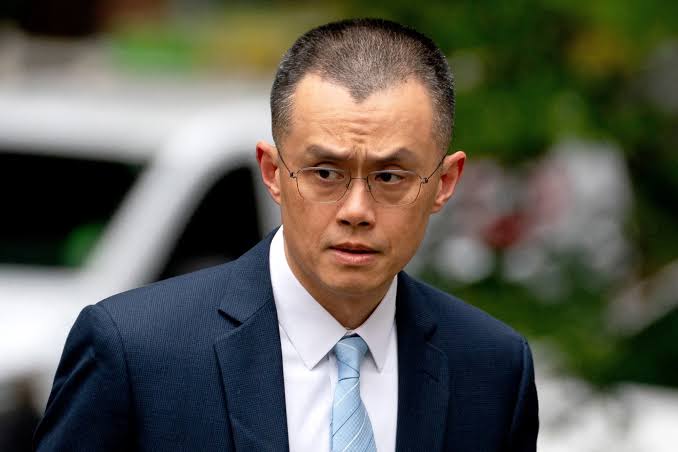
Changpeng Zhao’s unpublished memoir, Freedom of Money, is more than a founder’s comeback tale. It is an attempt to recast one of the most consequential corporate prosecutions in crypto history as a philosophical struggle over state power and financial autonomy. At its core, Zhao’s narrative argues that the U.S. government’s case against him and Binance was less about compliance failures and more about control — a perceived assault on what he calls Freedom of Money.
Yet the details surrounding his guilty plea, multibillion-dollar settlement and prison sentence complicate that framing.
The nearly 300-page draft, obtained by The New York Times, offers a rare first-person account of negotiations between Binance and the U.S. Justice Department. Zhao describes a legal siege, conflicting advice from elite attorneys and moments when he mentally prepared to become a fugitive. “The D.O.J. prioritized victory over justice,” he wrote. At another point, he said he feared prosecutors would “pull tricks” and “screw with me.”
But if Freedom of Money is meant to stand as a manifesto, it also doubles as a reminder that the crypto industry’s most powerful figures have operated in a regulatory gray zone — one that governments have increasingly moved to close.
Zhao’s central grievance is that the Justice Department overreached. Prosecutors accused Binance of violating anti-money-laundering laws and demanded $6.8 billion in penalties. Binance ultimately agreed to pay $4.3 billion, and Zhao pleaded guilty to a single count of violating an anti-money-laundering statute. In 2024, he was sentenced to four months in prison.
In Freedom of Money, Zhao presents this outcome as disproportionate and politically tinged. “The D.O.J. prioritized victory over justice,” he wrote, suggesting prosecutors were more interested in making an example of Binance than addressing specific compliance failures.
From an analytical standpoint, however, the settlement underscores how far the crypto sector has evolved from its early libertarian ethos. Freedom of Money, as imagined by crypto’s early evangelists, implied borderless transactions and minimal state oversight.
But Binance’s scale — the world’s largest exchange — made it impossible to operate outside traditional legal frameworks. When an exchange processes billions in daily transactions, the question ceases to be philosophical and becomes institutional.
Zhao’s argument frames enforcement as hostility to innovation. Regulators, in contrast, have increasingly argued that anti-money-laundering standards are not optional. The tension between those views defines the modern Freedom of Money debate.
The memoir also revisits Zhao’s rivalry with Sam Bankman-Fried, the former head of FTX who was later sentenced to 25 years in prison for fraud. Zhao recounts how concerns about FTX’s finances in 2022 led him to publish social media posts that triggered a run on the exchange.
“Did our relationship deteriorate to such a point that we don’t talk anymore?” Bankman-Fried wrote to Zhao, according to the manuscript.
Zhao’s recollection that Bankman-Fried asked for billions “as if he were asking for a bologna sandwich” paints a portrait of recklessness at the industry’s highest levels. Yet the episode also reveals how concentrated power had become within crypto. Two founders, operating largely outside traditional banking structures, could destabilize each other with a handful of messages.
Freedom of Money, in this context, did not eliminate systemic risk; it redistributed it. The FTX collapse demonstrated that decentralization rhetoric often masked centralized decision-making. Zhao’s narrative implies vindication — he survived, his rival did not — but the broader lesson was that unregulated platforms can amplify fragility.
Zhao’s manuscript contains pointed criticism of U.S. regulators, including Gary Gensler, the former chair of the Securities and Exchange Commission. Zhao recounts cordial early interactions with Gensler before the agency launched enforcement actions against Binance.
He also expresses sympathy for Donald Trump over the classified documents prosecution, writing, “If an employee took company files to read in the bathroom, I would be inclined to give him a bonus.”
The comment reflects how Zhao situates his experience within a broader critique of federal authority. In Freedom of Money, regulatory scrutiny is not merely legal friction but ideological overreach. That framing aligns with political narratives skeptical of centralized enforcement power.
Yet the practical outcome of Zhao’s case — a guilty plea and a substantial fine — suggests institutional resilience rather than regulatory collapse. Even after serving prison time and receiving a presidential pardon, Zhao remains worth more than $60 billion, according to Forbes. Binance continues to operate globally, including forging ties with a crypto start-up linked to the Trump family.
Freedom of Money, then, has not disappeared. It has adapted — negotiating, settling and integrating with political power rather than existing wholly outside it.
One of the memoir’s most striking sections recounts Zhao’s imprisonment in Lompoc, California, and a subsequent encounter with Immigration and Customs Enforcement. He wrote that ICE placed a detainer on him for allegedly overstaying his visa while he was incarcerated.
He described being handcuffed and transferred to a holding facility before his lawyers intervened. ICE did not publicly comment, and the details could not be independently confirmed.
Symbolically, the episode underscores the limits of Freedom of Money when confronted with sovereign authority. Digital assets may move instantly across borders, but individuals remain subject to territorial law. Zhao’s UAE citizenship, which he described as useful because it was “not to mention it was a non-extradition country,” reflects how mobility and jurisdiction have become strategic considerations for crypto elites.
In the final chapter — titled “GTFO” — Zhao describes leaving U.S. custody and boarding a private plane within 26 minutes. The scene reads as cinematic closure. Yet the broader industry remains in flux, facing continued scrutiny over sanctions compliance, anti-money-laundering controls and securities regulation.
Zhao’s memoir attempts to transform a compliance case into a referendum on Freedom of Money. It frames enforcement as antagonism toward innovation and autonomy. But the historical record suggests a more complex dynamic: governments adapting to technologies that, by scale alone, demand oversight.
The crypto industry was built on the promise that decentralized systems could reduce reliance on centralized institutions. Binance’s trajectory shows how quickly such systems can become institutions themselves. When they do, the Freedom of Money argument must contend with the same legal expectations imposed on banks and brokerages.
Zhao rose, fell and rose again. Whether Freedom of Money becomes a rallying cry or a cautionary tale will depend less on memoir sales and more on how the next generation of crypto leaders balances autonomy with accountability.



Copyright © 2025 - The Bit Gazette.

