




- Trending
- Comments
- Latest

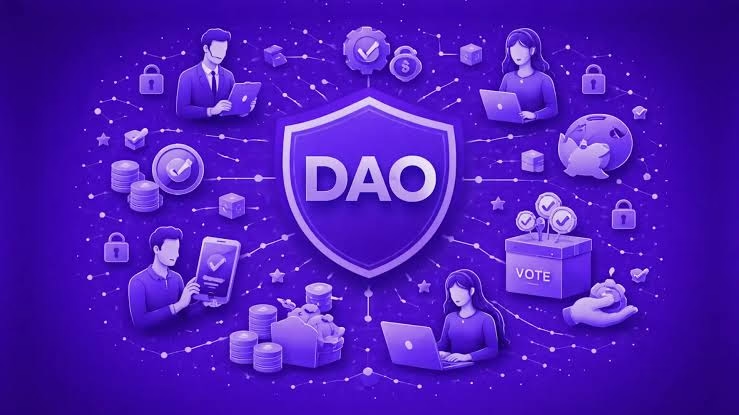
A Decentralized Autonomous Organization (DAO) is a blockchain-based system that allows people to coordinate, make decisions, and manage resources without relying on a central authority.
Instead of executives or managers, DAOs operate through smart contracts self-executing code that runs on networks like Ethereum.
These smart contracts define the rules, while members use tokens to vote on proposals. This explainer breaks down how DAOs work, why they matter, and where they are being used today.
At its core, a DAO replaces traditional management structures with code and community voting.
Here’s how it typically functions:
Once a proposal passes, the smart contract automatically executes it no middlemen involved.
DAOs are becoming popular because they offer a new way to organize people and capital globally.
According to Vitalik Buterin, DAOs represent “a way to structure internet-native organizations without centralized control.”
Key advantages include:
DAOs are no longer just theoretical as they are actively being used across different sectors.
The risks and limitations
Despite their potential, DAOs are still evolving and come with challenges:
The risks became clear during The DAO Hack, one of the earliest DAO failures
A Decentralized Autonomous Organization is more than just a crypto trend as it’s a new model for organizing people, money, and decision-making on the internet.
By combining blockchain technology, smart contracts, and community governance, DAOs remove the need for centralized control.
While still evolving, DAOs are already reshaping digital communities and could define how future organizations are built.



Copyright © 2025 - The Bit Gazette.