


- Trending
- Comments
- Latest

In the evolving world of cryptocurrency and Web3, decentralized identity (DID) is emerging as a transformative solution to one of the internet’s oldest problems: control over personal data.
Built on blockchain technology, decentralized identity systems aim to give users full ownership of their digital identities, removing reliance on centralized authorities like governments, banks, or tech giants.
For crypto investors, this shift represents not just a technological upgrade, but a foundational change in how value, trust, and privacy are managed online.
Decentralized identity refers to a system where individuals create, own, and manage their digital identities without depending on centralized intermediaries.
Unlike traditional identity systems where platforms like Google or Facebook store and control user data, DIDs operate on blockchain networks, ensuring transparency, security, and user sovereignty.
At its core, decentralized identity leverages cryptographic keys and digital wallets to verify identity. Users can selectively share credentials (such as age, nationality, or qualifications) without exposing unnecessary personal information.
According to Vitalik Buterin, Co-founder of Ethereum, Decentralized identity is about putting users back in control of their data.
This model is particularly relevant in an era of increasing data breaches and surveillance concerns.
According to reports from World Economic Forum, digital identity systems are becoming critical infrastructure, yet centralized models remain vulnerable to misuse and cyberattacks.
For investors, the implication is clear: decentralized identity could underpin the next generation of blockchain applications, from DeFi to NFTs and beyond.
Decentralized identity systems are built using three main components:
Projects like Microsoft’s ION network and Polygon ID are actively developing DID solutions on blockchain infrastructure.
Head of Decentralized Identity at Microsoft, Daniel Buchner says, Self-sovereign identity is the missing layer of the internet.
For example, instead of uploading a passport to multiple websites, a user could simply present a cryptographic proof verifying their identity. This reduces fraud, enhances privacy, and eliminates redundant data storage.
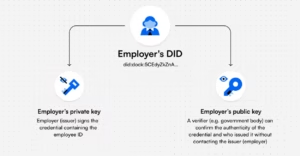
This infrastructure opens new opportunities in identity-focused tokens, Web3 authentication protocols, and privacy-enhancing technologies.
Decentralized identity is not just theoretical—it’s already being tested and deployed across multiple sectors:
According to Consensys, decentralized identity is becoming a key building block for Web3 ecosystems.
Additionally, governments in regions like Europe are exploring blockchain-based identity frameworks, signaling institutional interest in the technology.
Despite its promise, decentralized identity faces several challenges:
There are also concerns about scalability and the potential misuse of anonymous identity systems for illicit activities.
However, the long-term outlook remains bullish. As Web3 continues to expand, decentralized identity could become a core infrastructure layer, similar to how HTTPS transformed web security.
Tokens linked to identity verification, zero-knowledge proofs, and privacy protocols are gaining traction as the market matures.



Copyright © 2025 - The Bit Gazette.