


- Trending
- Comments
- Latest

Newly released U.S. Department of Justice emails reveal that an entity linked to Jeffrey Epstein invested $3.25 million in Coinbase in 2014, acquiring nearly 196,000 shares in the cryptocurrency exchange when it was valued at $400 million.
The documents, disclosed as part of broader Epstein-related materials, show the investment was structured through intermediaries and shell entities, with no evidence that Coinbase executives knew of Epstein’s involvement or the beneficial owner behind the investment vehicle.
The newly disclosed correspondence indicates that the Jeffrey Epstein Coinbase investment was facilitated through intermediaries and shell entities rather than direct engagement.
An email dated Dec. 4, 2014, from Bradford Stephens, founder and managing partner of Blockchain Capital, outlined efforts to obscure the identity of the investing party.
“When we figure out which LLC will be making the $3m investment, we will have them change the name of the investing entity. Wire instructions are also included,” — Bradford Stephens, Founder and Managing Partner, Blockchain Capital.
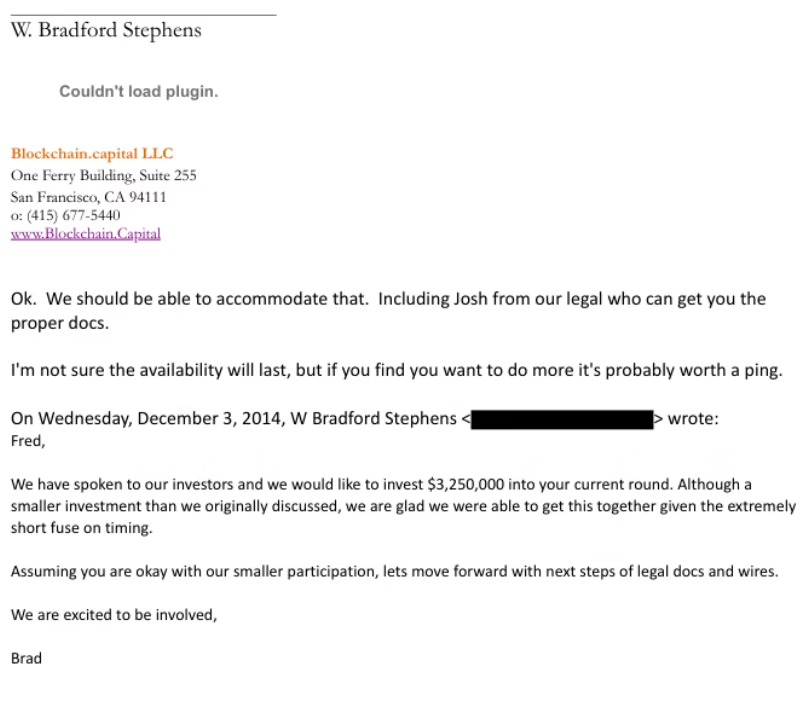
The email was addressed to Darren Indyke, one of Epstein’s longtime associates and executors of his estate.
The structure described reflects common venture capital practices of the time, particularly in early-stage crypto, where investments were frequently routed through limited liability companies.
The DOJ documents emphasize that there is no evidence Coinbase knowingly engaged with Epstein.
Instead, the Jeffrey Epstein Coinbase investment appears to have been one of several indirect stakes the financier held in early crypto ventures during the industry’s formative years.
The released records suggest that the Jeffrey Epstein Coinbase investment was not an isolated case.
Epstein-linked entities also participated in the $18 million oversubscribed seed round of blockchain infrastructure firm Blockstream, another early pillar of the crypto ecosystem.
That investment was reportedly split across three entities: Crypto Currency Partners II LLC, Crypto Currency Partners II LLP, and Crypto Currency Partners LP.

The documents indicate that Epstein’s exposure to crypto was broad and strategically diversified, targeting companies positioned at the core of blockchain development rather than speculative tokens.
The emails further show repeated references to Brock Pierce, co-founder of Blockchain Capital, who played a role in facilitating multiple crypto-related discussions involving Epstein-associated entities.
Pierce’s name appears frequently throughout the DOJ materials in connection with investment coordination and follow-up communications.
Four years after the original deal, the Jeffrey Epstein Coinbase investment entered a new phase. In early 2018, Bradford Stephens contacted Epstein’s representatives to propose buying out a portion of the stake.
In a Jan. 20, 2018 email, Stephens detailed the terms of the offer, noting that Coinbase’s valuation had risen sharply since 2014.
“We did this investment at a $400m valuation. The company just raised money at a 1.6b valuation, and we would be willing to buy the position from you at a $2b valuation. We would pay $15m for this $3m investment,” — Bradford Stephens, Blockchain Capital.
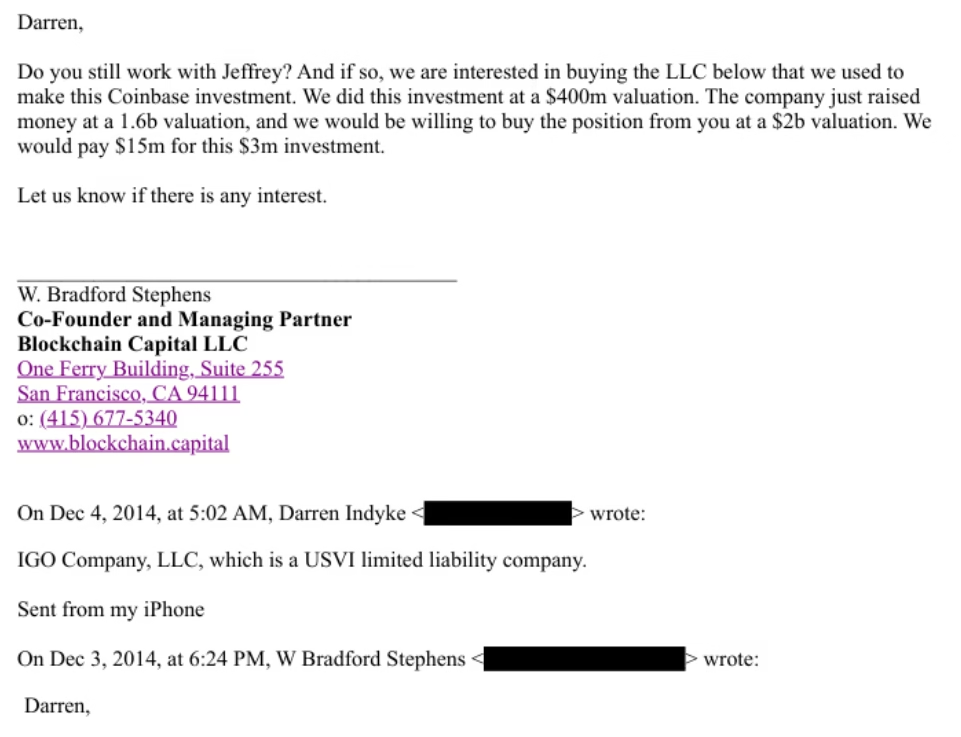
The proposal involved purchasing 50% of the original position for $15 million, effectively crystallizing significant gains on the initial $3.25 million outlay.
A follow-up email dated Feb. 22, 2018, from Brock Pierce confirmed the transaction had been executed.
“Stephens wired $15m for half of your Coinbase position yesterday. So you still have $15m of equity,” — Brock Pierce, Co-founder, Blockchain Capital.
This transaction reduced Epstein’s exposure while leaving him with a sizable remaining stake illustrating the scale of returns generated by early crypto equity investments.
The resurfacing of the Jeffrey Epstein Coinbase investment is significant not because of alleged wrongdoing by Coinbase, but because it highlights how opaque early crypto fundraising could be.
During the industry’s formative years, venture capital structures often prioritized speed and access over transparency, allowing controversial figures to gain exposure without public scrutiny.
Coinbase has not been accused of misconduct, and there is no indication from the DOJ files that the company knowingly accepted Epstein as an investor.
Still, the revelations add to ongoing debates about governance, disclosure, and reputational risk in crypto’s early history.
As regulators continue to examine legacy crypto investments, the Jeffrey Epstein Coinbase investment serves as a reminder that the industry’s rapid rise was shaped by capital from a wide and sometimes troubling range of sources.



Copyright © 2025 - The Bit Gazette.