





- Trending
- Comments
- Latest


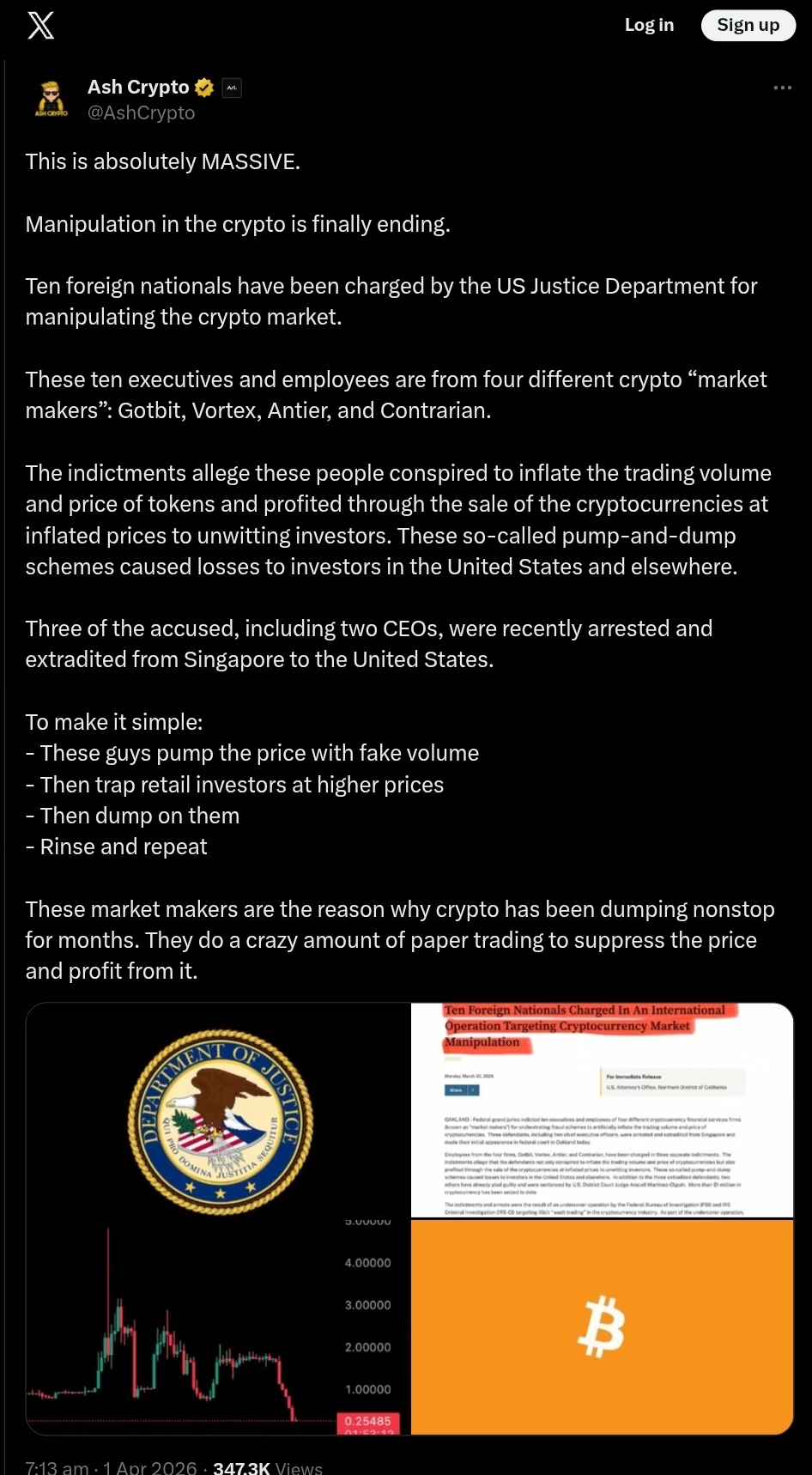
On April 1, 2026, the U.S. Department of Justice unsealed charges against ten foreign nationals accused of orchestrating a coordinated scheme to manipulate cryptocurrency markets.
According to prosecutors, the defendants linked to firms including Gotbit, Vortex, Antier, and Contrarian allegedly inflated trading volumes, artificially pumped token prices, and then sold into the hype, leaving retail investors holding the losses. Three of the accused, including two CEOs, have already been arrested and extradited from Singapore.
The mechanics are not new. But the scale and the fact that enforcement is catching up marks a shift the crypto market can no longer ignore.
For years, “market makers” have been positioned as essential infrastructure in crypto entities that provide liquidity, tighten spreads, and stabilize trading. In traditional finance, that role is tightly regulated. In crypto, it has often operated in the shadows.
The DOJ’s allegations cut through the narrative.
Instead of organic liquidity, prosecutors describe a system driven by wash trading where the same actors buy and sell assets to themselves to fabricate activity and coordinated pumping, where volume and price are artificially inflated to attract real buyers.
The result is a market that looks alive on the surface but is, in many cases, synthetically engineered.
This matters because volume is trust in crypto. Listings, rankings, and investor decisions often depend on it. If volume is fake, then price discovery itself is compromised.
A viral reaction from Ash Crypto framed the case as the beginning of the end for manipulation. The reality is more complicated.
The alleged scheme follows a familiar pattern:
But what makes this case notable is not the pattern it’s the professionalization.
This is no longer random Telegram groups running pump signals. It is structured, cross-border operations embedded within the very layer that is supposed to support markets.
In other words, manipulation isn’t happening at the edges anymore.
It’s happening at the core.
The key question is whether this moment signals real change.
Enforcement actions like this suggest regulators are moving beyond exchanges and token issuers to target market structure itself. That’s a significant evolution. For years, crypto enforcement has focused on fraud and unregistered securities. Now, the focus is shifting to how markets are actually made.
But declaring the end of manipulation is premature.
Crypto markets remain:
Even if specific firms are removed, the incentives that enable manipulation still exist:
Until those incentives change, the behavior will adapt not disappear.
This case also raises uncomfortable questions about exchanges.
Most major trading platforms rely on third-party market makers to bootstrap liquidity for new listings. In some cases, these relationships are contractual projects pay for liquidity services.
So where does responsibility lie?
The answer is likely a mix of all three.
What’s clear is that the line between market support and market distortion has been dangerously blurred.
While the case is being prosecuted in the United States, the impact is global and disproportionately felt in emerging markets.
Retail investors in regions like Africa, Southeast Asia, and Latin America often:
These are precisely the conditions where manipulated tokens thrive.
When artificial pumps collapse, it’s not market makers absorbing the loss it’s everyday users chasing opportunity in an already uncertain financial environment.
The deeper takeaway from this case is uncomfortable but necessary:
Market manipulation in crypto is not an anomaly. It is, in many cases, a structural feature.
From tokenomics designed to restrict supply, to liquidity agreements that simulate demand, to ranking systems that reward volume at any cost the ecosystem has, intentionally or not, incentivized distortion.
What the DOJ has done is not expose a loophole. It has exposed a business model.
What we are seeing is not the end of manipulation but the beginning of accountability.
And accountability changes behavior but only when it is:
Until then, manipulation will not vanish.
It will evolve becoming more subtle, more technical, and harder to detect.



Copyright © 2025 - The Bit Gazette.

