




- Trending
- Comments
- Latest

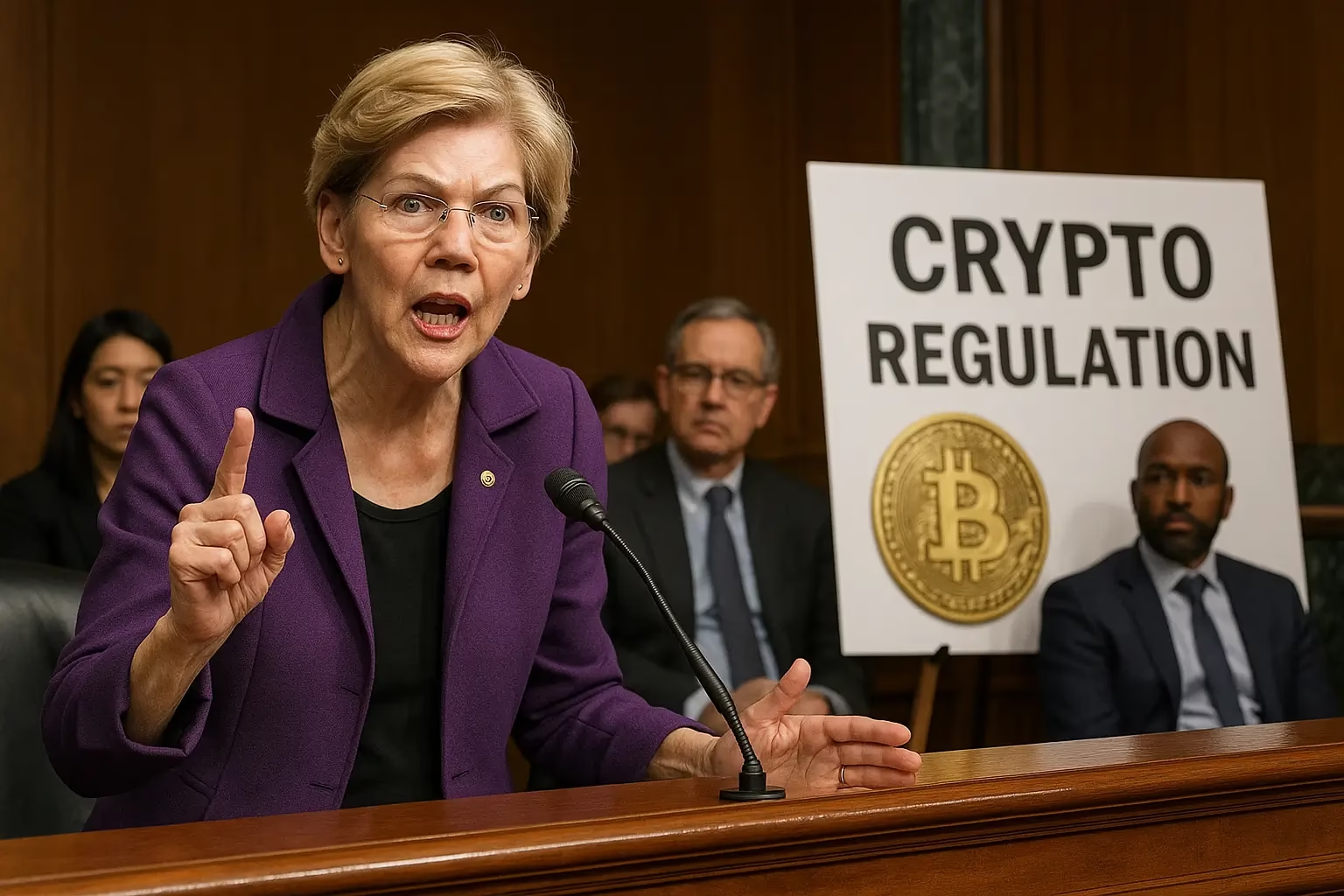
Senator Elizabeth Warren has called for a federal investigation into a $500 million investment by a UAE sovereign wealth vehicle into World Liberty Financial, the Trump family’s cryptocurrency venture, after documents revealed the deal was signed days before Donald Trump’s January 2025 inauguration and gave the Abu Dhabi entity roughly 49% of the company.
The Abu Dhabi investment vehicle acquired roughly 49% of the company, raising alarms over transparency, potential conflicts of interest, and the intersection of foreign influence and U.S. policy.
Sen. Elizabeth Warren has emerged as a vocal critic of the arrangement, urging federal authorities to investigate whether the transaction or subsequent policy decisions with the UAE violated ethics rules or national security interests.
“This is corruption, plain and simple,”
Warren said in a statement, adding that the administration must reverse decisions that she argues benefited the president’s crypto company at the expense of American interests.
World Liberty Financial and the White House have denied any impropriety, asserting that Trump and his immediate family have had no operational involvement in the company since he took office and stressing that the deal was lawful and transparent.
Documents reviewed by multiple news outlets show that Aryam Investment 1, an Abu Dhabi-based entity with backing tied to Sheikh Tahnoon bin Zayed Al Nahyan, who serves as the UAE’s national security adviser, signed the agreement to purchase a 49% stake in WLFI for $500 million in January 2025.
About half of the sum was paid upfront, with roughly $187 million flowing to entities controlled by members of the Trump family and additional tens of millions directed to co-founder affiliates.
The deal was not publicly disclosed at the time, and the family’s disclosed equity position in WLFI subsequently fell significantly from about 75% to roughly 38% without a clear explanation until recent reporting. Such post-hoc revelations have fuelled concerns among lawmakers and ethics watchdogs.
Critics also point to on-chain activity that shows governance tokens associated with WLFI were acquired by addresses linked to sanctioned groups, including North Korea’s Lazarus Group, as well as Russian and Iranian entities.
Sen. Warren has pressed for both an ethics investigation and testimony from administration officials on the deal’s timing relative to U.S. policy shifts involving the UAE, in her comments.
Based on her comments, she framed the situation not just as a business transaction but as a potential leveraging of presidential influence for private gain.
“Officials must testify in front of Congress on mounting evidence that they sold out American national security in order to benefit the President’s crypto company.”
Other Democratic senators, including Elissa Slotkin (D-Mich.), have voiced similar concerns in recent months, calling for probes into whether ethical lines were crossed.
She also urged oversight bodies such as the Department of Justice and congressional ethics panels to examine the full scope of the WLFI arrangement and related decisions.
Republican lawmakers supportive of the Trump administration have largely defended WLFI and downplayed conflict claims, with some arguing that denying competitively priced advanced technologies to allies like the UAE would harm U.S. strategic interests.
The Trump administration has stressed that appropriate recusal processes and trust arrangements are in place to prevent presidential influence from affecting family business interests.
The WLFI token and related crypto products tied to World Liberty Financial have seen mixed performance since the deal, with significant volatility and periodic price declines as investor confidence has wavered amid the political scrutiny.
Earlier in 2025, WLFI’s token price fell sharply due to large unlocks and sell-offs by major holders, compounding concerns about liquidity and investor risk.
The controversy also highlights broader regulatory and governance questions in the fast-evolving cryptocurrency sector, particularly regarding stablecoins and cross-border investment flows.
WLFI’s USD1 stablecoin has been used in high-profile transactions, including a reported $2 billion investment into Binance by a Tahnoon-linked fund, showing the growing complexity of digital assets as they intersect with global finance and geopolitics.
Regulators and market participants are watching closely as Congress weighs potential reforms to stablecoin oversight and crypto market regulation, with WLFI now at the centre of debates about transparency, accountability, and national security in digital finance.



Copyright © 2025 - The Bit Gazette.