






- Trending
- Comments
- Latest


A dormant Ethereum address holding 85,000 ETH worth approximately $400 million transferred its entire balance to the Gemini exchange this week after remaining inactive for nearly nine years, marking one of the largest whale movements in recent months.
The wallet, which originally accumulated 135,000 ETH in 2017 at an average price of $90, executed the transfers over 24 hours as Ethereum continues to struggle below the $3,000 level amid ETF outflows and broader market weakness.
According to blockchain analyst EmberCN, the Ethereum whale address identified as “0xb5a…168d6” originally accumulated 135,000 ETH in 2017 at an average price of approximately $90 per coin, primarily through Bitfinex.
At the time of purchase, the total value of the position stood near $12.17 million. After nearly a decade of inactivity, the wallet began transferring its holdings to Gemini earlier this week.
On-chain data from Arkham shows that the address first moved 50,000 ETH on Monday, followed by a 25,000 ETH transaction shortly afterward.
The remaining 60,283 ETH worth approximately $175 million at the time was transferred in a final batch.
Following the transfers, the Ethereum whale wallet now holds only negligible balances, roughly $70 worth of assorted altcoins, effectively confirming a full exit from its long-held Ether position.
“The address bought and held ETH for nine years, realizing a profit of nearly $381 million, representing a roughly 32x return,” EmberCN, blockchain analyst.
Large transfers to centralized exchanges are closely watched by investors because they often precede distribution or liquidation, though they do not guarantee immediate selling.
The reappearance of the Ethereum whale follows a broader trend of long-dormant crypto wallets reactivating.
Just a week earlier, a Bitcoin address that had been inactive for more than 12 years moved 909 BTC worth over $84 million to a new wallet, reinforcing concerns about latent supply entering the market during periods of price weakness.
For Ethereum, the timing is notable. ETH has declined more than 7% over the past week, briefly slipping below $2,800 before rebounding toward $2,934 at press time.
Despite the recovery, the asset remains capped below the psychologically important $3,000 threshold.
Market participants attribute part of the pressure to ETF-related outflows, which have dampened short-term momentum.
In that context, the movement of a large Ethereum whale to an exchange adds to near-term uncertainty, even if no immediate sell orders are confirmed.
Still, on-chain data presents a more nuanced picture. Daily active Ethereum addresses have risen toward 1.3 million, signaling continued network engagement despite price volatility.
While the Ethereum whale transfer raises supply concerns, longer-term indicators suggest that a significant portion of ETH remains locked away.
Staking participation continues to climb, reducing liquid supply and partially offsetting sell-side pressure.
One notable example is BitMine, led by Tom Lee, which has staked approximately 2.22 million ETH worth about $6.52 billion representing more than 52% of its total holdings.
The firm recently added another 209,504 ETH to staking, tightening circulating supply even further.
Despite these structural supports, some analysts remain cautious on Ethereum’s price trajectory.
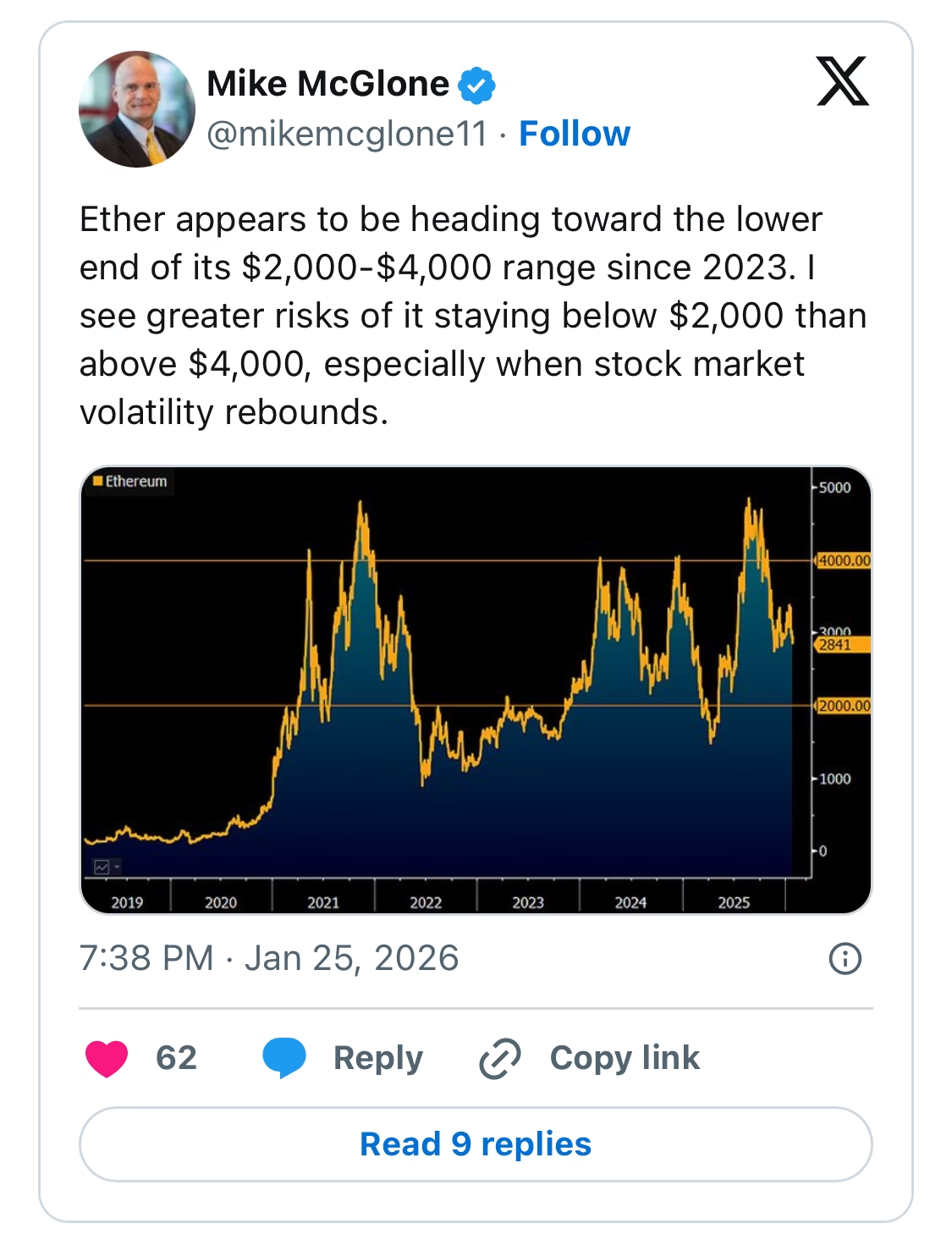
Bloomberg Intelligence senior commodity strategist Mike McGlone warned that ETH could drift toward the lower end of its long-standing range.
“I see greater risks of it staying below $2,000 than above $4,000, especially when stock market volatility rebounds,” — Mike McGlone, Senior Commodity Strategist, Bloomberg Intelligence.
McGlone noted that Ether has largely traded between $2,000 and $4,000 since 2023, and renewed equity market turbulence could weigh on risk assets, including crypto.
For crypto investors, the reawakening of a major Ethereum whale serves as a reminder that long-dormant supply can re-enter the market without warning.
While the transfer does not confirm imminent selling, it adds another variable to an already complex landscape shaped by ETF flows, staking dynamics, and macro risk.
As Ethereum navigates this phase, traders are watching whether whale-driven supply meets sustained demand or whether caution continues to dominate price action.



Copyright © 2025 - The Bit Gazette.

