




- Trending
- Comments
- Latest

An unauthorized cryptocurrency token impersonating the open-source AI assistant ClawdBot collapsed by more than 90% this week after the project’s founder publicly disavowed the asset and warned investors it was a scam.
The token, which traded under the ticker $CLAWD on Solana memecoin platforms, briefly reached a $16 million market cap before crashing to under $800,000 following the warning from Peter Steinberger, ClawdBot’s creator and a software developer whose GitHub account was compromised during the incident.
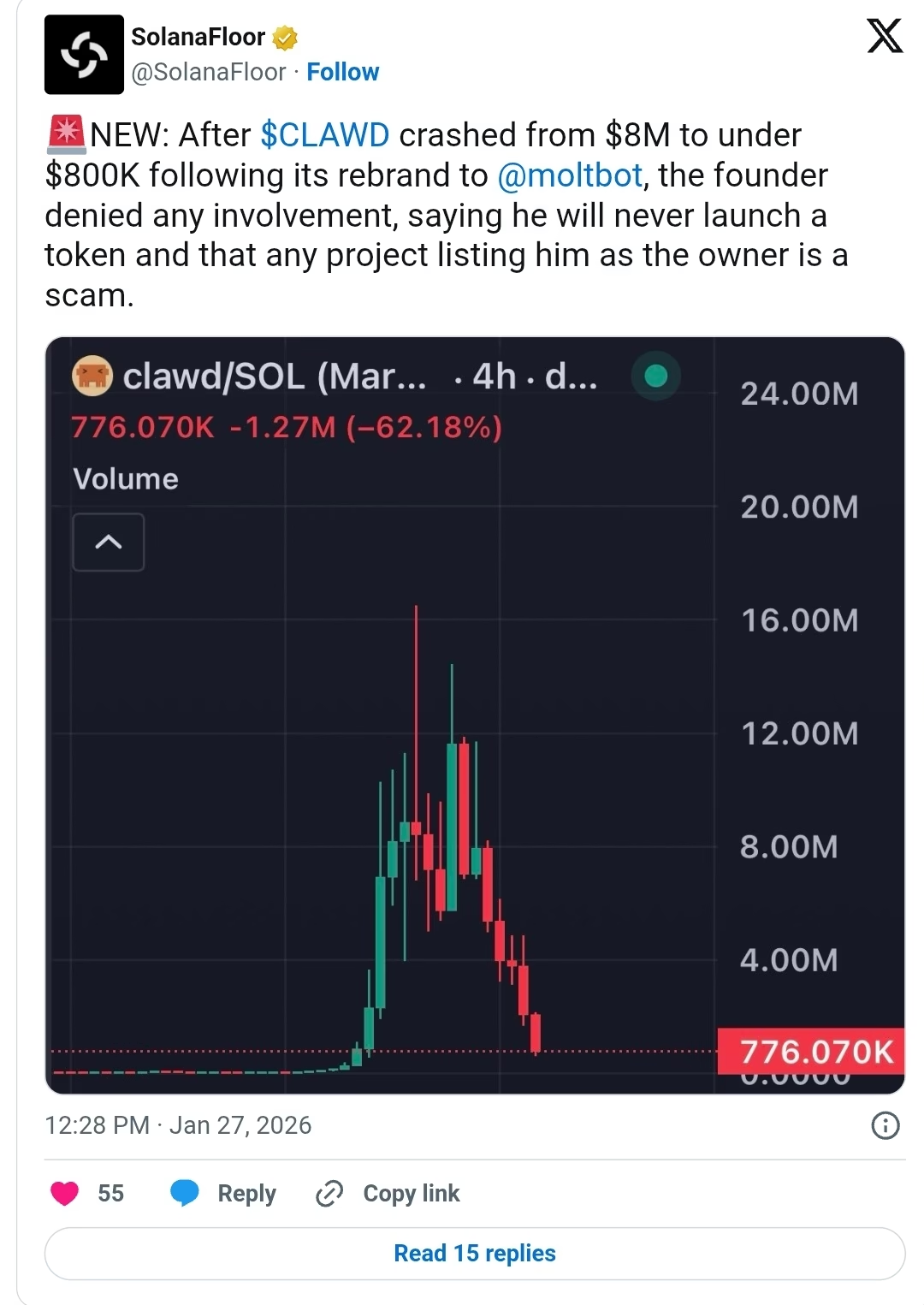
The controversy unfolded this week as a token branded around ClawdBot AI Token branding began circulating on Solana-based meme coin platforms. The asset, trading under the ticker $CLAWD, rapidly attracted speculative interest, with its market capitalization peaking at around $16 million during early trading.
According to multiple posts from traders on X, the rally was driven by hype surrounding AI-linked crypto projects and confusion over whether the token was officially connected to ClawdBot, a viral developer tool that had recently gained attention.
Some early buyers reported quick gains as social media chatter intensified, while others warned that the momentum appeared unsustainable.
The excitement proved short-lived. Once doubts about the token’s legitimacy surfaced and the project’s founder stepped in to clarify the situation, confidence evaporated. The ClawdBot AI Token market value reportedly fell from roughly $8 million to below $800,000 in a sharp sell-off, wiping out most of its paper gains.
Peter Steinberger, the founder of ClawdBot and a well-known software developer whose account on github was hacked, moved quickly to distance himself from the token and warn the crypto community.
In a public statement circulated on X, he made his position explicit: “I Issued No Token” Peter Steinberger, Founder, ClawdBot/Moltbot.
Steinberger stressed that he has never launched a cryptocurrency, has no plans to do so, and has no affiliation with any project marketing itself as a ClawdBot AI Token. He said the sudden appearance of the token led to days of unsolicited messages from traders and promoters seeking endorsements or validation.
In follow-up posts, Steinberger reiterated that he would not accept fees, promotions, or any form of involvement related to crypto launches tied to his work. He urged investors to stop contacting him and to treat any token claiming a link to ClawdBot or Moltbot as fraudulent.
The warning triggered an immediate market reaction. Traders on X described the episode as another example of speculative AI-themed tokens collapsing once official denials are issued, reinforcing concerns about opportunistic scams targeting trending technology projects.
The ClawdBot AI Token incident was compounded by a rebranding process already underway. Steinberger explained that ClawdBot was forced to change its name to Moltbot due to trademark issues, a transition that created openings for impersonation.
During the renaming, errors in account migrations allowed third parties to squat on or take control of related GitHub and X handles. Those compromised accounts were then used to impersonate the project and promote the fake token as if it were officially endorsed.
Steinberger said he is working with GitHub to recover the affected accounts and asked users to ignore any crypto-related claims tied to the project’s name, old or new. Several traders accused the anonymous token deployers of serial rug-pull behavior, alleging similar tactics had been used with other short-lived meme tokens launched under different identities.
The episode highlights how rebranding transitions, especially for open-source projects with fast-growing visibility, can be exploited to lend credibility to unauthorized crypto assets like the ClawdBot AI Token.
Beyond the token controversy, ClawdBot now Moltbot has drawn attention for both its rapid adoption and emerging security concerns.
The open-source, self-hosted AI assistant runs locally on users’ machines and integrates with platforms such as Telegram, WhatsApp, Discord, and Slack. Unlike cloud-based chatbots, it is designed to retain long-term memory, execute commands, and automate tasks directly on a user’s system.
Steinberger, who previously sold software company PSPDFKit for about €100 million, returned to development with the aim of building a privacy-focused alternative to cloud-hosted AI tools. However, cybersecurity researchers have warned that unsafe user deployments could expose serious risks.
Blockchain security firm SlowMist and independent researchers reported that hundreds of ClawdBot gateway instances were publicly accessible due to misconfigured proxies. These setups potentially exposed API keys, chat logs, and command execution capabilities.
Researchers emphasized that the issue stemmed from user configuration errors rather than a hidden exploit but cautioned that the risks were significant given the tool’s deep system access.
Those warnings, combined with the ClawdBot AI Token scam, added to confusion around the project as scammers leveraged its sudden visibility to target speculative investors.
Steinberger has urged users to separate the legitimate software project from unauthorized crypto activity and to remain cautious when encountering tokens that attempt to capitalize on viral AI branding.



Copyright © 2025 - The Bit Gazette.