




- Trending
- Comments
- Latest

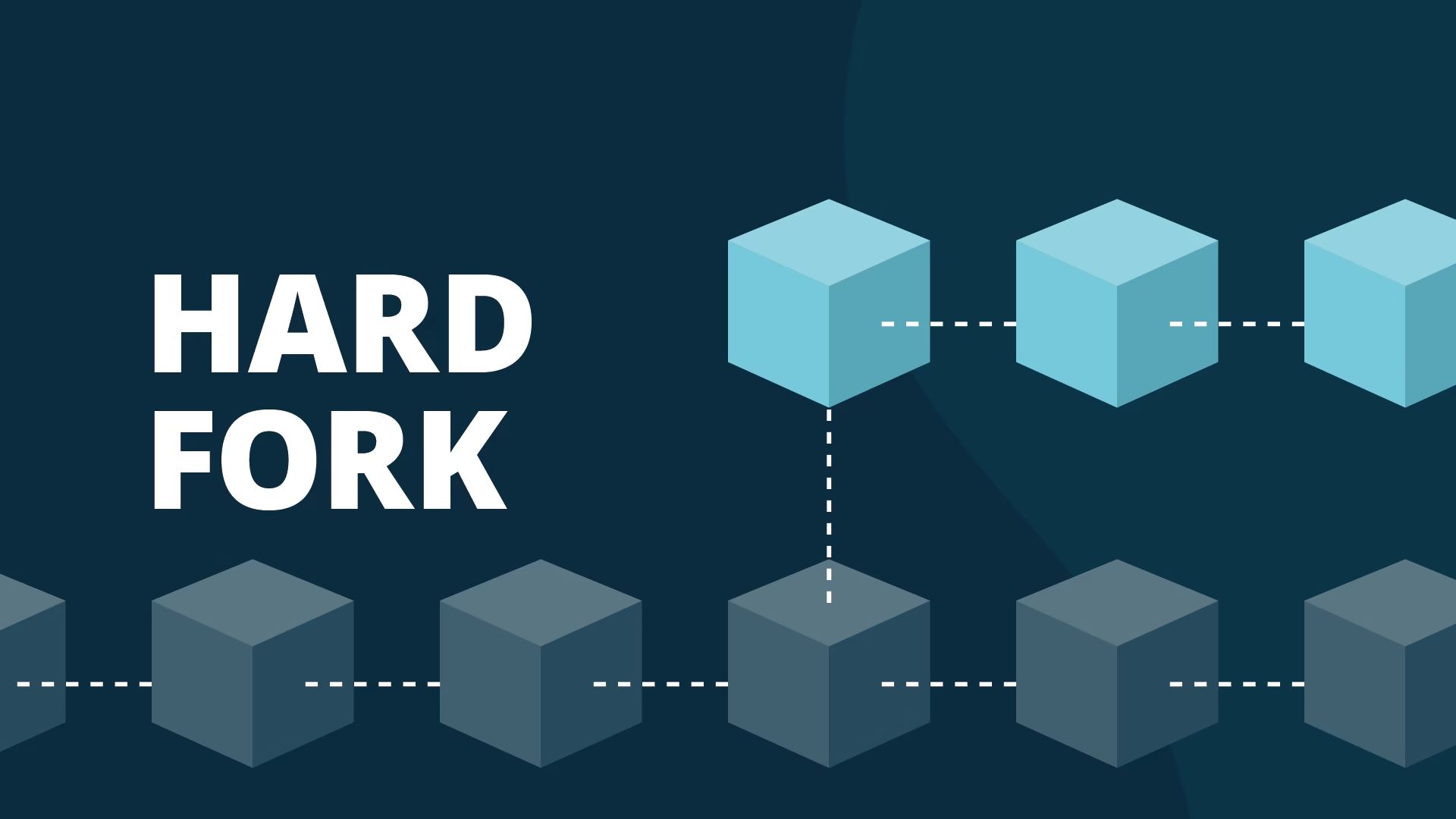
A Hard Fork is a major change to a blockchain’s protocol that creates a permanent split in the network. It occurs when developers or communities disagree on rules governing a blockchain, leading to two separate versions of the chain.
A Hard Fork has played a central role in the evolution of cryptocurrencies like Bitcoin and Ethereum, affecting developers, miners, and investors worldwide. As blockchain ecosystems mature, understanding how a Hard Fork works and what it means for users has become increasingly important.
A Hard Fork happens when a blockchain undergoes a software upgrade that is not backward-compatible. This means older versions of the network cannot validate new transactions, forcing a split.
In simple terms, a Hard Fork creates two blockchains: one that follows the new rules and another that continues with the old ones. Each chain operates independently, often with its own token.
These splits are usually driven by disagreements over governance, scalability, or security. Developers may propose changes, but if consensus is not reached, a Hard Fork becomes the outcome.
A Hard Fork begins with a proposal to change a blockchain’s code—this could involve transaction rules, block size, or token supply. If the community supports the change, nodes (computers running the network) upgrade their software.
However, if part of the network refuses to adopt the update, the blockchain splits. From that point, two versions exist, each maintaining its own transaction history moving forward.
This process reflects the decentralized nature of blockchain systems. “Code is law,” as widely cited in blockchain communities, meaning network participants ultimately decide which version to support.
Governance decisions, such as token supply changes or protocol upgrades, often shape these outcomes. For instance, a recent report on Polkadot’s token supply cap decision highlights how community voting can redefine a network’s economic structure—an approach closely tied to how Hard Fork decisions emerge.
One of the most well-known Hard Fork events occurred in 2017, when Bitcoin split into Bitcoin and Bitcoin Cash. The division stemmed from disagreements over how to scale the network, particularly around block size.
Another major Hard Fork followed the DAO hack in 2016, when Ethereum split into Ethereum and Ethereum Classic. The majority supported reversing the hack’s effects, while others chose to preserve the original chain.
These examples show that a Hard Fork is not just technical—it reflects deeper ideological differences within blockchain communities.
A Hard Fork can have significant implications for investors. In many cases, holders of the original cryptocurrency receive tokens on the new chain, effectively doubling their holdings—at least temporarily.
However, uncertainty often follows a Hard Fork. Prices can become volatile as markets react to the split. Users may also face confusion about which chain to support or how to access new tokens.
Recent market dynamics further complicate this. As reported by Bit Gazette, the crypto market now contains millions of tokens competing for attention, making it harder for new chains to gain traction after events like a Hard Fork.
Additionally, developers must maintain and secure both networks, which can dilute resources and slow innovation.
A Hard Fork remains one of the most powerful mechanisms in blockchain governance, enabling networks to evolve but also introducing division and risk. For investors and users, understanding the reasons behind a Hard Fork and its potential consequences is essential for navigating the ever-changing crypto landscape.



Copyright © 2025 - The Bit Gazette.