






- Trending
- Comments
- Latest

Venezuela-focused stablecoin neobank Kontigo confirmed on Jan. 5 that hackers stole $340,905 in USDC from 1,005 customer wallets following unauthorized system access, with the company pledging full reimbursement as it investigates the breach.
Kontigo said it detected suspicious activity involving customer funds, quickly isolated affected systems, and launched an investigation to assess the scope of the Kontigo hack.
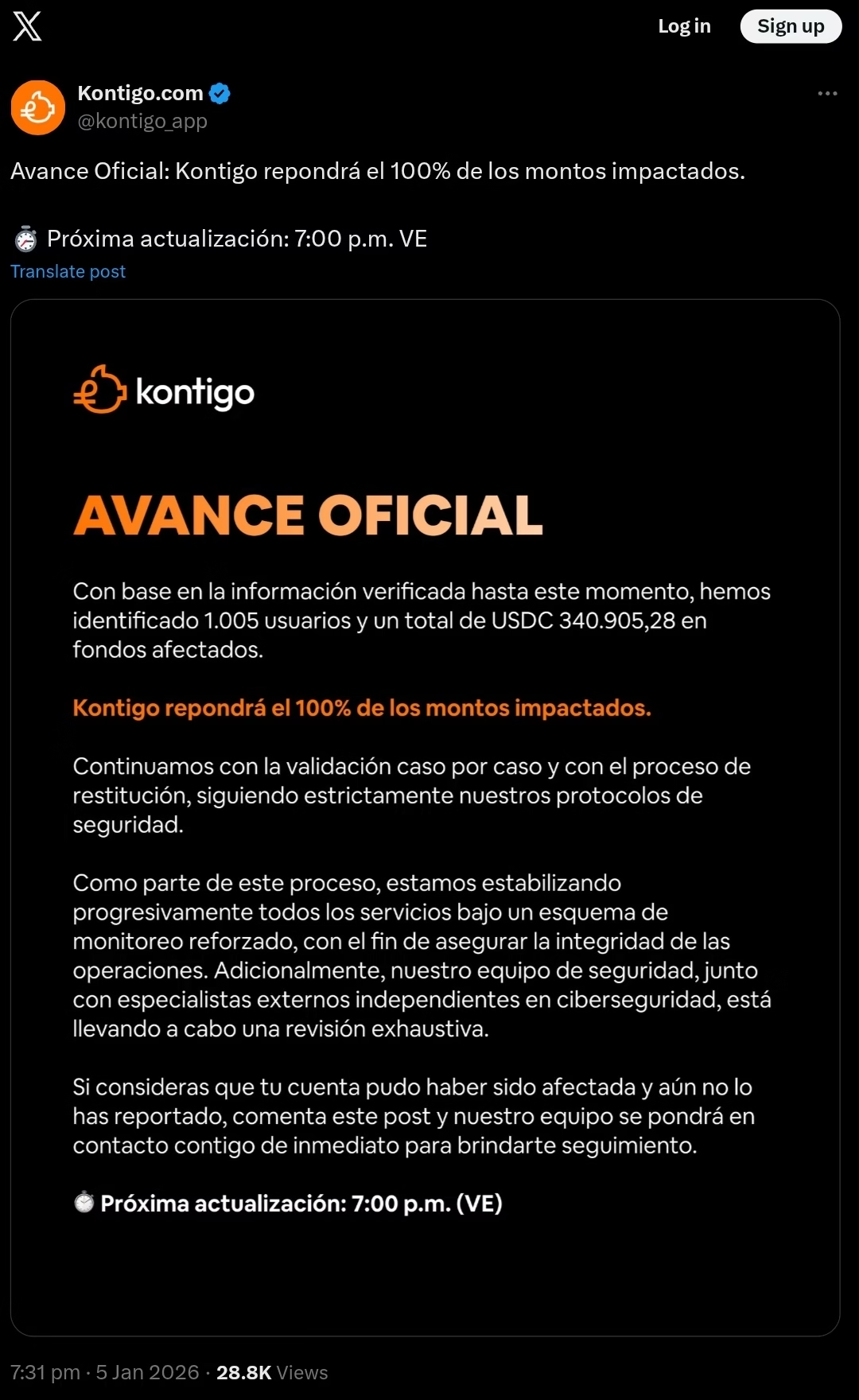
In an official update shared on Jan. 5, Kontigo acknowledged the incident and outlined its immediate response. “We detected unauthorized access that affected the funds of some users,” the company said in a translated excerpt from its announcement.
According to Kontigo, its internal security teams moved swiftly once the Kontigo hack was identified.
“We immediately isolated the systems involved, activated our security protocols, and are maintaining an active investigation to determine the scope of the incident,” the statement added.
Subsequent disclosures put the estimated losses at approximately $340,905 in USDC, with 1,005 customers affected. While the firm has not yet published a detailed post-mortem explaining how the breach occurred, it confirmed that independent external cybersecurity specialists have been engaged to support the investigation into the Kontigo hack.
The financial impact of the Kontigo hack has centered on USDC-denominated wallets held by customers using the platform’s stablecoin services.
Over the past week, users reported unusual account activity, with some sharing screenshots on social media showing unauthorized login attempts.
As of press time, Kontigo has not confirmed whether those reports are directly linked to the breach.
What the company has made clear, however, is its commitment to customer restitution.
“Kontigo will reimburse 100% of the impacted amounts,” said neobank.
Neobank laid emphasis that compensation will be processed on a case-by-case basis in line with its internal security procedures.
The firm also said it has implemented a “reinforced monitoring scheme” as systems are gradually restored, aiming to ensure operational integrity and prevent further fallout from the Kontigo hack.
For affected users, the reimbursement pledge has offered some reassurance, though questions remain about timelines and the longer-term impact on trust.
Founded in 2023, Kontigo is a San Francisco-based financial technology company that focuses on Latin America and the Latino community in the United States. Its services include USDC-denominated savings accounts, cross-border payments, debit and credit cards, and access to tokenized U.S. stocks and Bitcoin.
The Kontigo hack comes at a sensitive time for the company. Just last month, Kontigo closed a $20 million seed funding round that valued the neobank at $100 million.
The round was backed by prominent investors including Y Combinator, DST Global, and Coinbase Ventures, underscoring the high expectations placed on the firm’s stablecoin-based model.
For a platform built on the promise of fast, low-cost, and secure financial access, the breach represents a significant reputational challenge.
How Kontigo handles reimbursement and communicates the findings of its investigation into the Kontigo hack is likely to shape user confidence going forward.
The Kontigo hack is not an isolated incident. It comes amid a broader wave of attacks targeting crypto users and platforms, particularly those offering wallet and payment services.
Last month, Binance-owned Trust Wallet suffered a major exploit affecting users of its Google Chrome extension, with total losses estimated to exceed $7 million. Trust Wallet has since publicly committed to compensating all affected users.
More recently, on Jan. 5, blockchain security firm SlowMist warned of an active phishing campaign aimed at MetaMask users. The campaign allegedly tricks victims into revealing their seed phrases by posing as a Two-Factor Authentication activation process, highlighting the evolving tactics used by attackers.
Against this backdrop, the Kontigo hack underscores persistent security challenges facing the crypto and stablecoin sector, even as adoption accelerates. For regulators, investors, and users alike, the incident adds to the growing list of reminders that operational security remains a critical vulnerability.
As Kontigo works to reimburse customers and complete its investigation, the outcome of the Kontigo hack may serve as a case study in crisis response for crypto-native neobanks operating in emerging and cross-border markets.



Copyright © 2025 - The Bit Gazette.