





- Trending
- Comments
- Latest

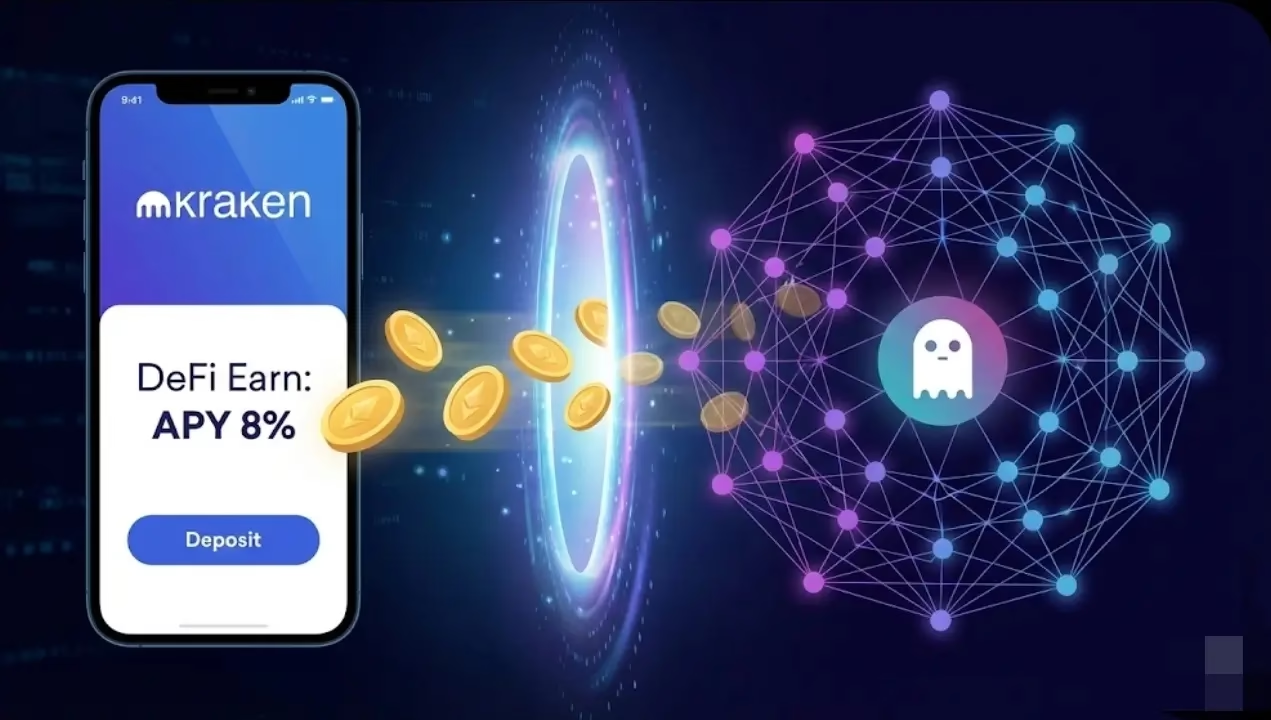
Kraken users can now earn up to 8% yields on stablecoins through Aave, without managing a wallet, paying gas fees, or ever leaving the exchange. The integration went live Sunday, making DeFi yields as simple as clicking “deposit” for the exchange’s 13 million users.
It’s the biggest bet yet that DeFi’s future isn’t self-custody, it’s invisible infrastructure.
The product, called DeFi Earn, routes user deposits through specialized vaults on Kraken’s Ink layer-2 network, which then deploy capital into Aave’s lending pools. The entire process happens behind the scenes. Users see an APY and a deposit button. That’s it.
For years, accessing DeFi yields meant navigating a gauntlet of technical hurdles: downloading MetaMask, securing a seed phrase, bridging funds across networks, approving smart contracts, and paying gas fees that could eat into small deposits.
DeFi Earn eliminates all of it.
When a user deposits USDC, Kraken automatically handles the backend pipeline, routing funds to Ink-based vaults managed by risk partners like Chaos Labs and Veda, which then supply liquidity to Aave. The user never sees a smart contract approval or a transaction hash.
The result is DeFi yields packaged like a traditional savings account.
Kraken’s choice of Aave as the underlying protocol was strategic. With over $50 billion in total value locked, Aave commands the largest share of the decentralized lending market by a wide margin. Its Safety Module, a reserve fund designed to cover bad debt, provides institutional-grade reassurance that smaller protocols can’t match.
The integration also gives Aave something it’s never had: instant distribution to millions of retail users who would never download a Web3 wallet on their own. It’s a rare win-win, Kraken abstracts complexity, while Aave gains massive reach.
DeFi Earn also marks the first significant deployment for Ink, Kraken’s proprietary layer-2 blockchain built on the Optimism Superchain. By processing transactions on its own network, Kraken can minimize congestion, control gas costs, and optimize the user experience without relying on Ethereum mainnet.
It signals a shift in how exchanges view blockchain infrastructure, not as external rails to connect to, but as owned territory to operate within.
The launch raises uncomfortable questions for the self-custody movement. If users can earn DeFi yields without wallets, seed phrases, or technical knowledge, does decentralization still matter to the average person?
Kraken is betting it doesn’t, or at least, that it matters less than convenience.
Winners:
Losers:
The product is available immediately to users in Europe, Canada, and most U.S. states, though regulatory restrictions apply in certain American jurisdictions.
DeFi Earn represents the clearest signal yet that the next phase of crypto adoption won’t be won by better technology, it will be won by better packaging.
By stripping away wallets, gas fees, and contract interactions while preserving the yield mechanics of Aave, Kraken has built what could become the blueprint for mainstream DeFi access.
The question now: Will Coinbase, Binance, and other major exchanges follow suit, or will they let Kraken own the “DeFi for normies” narrative?
Disclosure: This article does not constitute financial advice. DeFi investments carry risk, including smart contract vulnerabilities and impermanent loss. Always conduct your own research before depositing funds.



Copyright © 2025 - The Bit Gazette.