






- Trending
- Comments
- Latest

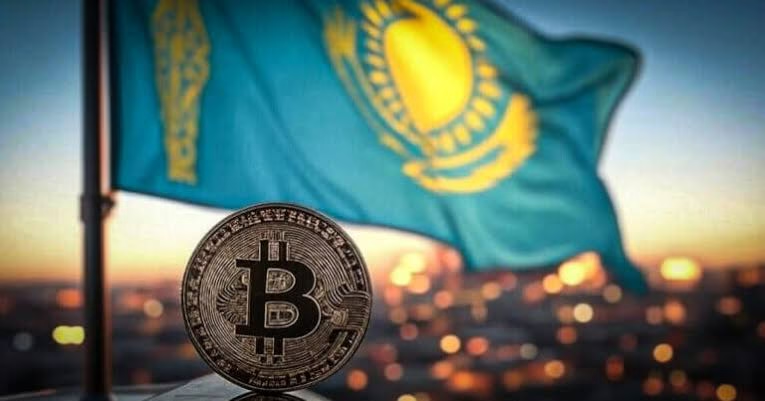
The European Union is preparing to sanction two Kyrgyzstan-based banks, Keremet Bank and Capital Bank of Central Asia, for allegedly processing cryptocurrency transactions linked to Russian sanctions evasion, according to a draft of the EU’s 20th sanctions package reviewed by Reuters.
Under the EU’s proposed 20th sanctions package, Keremet Bank and Capital Bank of Central Asia are alleged to have processed transactions tied to Russian crypto activity, according to a draft proposal reviewed by Reuters.
The move reflects Europe’s growing determination to shut down alternative payment rails that Moscow is believed to be exploiting to bypass Western restrictions.
The latest Kyrgyz banks sanctions underscore a strategic pivot by Brussels toward third countries suspected of helping Russia evade financial controls.
European officials are no longer focused solely on Russian institutions but are increasingly scrutinizing regional allies and trade partners enabling indirect access to global markets.
“The EU is stepping up efforts to ensure sanctions cannot be circumvented through third countries,” European Commission President Ursula von der Leyen said last week, emphasizing that enforcement is now as critical as legislation itself.
If finalized, the sanctions would prohibit EU individuals and companies from conducting any financial transactions with the named Kyrgyz banks, effectively cutting them off from Europe’s banking system.
According to the proposal, Kyrgyz banks sanctions are driven largely by allegations that these institutions enabled crypto-related services linked to Russian entities.
Capital Bank of Central Asia was previously sanctioned by the United Kingdom over suspicions it helped Moscow procure military supplies, while Keremet Bank has already been blacklisted by the United States.
U.S. Treasury officials have repeatedly warned that cryptocurrencies, while not immune to detection, can still be abused to obscure payment trails when routed through lightly regulated jurisdictions.
“Kremlin-linked actors continue to experiment with crypto assets to finance procurement and sanctions evasion,” a senior U.S. Treasury official noted in a prior briefing.
The renewed Kyrgyz banks sanctions come amid diplomatic pushback from Bishkek. Last year, Kyrgyzstan President Sadyr Zhaparov appealed directly to Washington and London, urging Western governments to avoid what he called the “politicization of the economy.”
Despite those appeals, Kyrgyzstan has remained under scrutiny after a network of crypto platforms — including the issuer of the ruble-pegged stablecoin A7A5 — was accused of helping fund Russia’s war effort.
Both the U.S. and U.K. have already taken action against entities linked to those platforms.
In a notable development, President Zhaparov signed new legislation last week tightening state control over cryptocurrency and stablecoin issuance, placing oversight directly under the presidential administration — a move analysts see as an attempt to reassure Western partners.
The Kyrgyz banks sanctions are part of a far broader enforcement sweep. The EU’s proposal also targets banks in Tajikistan and Laos, ports handling Russian oil in Georgia and Indonesia, and imports of metals such as nickel, copper, and aluminum scrap.
According to Reuters, the sanctions package would extend asset freezes and travel bans to an additional 30 individuals and more than 60 companies, including crypto service providers and Russia’s digital ruble platform.
“The EU’s anti-circumvention tool is being deployed for the first time against third countries,” EU officials said, signaling a new phase in sanctions enforcement.
For crypto markets, Kyrgyz banks sanctions represent a sobering reminder that regulatory scrutiny is intensifying globally.
While digital assets offer speed and flexibility, they are no longer viewed as safe havens from geopolitical enforcement.
As Brussels sharpens its tools, Central Asia’s role as a financial bridge for Russia appears increasingly risky — and increasingly costly.



Copyright © 2025 - The Bit Gazette.

