





- Trending
- Comments
- Latest

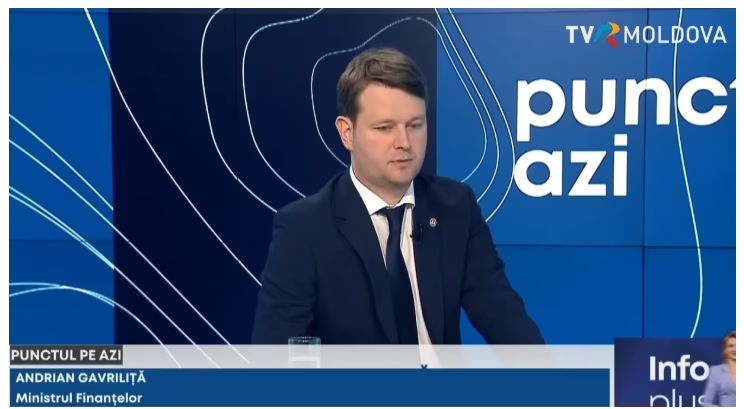
Moldova plans to introduce its first comprehensive cryptocurrency law by the end of 2026, closely mirroring the European Union’s Markets in Crypto Assets Regulation (MiCA), Finance Minister Andrian Gavrilita announced.
The framework will allow citizens to legally own and trade digital assets but will stop short of recognizing cryptocurrencies as legal tender, Gavrilita said in an interview with state broadcaster TVR Moldova.
“We have a duty to regulate these assets and citizens will have the right to hold them,” Gavrilita said, adding that outright bans are unrealistic given that Moldova crypto regulation is tied to the country’s broader commitments to the European Union.
“Cryptocurrencies cannot be prohibited.,” he said.
The planned legislation follows the full rollout of the EU’s MiCA framework which took effect for crypto asset service providers on Dec. 30, 2024. By aligning Moldova crypto regulation with MiCA authorities aim to ensure regulatory consistency as the country advances its EU integration agenda.
If enacted, the bill would represent Moldova’s first formal crypto law. The National Bank of Moldova has repeatedly warned the public about the volatility of digital assets and the risks of fraud and money laundering concerns that officials say will be central to Moldova crypto regulation.
According to Gavrilita, the draft law will be developed jointly by the Finance Ministry, the National Bank of Moldova, the national financial markets regulator, and the country’s Anti-Money Laundering authority.
While the framework is expected to legalize ownership and trading, Moldova crypto regulation will not include provisions allowing cryptocurrencies to be used for domestic payments.
Gavrilita stressed the speculative nature of digital assets throughout the interview distancing them from traditional investments.
“I avoid using the term investments when it comes to cryptocurrencies,” he said,
He describes them instead as a speculative domain, an outlook that continues to shape Moldova crypto regulation.
He pointed to Estonia as an example of relatively simple and clear crypto legislation though he did not provide further details on how closely Moldova might follow that model.
Elsewhere in Europe, regulators are seeking to close potential loopholes within MiCA. In September 2025, France became the third country after Austria and Italy to urge the European Securities and Markets Authority to assume direct supervision of major crypto firms.
The push followed criticism of Malta’s crypto licensing regime. In July, ESMA published a peer review stating that the Malta Financial Services Authority had only “partially met expectations” when authorizing a crypto service provider developments that Moldova is watching closely as it finalizes Moldova crypto regulation.



Copyright © 2025 - The Bit Gazette.