





- Trending
- Comments
- Latest

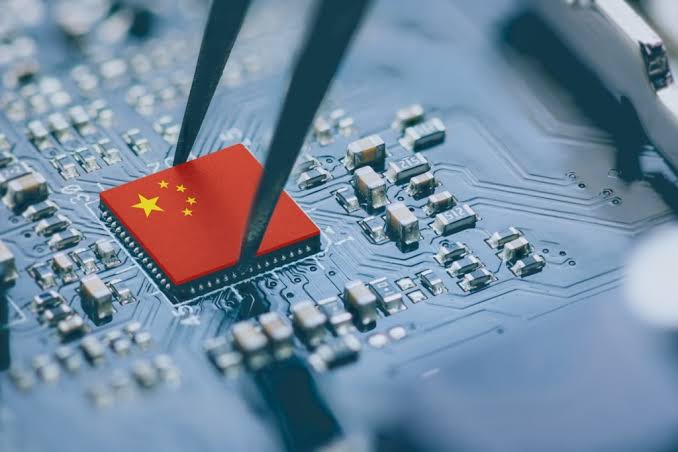
Montage Technology surged more than 50% on its first day of trading in Hong Kong on February 9, 2026, after raising approximately HK$7.04 billion (about $900 million) in its secondary listing.
The sharp rally shows growing investor appetite for infrastructure companies tied to artificial intelligence and data centre growth, sectors increasingly intertwined with crypto mining and blockchain computing capacity.
Shares in Montage Technology opened at HK$168, well above the offer price of HK$106.89, and climbed as high as HK$171 during early trading in Hong Kong.
The offering attracted strong institutional and retail interest, with the retail tranche reportedly oversubscribed more than 700 times and international allocations exceeding 37 times demand.
The company’s IPO raised roughly HK$7.04 billion, with proceeds earmarked primarily for research and development, commercialisation efforts, acquisitions, and working capital.
Seventeen cornerstone investors, including JPMorgan Asset Management and UBS Asset Management, committed about $450 million to the offering, reinforcing confidence in the chipmaker’s growth trajectory.
Montage’s Hong Kong debut also contributed to one of the strongest starts to the year for the city’s capital markets since 2021, amid renewed global interest in technology listings.
Founded in 2004, Montage Technology designs memory interconnect chips used to move data efficiently between processors and memory in servers and cloud infrastructure.
By revenue, it held a 36.8% share of the global memory interconnect chip market in 2024, positioning it as a key supplier to AI-driven data centre expansion.
Financial performance has strengthened alongside the AI boom. The company reported revenue growth of 58% year-over-year to 4.1 billion yuan for the first nine months of 2025, while net profit rose 64% to 1.6 billion yuan.
Analysts say the surge reflects broader investor interest in China’s domestic semiconductor ecosystem, particularly as global demand for AI computing capacity rises.
“The strong lineup of global cornerstone buyers suggests that Chinese AI-related IPOs are attracting institutional investors back to the HKEX market again.”
Winston Ma, adjunct professor at NYU School of Law and former CIC executive, said.
Ma added that Montage’s debut shows how China’s AI chip ecosystem is moving up the stack toward specialised components that connect processors and memory in modern data centres.
Although Montage does not manufacture cryptocurrency mining ASICs, its products are integral to high-performance computing infrastructure that underpins both AI workloads and blockchain-related processing environments.
Its chips accelerate data transfer within servers, a technology also used in large-scale mining operations and cloud platforms that host crypto services.
The company’s capital raise is expected to fund expanded research and strategic investments, potentially strengthening supply chains for compute-intensive sectors increasingly shared by AI and digital-asset industries.
Market observers also link the IPO’s strong reception to geopolitical dynamics affecting semiconductor supply. According to analysts, restrictions on China’s access to advanced foreign chips have accelerated domestic investment across the semiconductor value chain.
Montage Technology’s listing follows a wave of technology offerings as companies tied to artificial intelligence and advanced computing tap a recovering Hong Kong equity market.
Earlier demand signals included the deal pricing at the top of its range, suggesting robust institutional confidence even before trading began.
The renewed pipeline reflects broader capital flows back into Asia’s semiconductor and AI sectors after several muted years for global IPO activity.
As AI, cloud computing, and data-intensive workloads expand, companies supplying the underlying hardware, such as memory interface chip designers, are increasingly attracting capital and market attention.



Copyright © 2025 - The Bit Gazette.