


- Trending
- Comments
- Latest

Index provider MSCI is considering excluding companies that hold more than 50% of their assets in digital currencies from its global equity indices, a move that could force index funds to sell $10-15 billion in shares from 39 affected companies with a combined $113 billion in float-adjusted market capitalization.
The proposal, which targets firms like Strategy Inc. and publicly traded Bitcoin miners, has drawn formal opposition from corporate Bitcoin holders and asset managers who warn the change could distort markets and undermine US digital asset innovation.
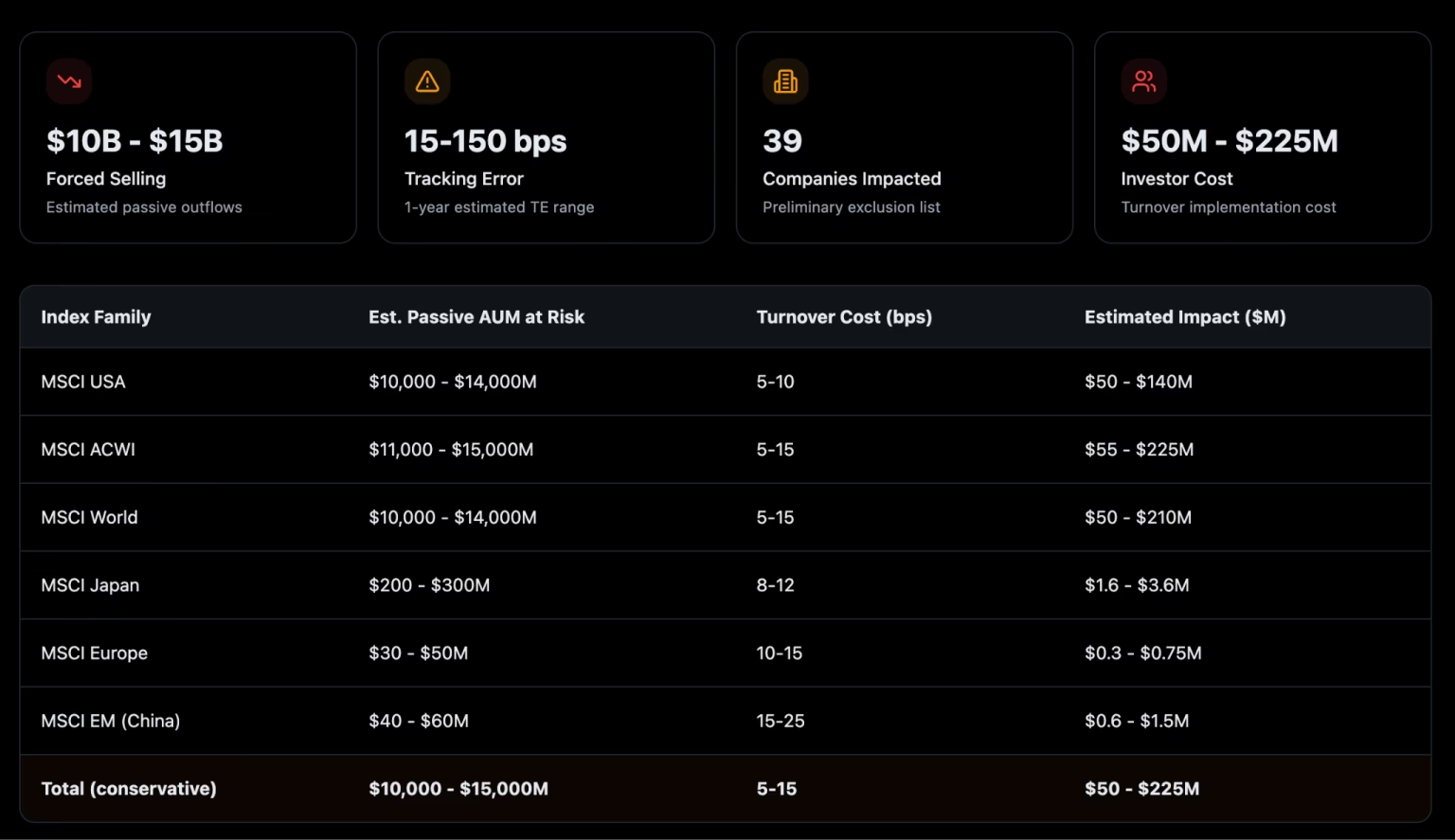
MSCI’s consultation period closes December 31, with a final decision expected January 15.
At the heart of the MSCI proposal is a reclassification effort that would treat crypto-heavy operating companies as investment vehicles rather than businesses.
MSCI argues that firms holding digital assets as a majority of their balance sheet no longer fit traditional index inclusion criteria.
Critics counter that the approach ignores decades of index precedent. Analysts note that MSCI has long included REITs, which must hold at least 75% of assets in real estate, as well as conglomerates like Berkshire Hathaway, whose balance sheet is dominated by investment holdings.
Despite these precedents, the MSCI proposal introduces a new exclusion threshold that opponents describe as arbitrary and potentially destabilizing.
Strategy Inc.—one of the most prominent corporate Bitcoin holders—formally challenged the MSCI proposal in a December 10 letter signed by Executive Chairman Michael Saylor and CEO Phong Le.
The proposal is misguided and risks profoundly harmful consequences for capital markets, the executives wrote, warning it could force indiscriminate selling unrelated to business fundamentals.
Strategy argued that it operates as an active operating company, not a passive investment fund, running a Bitcoin-backed treasury strategy alongside equity and fixed-income issuance.
According to the firm, excluding companies based on treasury composition alone would mark a dangerous break from long-standing index neutrality.
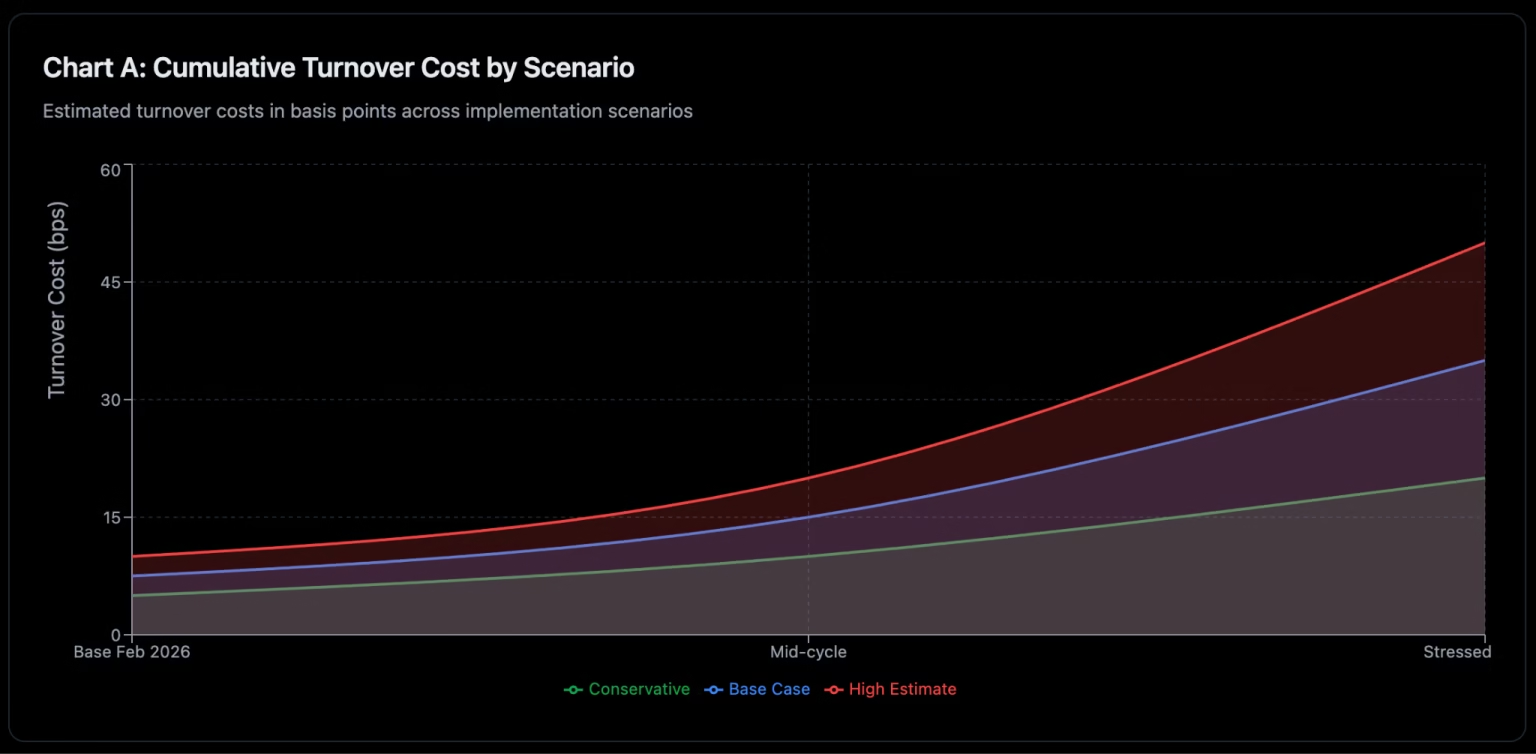
A major concern raised by Strategy is the MSCI proposal’s 50% digital asset threshold, which critics say could cause companies to whipsaw on and off indexe due to crypto price volatility and inconsistent accounting standards.
Market participants warn this could amplify volatility rather than reduce it, forcing index funds to buy and sell shares mechanically as balance sheet valuations fluctuate—potentially harming long-term investors.
Indexes are supposed to reflect markets, not dictate outcomes, one analyst familiar with the consultation process said.
Opposition to the MSCI proposal extends beyond corporate treasuries. Strive Asset Management submitted a formal response on December 6, with CEO Matt Cole arguing that the proposal misunderstands the evolving role of Bitcoin-focused companies.
Cole highlighted how miners such as MARA Holdings, Riot Platforms, and Hut 8 are pivoting infrastructure toward AI and high-performance computing, where access to power—not chips—is becoming the primary bottleneck.
“Many analysts argue the AI race is increasingly constrained by power availability,” Cole wrote, positioning Bitcoin miners as critical infrastructure players rather than speculative vehicles.
Strive proposed creating a parallel ex-digital asset treasury index, preserving investor choice without forcing blanket exclusions.
The MSCI proposal has now become a broader debate about index neutrality. BitcoinForCorporations’ petition opposing the move has gathered over 1,000 signatures, while Bitwise Asset Management also weighed in.
The power of a great index lies in its neutrality, Bitwise said, warning that policy-driven exclusions could undermine investor trust.
As MSCI prepares its January decision, market participants are bracing for what could become one of the most consequential index methodology shifts of the digital asset era.



Copyright © 2025 - The Bit Gazette.