






- Trending
- Comments
- Latest

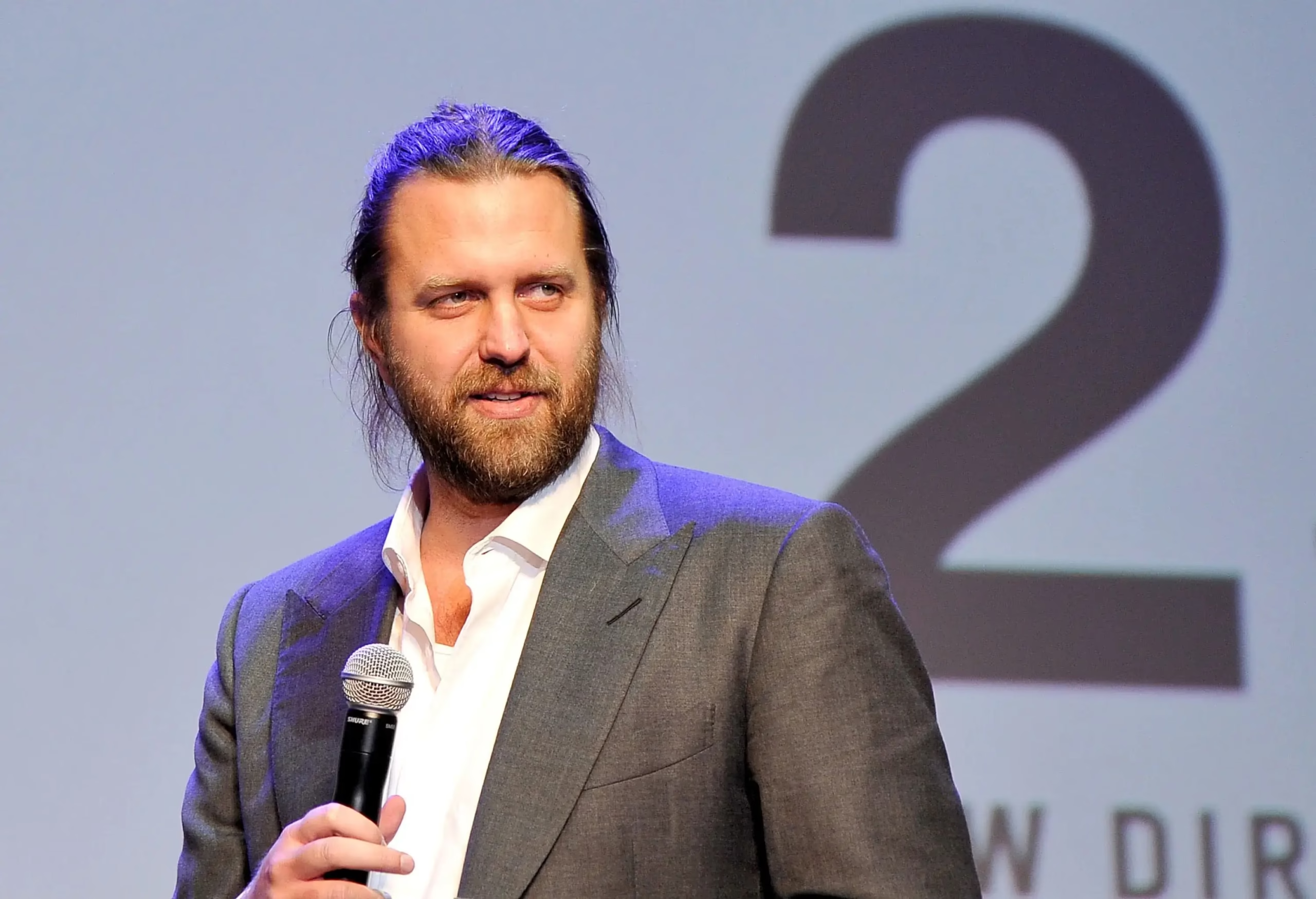
Filmmaker Carl Erik Rinsch goes to trial Tuesday in Manhattan federal court on wire fraud and money laundering charges, accused of diverting $11 million in Netflix production funds into luxury cars, crypto trading and personal purchases—including two mattresses that cost more than $638,000.
As the Netflix show developer lawsuit enters trial, jurors will confront raw footage, internal emails, and detailed financial records that prosecutors argue reveal systematic deception sources say.
The Netflix show developer lawsuit arises from Rinsch’s stalled sci-fi series originally titled White Horse, a project that drew interest from several major streaming platforms and even early investment from actor Keanu Reeves. Netflix ultimately secured the rights by advancing $44 million in 2018, drawn by a striking trailer and six short episodes Rinsch had previously produced.
Prosecutors argue that the filmmaker soon sought additional funds and, in 2020, received the extra $11 million that now anchors the Netflix show developer lawsuit. That money, they say, was contractually restricted to pre-production and post-production tasks—costumes, editing work, and payroll for the crew. Instead, prosecutors allege that Rinsch routed the money through multiple personal financial accounts, used it for stock speculation, and later moved the remaining funds into cryptocurrencies.
Court filings referenced in the Netflix show developer lawsuit show that Rinsch defended one of his most controversial purchases—two ultra-premium mattresses—during a previous civil deposition. “Not only extraordinary,” he said of the mattresses, “almost Cat in the Hat crazy expensive mattresses, yes… But they appreciate in value, strangely.”
By the time Netflix realized the project had stalled, prosecutors say, not one episode of the planned 13-episode first season had been completed. This central allegation forms the core conflict in the Netflix show developer lawsuit.
The Netflix show developer lawsuit details an extensive list of high-value purchases that prosecutors argue were funded with Netflix’s money. These include luxury vehicles—five Rolls-Royces among them—designer watches, professional-grade furnishings, and costly rentals.
Prosecutors claim Rinsch lost more than half of the $11 million through aggressive, speculative stock trading, even while assuring Netflix executives that production progress was strong. In one email highlighted within the Netflix show developer lawsuit, Rinsch told senior Netflix executive Cindy Holland not to worry about the project, calling his progress “awesome,” “other level,” and “game changing good.”
He then allegedly used subsequent cryptocurrency profits—nearly $10 million—to pay off credit card debt, resolve personal legal issues, and continue making high-end purchases, including Frette bedding and a Vacheron Constantin wristwatch. These details appear prominently in the Netflix show developer lawsuit’s filings.
“Mr. Rinsch, you can agree that these are extraordinarily expensive mattresses, right?” a lawyer asked during an earlier deposition. His response, quoted in the Netflix show developer lawsuit, has become one of its most widely shared lines.
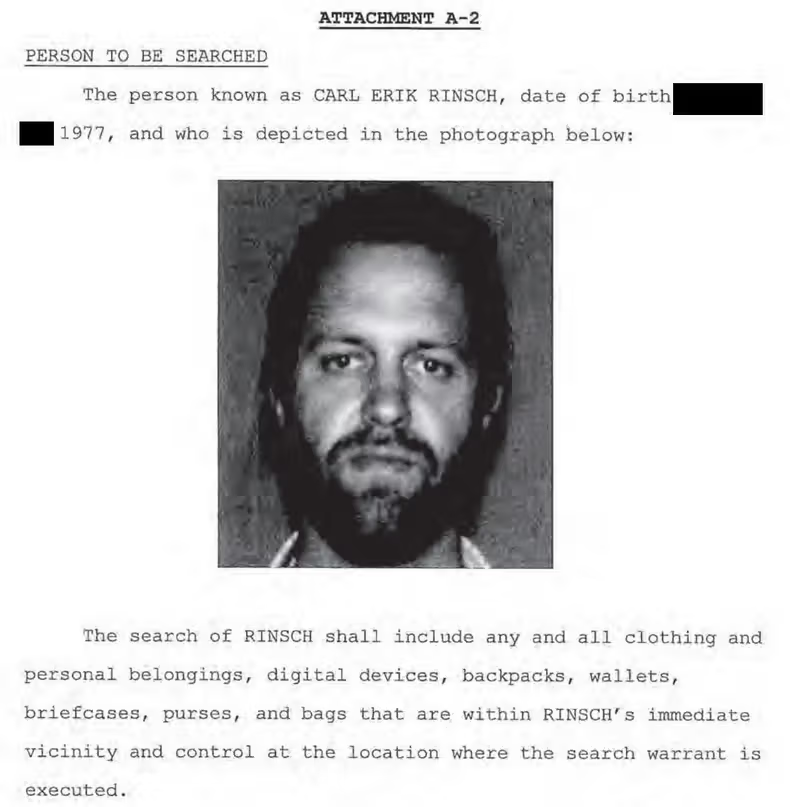
The Netflix show developer lawsuit will unfold over roughly two weeks before US District Judge Jed Rakoff. Prosecutors plan to call multiple former Netflix executives, including Cindy Holland and Peter Friedlander, as well as Rinsch’s ex-wife, a former producer on the project.
While the government argues that the filmmaker deliberately misled Netflix while diverting funds, Rinsch’s defense attributes the series’ collapse to the COVID-19 pandemic and Netflix’s own decision to abandon the project as a tax write-off. The defense also suggests that Rinsch’s mental state, while not meeting the legal threshold for insanity, requires context.
His lead attorney, Daniel Adam McGuinness, maintained Rinsch’s innocence, telling Business Insider: “Mr. Rinsch is looking forward to the opportunity to show that these charges are not founded and that he’s completely innocent.”
Despite facing charges that could carry up to 90 years in prison, Rinsch declined to consider a plea deal—another detail that adds weight to the Netflix show developer lawsuit and the stakes surrounding it.



Copyright © 2025 - The Bit Gazette.

