


- Trending
- Comments
- Latest

Polish lawmakers have resubmitted the country’s controversial crypto regulation bill without changes, just days after President Karol Nawrocki vetoed the 118-page proposal.
The ruling coalition’s Polska2050 party reintroduced the legislation Tuesday, with government spokesman Adam Szłapka confirming it is identical to the rejected version—”not even a comma” different.
The move sets up a renewed confrontation between Poland’s executive and legislative branches as the country faces a 2026 deadline to align with the EU’s Markets in Crypto-Assets (MiCA) framework.
Polska2050, part of the ruling coalition reintroduced the bill on Tuesday with backers insisting it is an “improved” successor to Bill 1424. Yet government spokesman Adam Szłapka openly admitted that the Poland crypto bill is identical to the vetoed version.
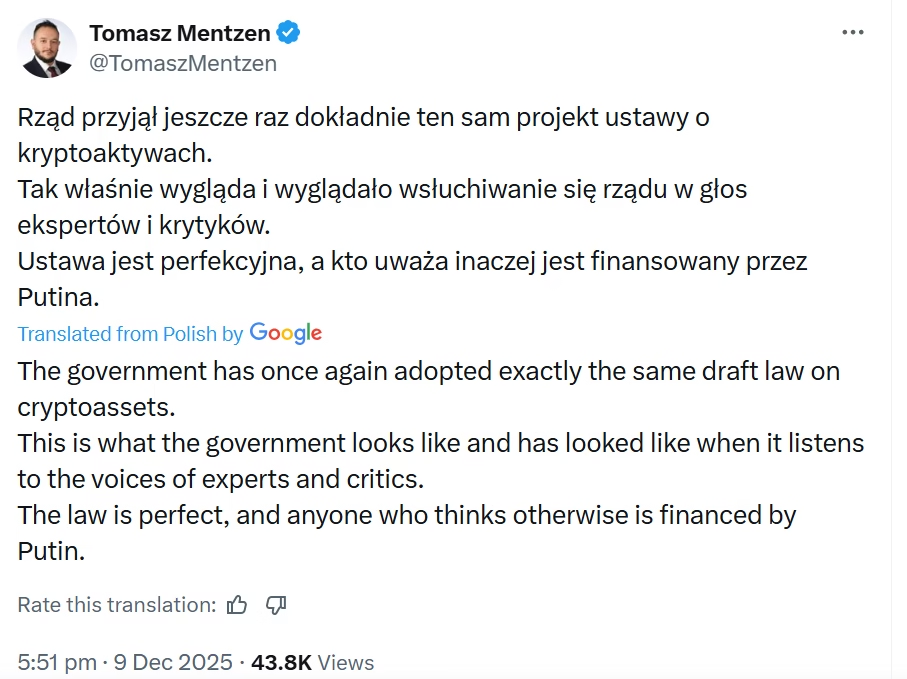
Crypto advocates, including Tomasz Mentzen, argued that the Poland crypto bill represents excessive oversight comparing its 118 pages of regulation to far slimmer frameworks in Hungary and Romania. Mentzen said the government “adopted exactly the same bill,” mocking Prime Minister Donald Tusk’s earlier claim linking opposition to the “Russian mafia.”
Officials now insist President Nawrocki is unlikely to veto the bill again following a classified security briefing that gave him “full knowledge” of national security implications.
The Poland crypto bill comes at a pivotal moment as MiCA is rolled out across the EU. The bill designates Poland’s Financial Supervision Authority as the primary crypto regulator a position that clashes with calls for more centralized oversight from the European Securities and Markets Authority in Paris.
France has pushed for ESMA authority warning that fragmented MiCA enforcement could weaken EU financial sovereignty. Malta and others counter that centralized control could create excessive bureaucracy and hinder innovation.
Polish economist Krzysztof Piech remains skeptical of the Poland crypto bill noting that MiCA’s standardized protections already take effect in 2026. Some insiders claim Nawrocki’s team has also been shown an “alternative” version of the Poland crypto bill potentially more market friendly and more aligned with EU wide MiCA standards.
As Warsaw’s executive and legislative branches continue to clash, the fate of the Poland crypto bill now carries implications far beyond Poland’s borders.
Whether the president signs the Poland crypto bill or pivots toward the rumored alternative draft, the decision will help define how decentralized or centralized MiCA supervision becomes across the EU.



Copyright © 2025 - The Bit Gazette.