






- Trending
- Comments
- Latest

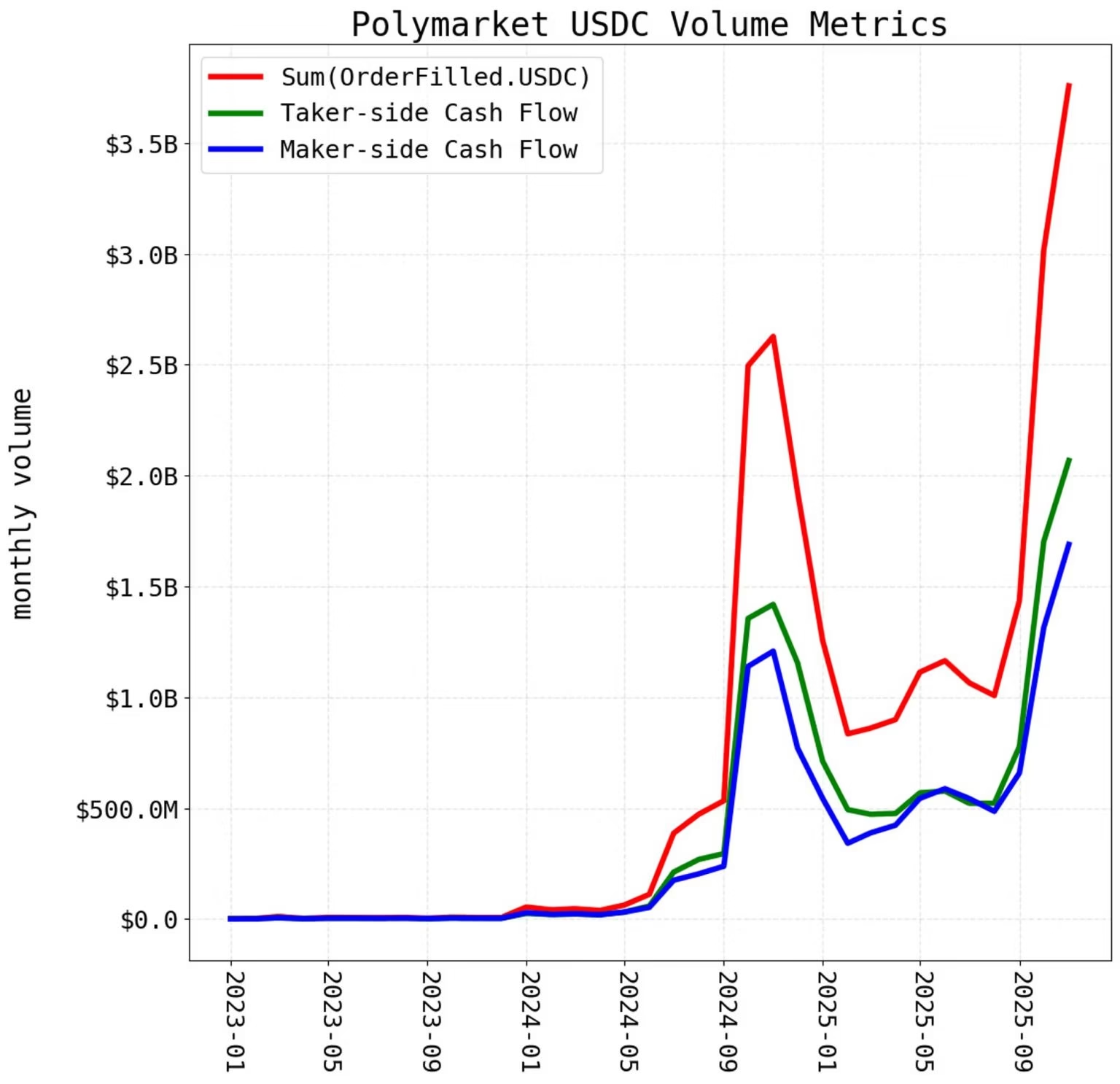
Polymarket’s reported trading volume has been inflated by roughly 100% due to a double-counting error affecting major analytics platforms, according to research from Paradigm partner Storm Slivkoff.
The inflated figures stem from smart contracts that generate duplicate events for each trade’s maker and taker sides, causing dashboards like DeFiLlama and Allium Labs to count every transaction twice.
In a detailed report, Slivkoff explained that Polymarket smart contracts generate duplicate OrderFilled events for both the maker and taker sides of each transaction.
This technical quirk means that every trade is effectively counted twice, inflating total Polymarket trading volume across dashboards like DeFiLlama and Allium Labs.
A $4.13 trade is being shown as $8.26 in total volume, Slivkoff wrote, underscoring how simple event duplication led to exaggerated metrics.
He added that while each event record is technically correct, summing both sides creates a systematic distortion of notional and cash flow metrics.
As the report gained traction, critics were quick to highlight Paradigm’s financial ties to Kalshi — Polymarket’s main U.S. competitor.
It reads a bit like a hit piece when it’s just data being hard and Polymarket’s contracts being open/onchain,Will Sheehan, founder of Parsec Finance, commented.
Still, Slivkoff maintained that the research was neutral and technically rigorous. This isn’t about blame, he said. It’s about ensuring transparency in how we interpret on-chain data and understanding what Polymarket trading volume truly represents.
Huang, defending the research, reposted the findings with a note emphasizing that open-source markets require open-source truth, suggesting that the discovery helps improve DeFi data integrity overall.
The backlash prompted swift action from analytics platforms. DeFiLlama, Allium Labs, and Blockworks confirmed that they are revising their Polymarket dashboards to correct double-counting errors.
“We’ve validated the findings and updated our datasets accordingly,” a DeFiLlama representative told The Block.
Hildobby, data head at Dragonfly, added that some sophisticated analytics had already differentiated between maker and taker volumes since 2024 but admitted the methodology “was never properly documented.”
As data providers rush to recalibrate, the Polymarket trading volume debate has become a wake-up call for decentralized analytics — a reminder that even transparent blockchain data can mislead without precise interpretation.
Beyond the immediate Polymarket trading volume dispute, industry voices warn of broader challenges in measuring activity within prediction markets. Nick Preszler, founder of Melee Markets, noted that low-priced contracts often distort notional volume figures.
“If a user buys $10 worth of contracts at 0.1¢ each, they’re risking $10 but generating $10,000 of recorded volume,” Preszler said. “Metrics like open interest and fee revenue might be far more telling than raw volume data.”
This sentiment echoes across the decentralized finance ecosystem, where transparent yet complex contract structures often produce misleading statistics for investors and analysts.
While Polymarket’s data team pushed back against claims of intentional inflation, they acknowledged the technical nuance.
“Our smart contracts are open and verifiable, how third parties interpret the data is beyond our control,” a spokesperson said.
Still, the Polymarket trading volume revelation has fueled heated debates over credibility, methodology, and transparency in crypto analytics.
As platforms revise their data pipelines, one truth stands clear — even in blockchain, numbers can lie if not properly decoded.



Copyright © 2025 - The Bit Gazette.